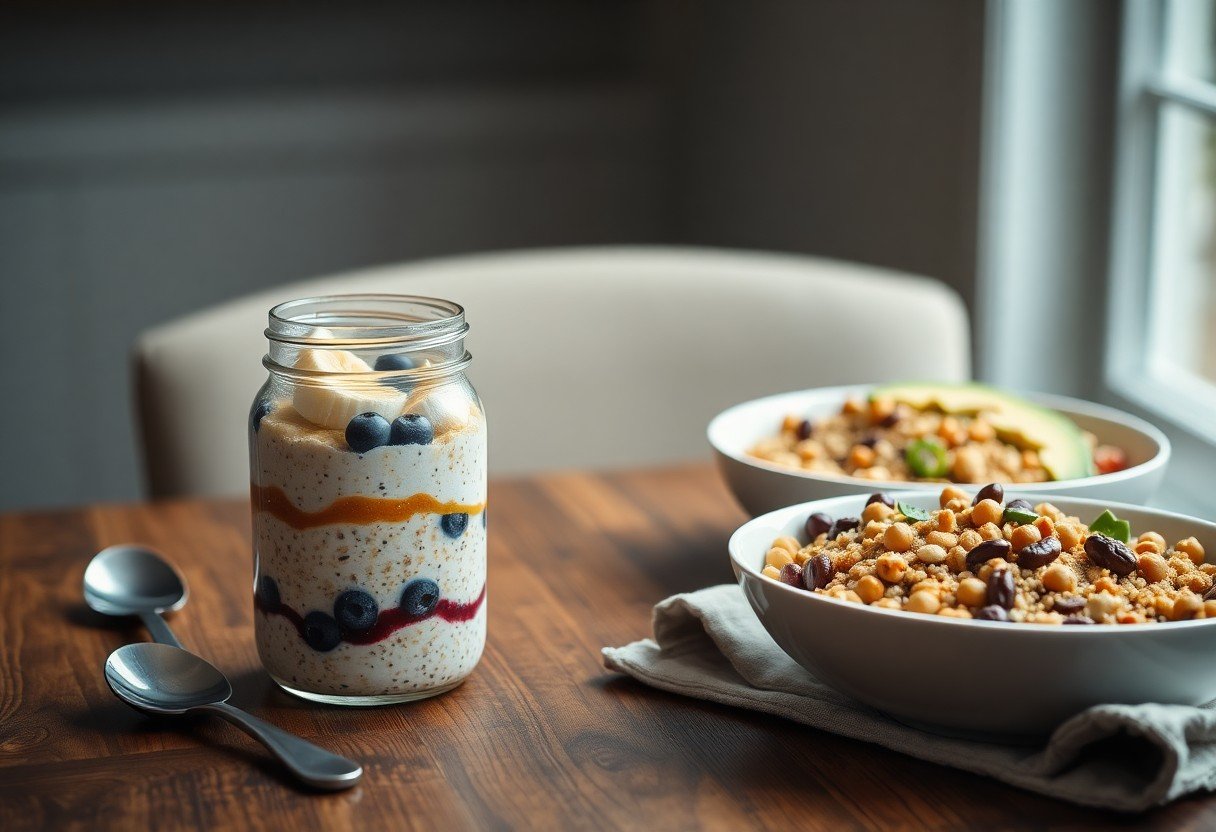
Breakfast sets the tone for your training and metabolism; choosing high-protein breakfasts helps fuel workouts, promote muscle repair and growth, and increase satiety for weight loss, while avoiding excess added sugars and processed meats prevents undermining your goals. This post gives practical recipes and tips so you can reliably hit protein targets, control calories, and optimize recovery.
Key Takeaways:
- Aim for 20-40 g of high-quality protein at breakfast to stimulate muscle protein synthesis and increase satiety, supporting both muscle growth and weight control.
- Pair protein with moderate carbs and healthy fats to fuel workouts, stabilize blood sugar, and control overall calorie intake.
- Choose versatile, quick options (Greek yogurt, eggs, protein smoothies, tofu) and batch-prep servings to hit protein targets consistently without excess calories.
Understanding the Importance of Protein in Breakfast
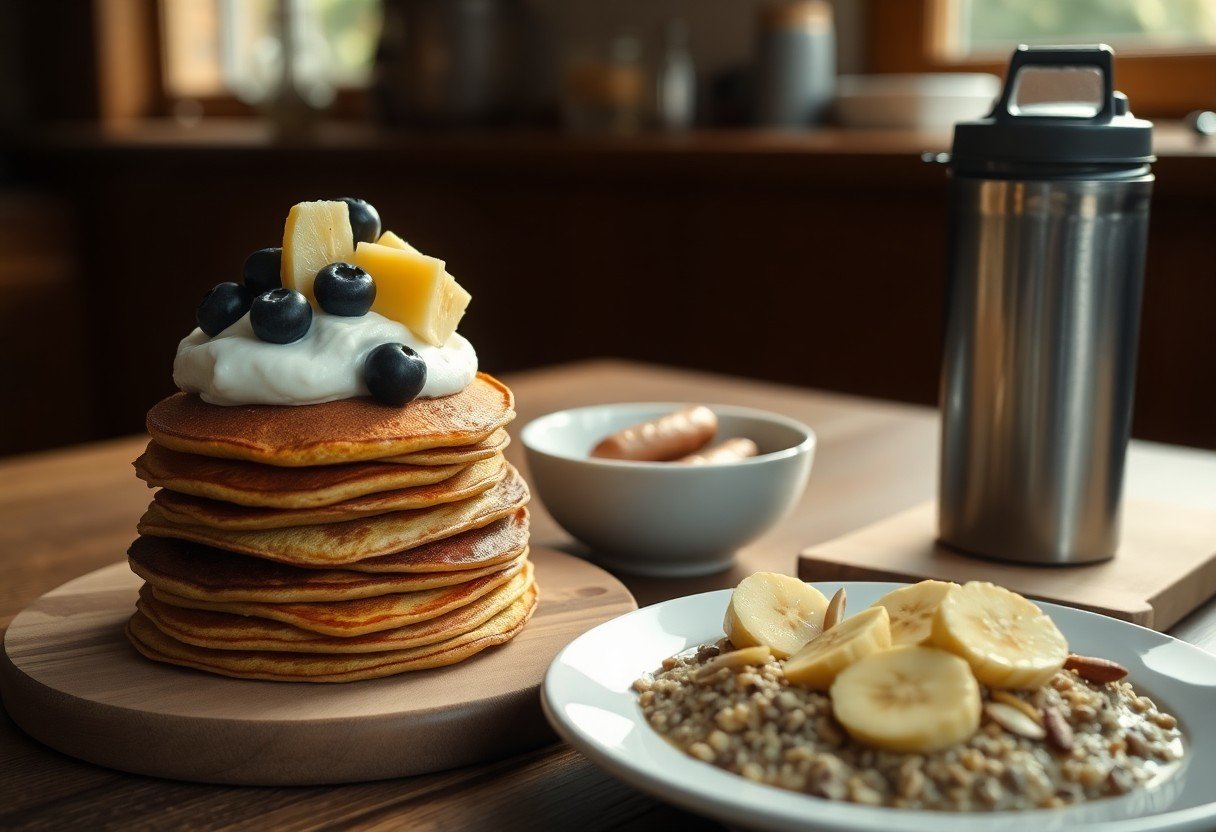
When you prioritize protein at breakfast, you hit an early opportunity to trigger muscle protein synthesis and steady appetite control; aiming for 20-30 g of high-quality protein (eggs, Greek yogurt, whey) delivers the leucine dose to start repair and satiety. You benefit from the thermic effect of protein-burning more calories during digestion-and a stabilized blood glucose curve, so choosing protein-rich options reduces mid-morning cravings and supports performance through the day.
How Protein Supports Muscle Repair and Growth
After resistance work, you should supply a per-meal protein dose that stimulates muscle protein synthesis-generally 20-30 g with ~2-3 g leucine-to maximize repair and hypertrophy. You gain more when protein intake is distributed across meals rather than skewed to one sitting; for example, combining 3 eggs (~18 g) with 150 g Greek yogurt (~15 g) gives a fast, complete amino-acid profile that complements your training session.
The Role of Protein in Weight Management
Protein helps you lose fat while preserving lean mass by increasing satiety, raising energy expenditure via a thermic effect of ~20-30%, and reducing spontaneous calorie intake; practical targets are 1.6-2.2 g/kg body weight daily for active individuals or ~25-30% of calories from protein during a deficit. You’ll experience fewer cravings and better metabolic outcomes when breakfasts reliably contribute to that protein total.
For actionable swaps, you can replace a typical low-protein cereal breakfast (~5-8 g protein) with a 200 g Greek yogurt bowl plus fruit (~20 g) or a whey smoothie (25-30 g), which studies and practical trials show often cut subsequent meal calories by ~150-300 kcal. If you have kidney disease, consult your clinician before raising protein; otherwise, evenly spaced protein breakfasts accelerate fat loss while preserving strength and performance.
Egg-Based Breakfast Recipes
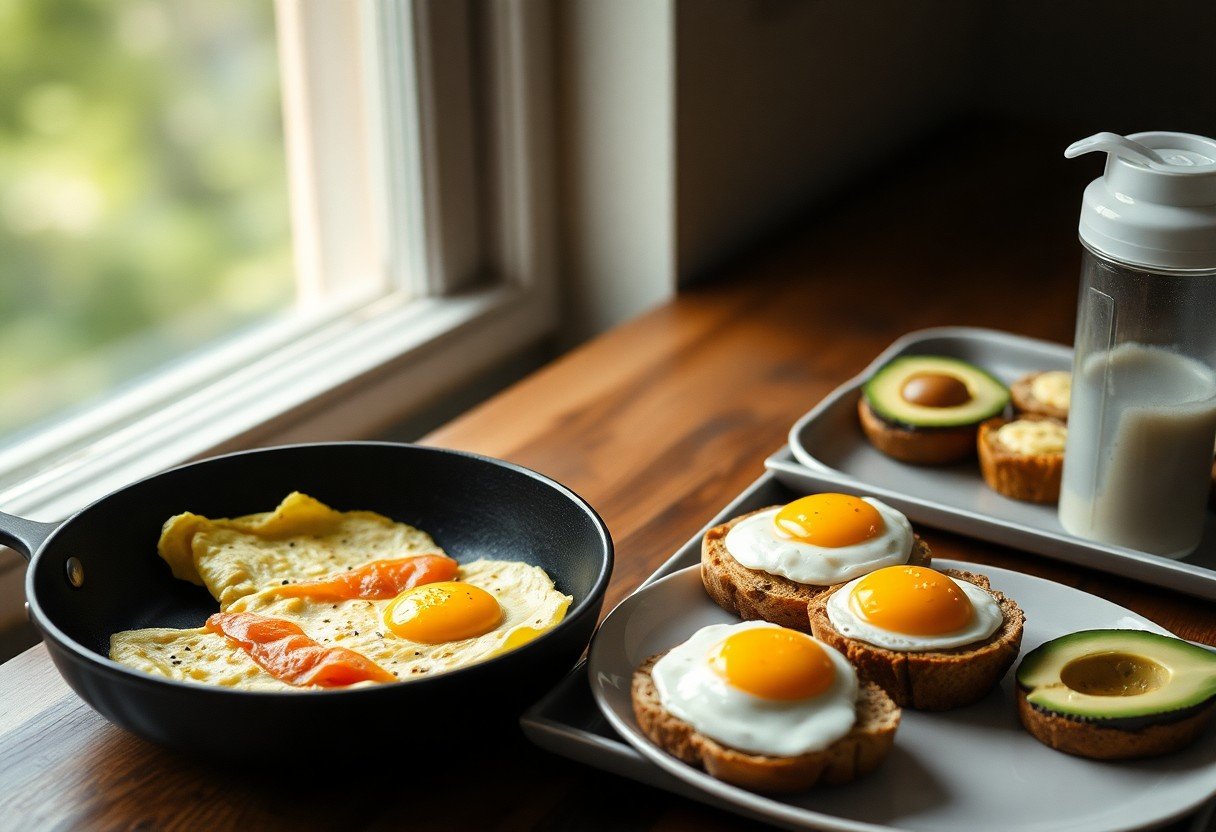
You can leverage eggs’ nutrient profile-one large egg supplies about 6-7 g protein, ~0.5 g leucine and key micronutrients like B12 and choline-to build muscle and satiety. Combining eggs with dairy or lean meats boosts total protein per meal: for example, a 3-egg base plus ½ cup cottage cheese adds roughly ~30-35 g protein overall. Be aware that raw or undercooked eggs carry salmonella risk, so cook or use pasteurized products when needed.
Protein-Packed Omelet Variations
Try a 3-egg omelet (~18-21 g protein) folded around 3 oz smoked salmon (+~17 g), ½ cup sautéed spinach and ¼ cup shredded cheese for a ~40 g meal. You can swap 2 whole eggs for 4 egg whites to cut fat while keeping protein; however, note that 3 eggs provide only ~1.5 g leucine, below the ~2.5 g threshold often cited for maximal MPS, so add Greek yogurt, whey, or cottage cheese to hit that target.
Breakfast Egg Muffins with Veggies and Cheese
Make a batch using 6 large eggs (≈36 g protein total), 1 cup mixed peppers/onions/spinach and ½ cup shredded cheddar; pouring into a 6‑cup tin yields six muffins at about 6 g protein each, or adjust eggs to change portion size. You can increase protein by stirring in ½ cup cottage cheese or diced turkey, or use extra egg whites to lower calories while preserving protein density.
If you want batch prep, bake at 350°F (175°C) for 18-22 minutes until set and cool completely before storing. Portion into grab‑and‑go servings, then refrigerate within 2 hours and consume within 3-4 days, or freeze up to 3 months. Reheat in the microwave 60-90 seconds or in the oven at 325°F for 8-10 minutes; divide total recipe protein by servings to track grams per muffin.
Smoothie Recipes for Muscle Gain
You can target 25-40 g protein per smoothie by blending fast and slow proteins with whole-food carbs and fats; for example, combine 1 scoop whey (≈20-25 g protein), 1 cup nonfat Greek yogurt (≈20 g), ½ cup oats and a cup of berries to hit ~45-55 g protein and 450-600 kcal depending on milk choice.
High-Protein Smoothie Combos
Try specific combos: a post-workout “Recovery” with 1 scoop whey + 1 banana + 1 cup milk (~25-30 g protein); a “Mass” blend using 1 scoop whey + 1 cup Greek yogurt + 2 tbsp peanut butter (~40 g protein, ~600 kcal); or a lower-calorie “Lean” option of ½ cup cottage cheese + 1 cup spinach + berries (~20-25 g protein, ~250-300 kcal).
Nut Butter and Yogurt Smoothies
You’ll get dense protein and calories by pairing nut butter with Greek yogurt: 2 tbsp nut butter contributes about 6-8 g protein and ~180-200 kcal, while 1 cup Greek yogurt adds ~18-22 g protein; scale portions so you hit your target protein without overshooting calories if you’re leaning out.
For more detail, combine a fast-digesting protein (whey) with yogurt to create both an immediate amino spike and sustained release-whey gives rapid availability (~20-25 g per scoop) and yogurt supplies more slowly digested casein-like proteins; if you need more calories for mass, add 2 tbsp nut butter or ½-1 cup oats, but if fat loss is the goal, cut nut butter to 1 tbsp and use water or skim milk to control total energy.
Overnight Oats and Grain Bowls
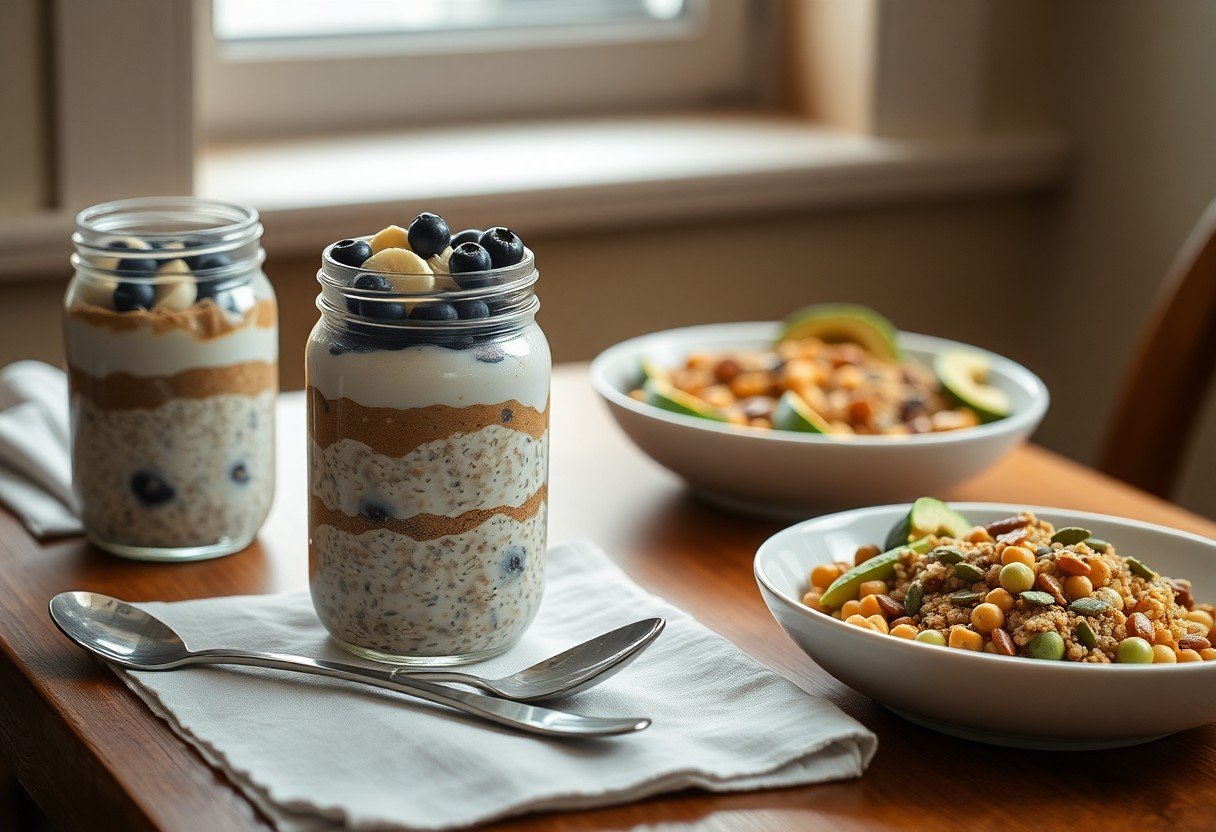
You can turn overnight oats and grain bowls into portable muscle food by stacking ingredients for up to 30g protein per serving: mix oats with Greek yogurt, milk, a scoop of protein powder or casein for slow release. Try savory quinoa bowls or sweet chia-oat combos, and consult resources like 9 high-protein breakfasts to build muscle and stay fit for inspiration; watch added sugars in flavored yogurts and powders.
Protein-Enriched Overnight Oats
Mix 1/2 cup rolled oats with 1/2 cup milk, 1/2 cup Greek yogurt and 1 scoop (20-25g) whey or plant protein; add chia seeds for fiber and omega-3s. You’ll get roughly 20-35g protein depending on the powder, plus sustained energy from slow-digesting carbs. Prep in mason jars, refrigerate 6-8 hours, and top with berries or nut butter for extra calories and micronutrients while keeping sugar low.
Savory Grain Bowls with Quinoa and Eggs
Use 1 cup cooked quinoa (~8g protein) as your base, add two eggs (~12g) and 1/2 cup edamame or lentils to reach ~25-30g protein; toss greens, roasted veggies, olive oil and lemon for healthy fats. Season with herbs and a spoon of tahini for texture. Pay attention to portion sizes and excess sodium from dressings to keep the meal performance-friendly.
For faster prep, batch-cook quinoa (4 cups cooked lasts 3-4 days) and soft-boil eggs in advance; assemble bowls in 5 minutes. Swap ingredients to hit targets: replace one egg with 3 oz grilled chicken (+21g protein) or add 1/2 cup cottage cheese for immediate creaminess. This lets you scale protein from ~20g to >40g depending on your goals while keeping carbs and fats adjustable.
Breakfast Options for On-the-Go
When you’re pressed for time, prioritize portable choices that deliver 20-30 g protein within 60 minutes of waking to support muscle protein synthesis; examples include Greek yogurt cups, hard-boiled eggs, and jerky. Choose items that stay safe: perishables require refrigeration or consume within 2 hours, while shelf-stable options like canned tuna or protein powders last longer. Pack a small cooler or use insulated containers to keep temps below 40°F (4°C) and avoid spoilage.
Protein Bars: Make Your Own
You can craft no-bake bars using 1 cup oats, 1 scoop (25-30 g) whey isolate, 1/3 cup nut butter, 2 tbsp honey, and 2 tbsp flaxseed to yield ~10 bars at ~250-300 kcal and 15-25 g protein each. Control sugar by swapping honey for monk fruit or erythritol; press into a pan and chill or bake at 325°F for 10 minutes to set. Store individually wrapped in the fridge for up to 7 days or freeze for a month.
Quick Breakfast Wraps with Lean Proteins
Start with a whole-grain tortilla, add 3 oz sliced turkey breast (~18 g protein), two egg whites (~7 g), a sprinkle of low-fat cheese, and spinach for fiber to hit ~25-30 g protein and ~350 kcal. Assemble the night before, wrap in foil, and warm in a skillet or microwave for 60-90 seconds. For flavor variety swap turkey for smoked salmon or grilled chicken; use salsa instead of sauce to cut calories without losing taste.
To maximize safety and convenience, cook proteins in batches: grill 12 oz chicken yields four 3-oz portions (~24 g protein each) that freeze well, so you can reheat and assemble quickly. Reheat thoroughly to 165°F (74°C) and cool quickly before storing; keep refrigerated up to 48 hours for mixed wraps. Use low-carb tortillas if you’re cutting calories, or swap in a whole-egg omelet for extra micronutrients-this gives you 2-4 ready-to-go wraps per week while keeping protein consistent.
Creative Uses for Cottage Cheese and Greek Yogurt
Combine cottage cheese and Greek yogurt to create versatile, high-protein breakfasts: 1/2 cup low-fat cottage cheese (~14 g protein) plus 6 oz plain Greek yogurt (~17 g) gives about 31 g protein, ideal post-workout. Try blending them with 1/2 cup berries and 1 tbsp chia for texture, or swap half the yogurt for kefir to add probiotics; be cautious because adding sweetened granola or syrup can quickly add 200+ extra calories and undermine weight goals.
Cottage Cheese Breakfast Bowls
Use cottage cheese as a base for savory bowls with chopped tomato, cucumber, 1/4 avocado and a sprinkle of za’atar, or go sweet with peach slices, cinnamon and 1 tbsp flaxseed; 1/2 cup supplies ~14 g protein. You can add 1-2 tbsp of nuts for healthy fats and another 3-6 g protein. Watch sodium-many brands contain around 350-400 mg per 1/2 cup-so choose low-sodium varieties if you track salt.
Greek Yogurt Parfaits with Nuts and Fruits
Layer plain Greek yogurt with 1/2 cup mixed berries, 1/4 cup granola and 1 oz chopped nuts for a balanced parfait; 6 oz yogurt provides ~17 g protein and nuts add healthy fats plus 4-6 g protein. Prefer plain, unsweetened yogurt to control added sugar, and limit granola to 1/4 cup to avoid 100-200 extra calories that can stall weight loss.
For a practical template, combine 6 oz plain Greek yogurt (≈17 g protein), 1/4 cup granola (≈3 g protein), 1 oz almonds (≈6 g) and 1/2 cup berries-totaling about 26 g protein and roughly 350-450 kcal depending on granola choice. You can bulk up for muscle by adding an extra scoop of protein powder or reduce calories by swapping granola for 2 tbsp hemp seeds; also benefit from the yogurt’s probiotics to support gut health when you choose live-culture varieties.
Conclusion
Following this approach, you can choose high-protein breakfasts that fuel muscle repair, control appetite, and support fat loss while preserving lean mass. Focus on whole-food proteins, balanced fats and fiber-rich carbs, adjust portion sizes to your goals, and prioritize consistency to maximize results.
FAQ
Q: How much protein should I aim for at breakfast to support muscle growth and weight management?
A: Aim for roughly 20-40 g of high-quality protein at breakfast. For muscle growth target a daily intake of about 1.6-2.2 g/kg body weight distributed evenly across meals (~0.25-0.4 g/kg per meal). For weight loss maintain the higher end of protein (1.6-2.4 g/kg/day) to preserve lean mass while in a calorie deficit; that still translates to ~25-40 g at breakfast. Prioritize complete proteins or combinations that supply ~2.5-3 g of leucine (often achieved with ~25-30 g of high-quality protein) to maximally stimulate muscle protein synthesis.
Q: What are fast, practical high-protein breakfast recipes I can make on busy mornings?
A: Quick options: 1) Egg-white omelet with spinach + 1/2 cup cottage cheese (25-30 g protein, 10-15 minutes). 2) Greek yogurt parfait with 1 cup 0% Greek yogurt, 1 scoop whey, berries, and 1 tbsp nuts (30-40 g protein, 5 minutes). 3) Protein pancakes (1 banana, 2 eggs, 1 scoop protein powder, 1/2 cup oats) cooked in 6-8 minutes (25-35 g protein). 4) Smoothie: 1 scoop whey/pea protein, 1 cup milk or fortified plant milk, 1 tbsp nut butter, spinach (25-35 g). 5) Smoked salmon on sprouted-grain toast with cottage cheese (25-30 g). Each is portable and customizable for calories or carbs depending on goals.
Q: How should I adapt high-protein breakfasts differently for fat loss versus muscle gain?
A: For fat loss: keep protein high (25-40 g) while reducing total calories-trim added fats and starchy carbs, prioritizing low-calorie vegetables and lean protein sources (egg whites, Greek yogurt, cottage cheese). For muscle gain: increase overall calories and include more carbs around workouts to support glycogen and recovery (oatmeal, fruit, whole-grain toast) and include healthy fats for calorie density. In both cases keep protein distribution steady and include a post-workout carbohydrate-protein combo if training fasted or in the morning.
Q: What meal-prep strategies and storage tips make high-protein breakfasts easier during the week?
A: Batch options: bake egg muffins (eggs/egg whites + veggies + cheese) and refrigerate 4-5 days or freeze up to 3 months; make overnight oats with protein powder and chia seeds in jars for 3-4 days; cook a large batch of quinoa or steel-cut oats and portion with protein toppings; freeze assembled breakfast burritos (eggs, beans, lean meat) and reheat from frozen; pre-portion yogurt and toppings in containers. Reheat gently (microwave at lower power, or thaw overnight) to preserve texture and flavor.
Q: What are effective vegetarian and vegan high-protein breakfast recipes and protein combinations?
A: Vegetarian: Greek yogurt bowls with whey or casein, cottage cheese with fruit and seeds, scrambled eggs or egg-bake with cheese and legumes. Vegan: tofu scramble with nutritional yeast and tempeh bacon, chickpea flour omelet, overnight oats blended with pea or soy protein, smoothie with silken tofu/pea protein, nut butter, and oats. Combine complementary sources (legumes + whole grains, soy/pea isolates for complete amino acids) and add hemp or chia seeds for extra protein and healthy fats. Aim for concentrated sources (soy, tempeh, seitan, pea isolate) to hit 20-40 g per meal.