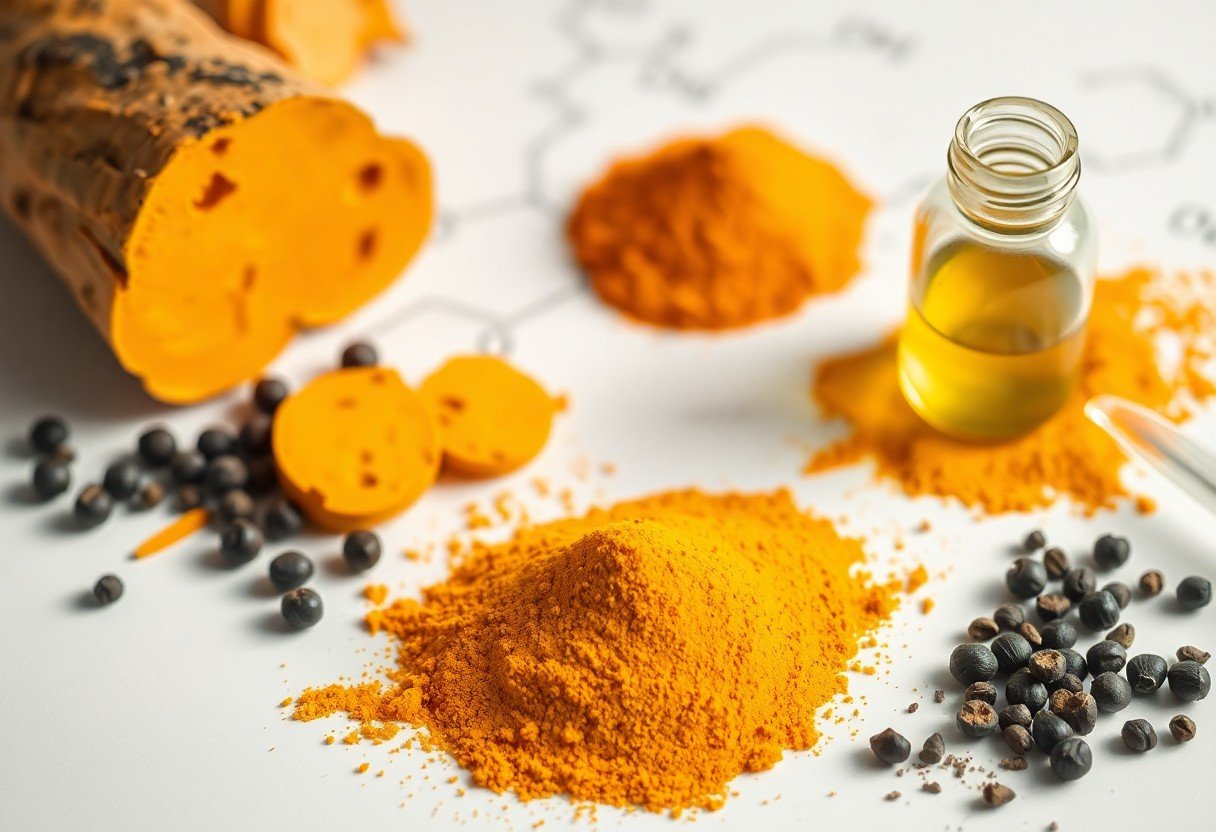
With turmeric’s curcumin and black pepper’s piperine, you gain anti-inflammatory and antioxidant effects as piperine boosts curcumin absorption by up to 2000%, but you should watch for drug interactions and increased bleeding risk.
The Phytochemical Foundation of Curcumin
Molecular Structure and Biological Activity of Curcuminoids
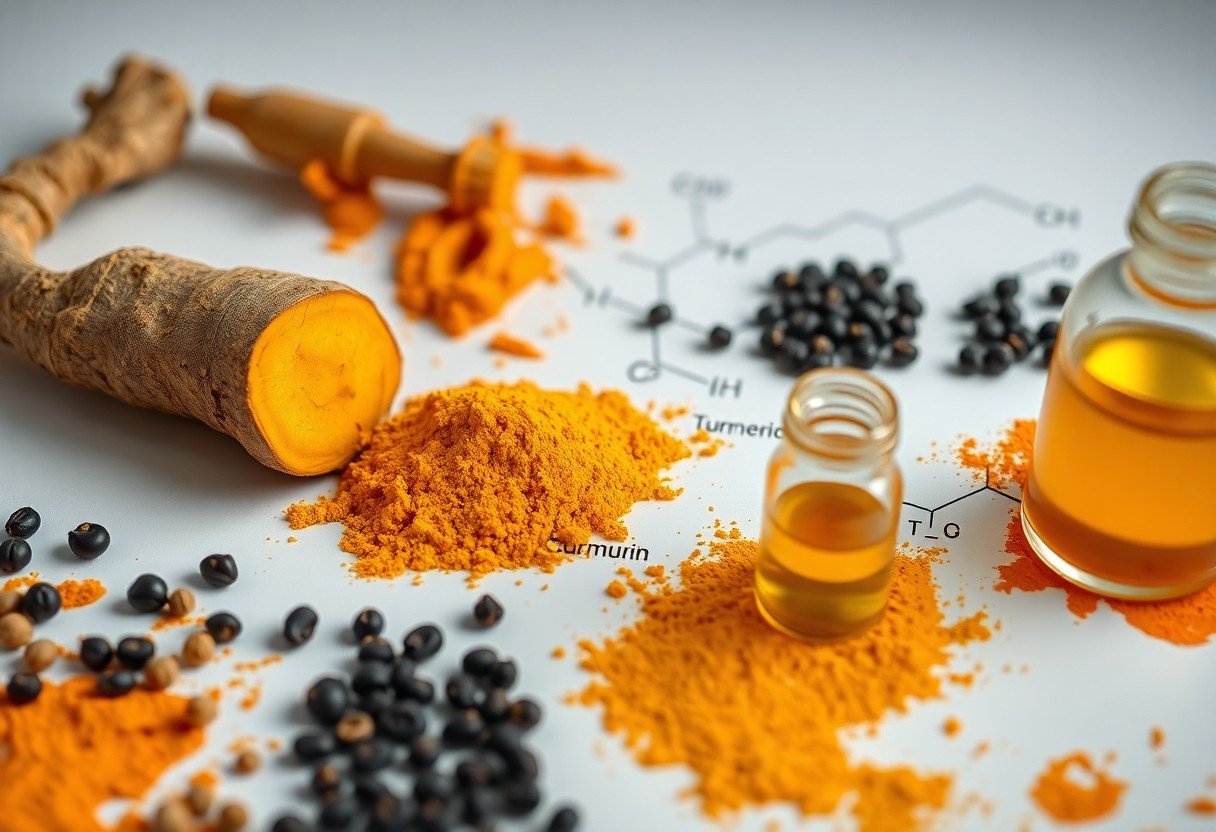
Curcuminoids possess a polyphenolic diarylheptanoid structure that confers antioxidant and anti-inflammatory activity; you benefit from their conjugated diketo/enol moieties, yet poor systemic bioavailability often curtails clinical effects without absorption enhancers.
The Mechanism of Modulating Pro-inflammatory Cytokines
You see curcumin suppresses pro-inflammatory signaling by inhibiting NF-κB and MAPK pathways, reducing production of IL-1β, IL-6, and TNF-α, which lowers inflammatory cascades.
Research demonstrates curcumin directly targets kinases and transcription factors; when paired with piperine you obtain dramatically higher plasma concentrations-piperine can increase curcumin bioavailability by up to 2000%-so you see more pronounced cytokine suppression, but monitor for drug-interaction risks such as with anticoagulants.
The Bioavailability Barrier
Bioavailability remains the main obstacle when you judge turmeric’s clinical potential, since curcumin suffers from poor absorption, rapid metabolism, and swift elimination; your strategies must target intestinal solubility and hepatic clearance to achieve meaningful systemic levels.
Factors Limiting Intestinal Absorption and Aqueous Solubility
Curcumin shows poor intestinal uptake and aqueous solubility, severely limiting systemic exposure.
- Solubility – minimal in water
- Permeability – low passive diffusion
- P-gp efflux – active extrusion
Assume that you co-administer piperine to hinder efflux and boost absorption.
Rapid Hepatic Metabolism and Systemic Elimination
Hepatic metabolism converts curcumin into inactive conjugates via glucuronidation and sulfation, causing rapid systemic elimination and low plasma concentrations. Assume that you co-administer piperine to inhibit these pathways and prolong bioactive exposure.
Enzymatic conjugation in the liver rapidly neutralizes curcumin’s activity: UDP-glucuronosyltransferases and sulfotransferases produce glucuronides and sulfates that are quickly cleared. You should expect pronounced first-pass clearance that reduces free curcumin; co-administration of piperine can inhibit these enzymes, amplify circulating bioactive levels, and raise drug-drug interaction risks you must monitor.
Piperine: The Essential Bioenhancing Catalyst
Pharmacological Properties of Black Pepper Extract
Piperine in black pepper increases absorption of curcumin and other phytochemicals by modulating drug-metabolizing enzymes and transporters, so you achieve higher plasma levels; it exerts powerful bioenhancing effects and may cause clinically relevant drug interactions.
Inhibiting Glucuronidation to Prolong Metabolic Presence
Inhibiting glucuronidation, piperine slows curcumin conjugation so you retain active free curcumin longer, increasing exposure; this raises efficacy but also presents a heightened risk of drug interactions when you take concurrent medications.
You should know that piperine directly inhibits UDP-glucuronosyltransferases and alters intestinal efflux transporters, which can boost curcumin’s area under the curve by up to 2,000% in reported studies; this prolongs systemic presence but also causes greater exposure to co-administered drugs, so you must review medication profiles and consider dose adjustments.
The Science of the Synergistic Effect
You can trace the synergy to piperine’s inhibition of curcumin glucuronidation and slowed clearance, which the classic study on bioenhancement documents (Bioenhancer Assessment of Black Pepper with Turmeric on …), explaining the large boost in curcumin bioavailability.
Quantifying the 2,000% Increase in Serum Concentration
Data from human and animal work show that adding piperine can raise curcumin serum levels by up to 2,000%, so you obtain far greater systemic exposure from the same oral dose.
Combined Modulation of Oxidative Stress Pathways
Curcumin and piperine together alter antioxidant enzyme activity and lower reactive oxygen species, giving you enhanced cellular protection and reduced inflammatory signaling.
Together, curcumin activates Nrf2-driven gene expression and boosts glutathione recycling while piperine’s bioenhancement magnifies tissue concentrations, so you observe stronger antioxidant responses and suppression of NF-κB-mediated cytokine release; note that piperine can inhibit hepatic drug-metabolizing enzymes, so you should consult a clinician if you take prescription medications.
Practical Implementation and Safety Profile
Establishing Optimal Ratios for Maximum Efficacy
Aim for low milligram piperine when combining with curcumin; amounts around 5-20 mg commonly increase absorption markedly, so you should choose formulations that balance enhanced bioavailability with gastrointestinal tolerability. Too much piperine can raise drug levels, so err on the lower end unless supervised.
The Essential Role of Dietary Fats in Nutrient Absorption
Include a source of dietary fat whenever you take turmeric to enhance curcumin uptake; even a teaspoon of oil or a fatty meal promotes absorption. Fat greatly increases bioavailability and is safe for most people.
Oils help form micelles and stimulate bile release, which transports lipophilic curcumin into enterocytes; you should pair turmeric with monounsaturated or polyunsaturated fats like olive oil, avocado, or nuts. Emulsified formulations or combining with a meal consistently improves plasma levels, reducing the need for very high doses.
Evaluating Whole Food Sources versus Standardized Extracts
Compare whole turmeric and standardized extracts based on your goals: whole root provides diverse phytochemicals, while extracts give predictable curcumin content for targeted dosing. Standardized extracts offer consistent potency.
Choosing whole food keeps you exposed to volatile oils and minor curcuminoids that may modulate effects, but you should expect lower curcumin per gram; extracts can deliver therapeutic levels in smaller doses, yet you must verify purity with third-party testing and be wary of adulteration. Quality verification matters for safety and efficacy.
Potential Contraindications and Pharmaceutical Interactions
Check for interactions before you combine turmeric or piperine with medications; they may increase levels of anticoagulants, certain chemotherapeutics, and drugs cleared by CYP3A4 or P‑glycoprotein, raising bleeding or toxicity risk.
Consult your healthcare provider if you take blood thinners, antiplatelet agents, immunosuppressants, or drugs with narrow therapeutic windows, because piperine inhibits drug‑metabolizing enzymes and curcumin can affect platelet function; this interaction can be dangerous and dosing adjustments or monitoring may be required.
To wrap up
With these considerations, you should combine turmeric and black pepper to maximize curcumin absorption, reduce inflammation, and tailor doses safely using clinical evidence and physician guidance.
FAQ
Q: How does turmeric (curcumin) reduce inflammation at the molecular level?
A: Curcumin, the primary bioactive compound in turmeric, inhibits pro-inflammatory signaling pathways including NF-κB and downregulates enzymes such as COX-2 and 5-LOX. It lowers levels of cytokines like TNF-α, IL-1β and IL-6 while activating antioxidant responses via Nrf2, which reduces oxidative stress that drives chronic inflammation. Laboratory and animal models show decreased leukocyte infiltration and reduced inflammatory mediators in tissues affected by arthritis, colitis, and metabolic inflammation.
Q: What role does black pepper (piperine) play in increasing curcumin bioavailability?
A: Piperine, an alkaloid in black pepper, inhibits intestinal and hepatic glucuronidation and blocks P-glycoprotein, slowing curcumin metabolism and efflux. Human pharmacokinetic studies reported up to a 2000% increase in curcumin bioavailability when co-administered with piperine, although the magnitude depends on formulation and dose. Piperine also increases peak plasma concentrations and area under the curve for curcumin, making lower curcumin doses more effective in some supplement designs.
Q: What does clinical evidence say about the anti-inflammatory effectiveness of the turmeric-plus-black-pepper combination?
A: Randomized controlled trials and meta-analyses have found improvements in symptoms and inflammatory biomarkers for conditions such as osteoarthritis, rheumatoid arthritis, and components of metabolic syndrome when bioavailable curcumin formulations are used. Effect sizes vary by study; several trials report pain reduction comparable to NSAIDs over short-term periods with fewer gastrointestinal side effects. Large, long-term trials are still limited, and outcomes depend heavily on curcumin purity, dose, and presence of absorption enhancers like piperine or specialized delivery systems.
Q: What doses and formulations are commonly used to achieve anti-inflammatory effects safely?
A: Typical therapeutic curcumin extract doses range from 500 mg to 2000 mg per day of standardized curcuminoids, usually divided across meals. Piperine doses that enhance absorption are small-commonly 5-20 mg per dose-or equivalent inhibitory concentrations provided in combined formulations. Advanced delivery systems such as phytosome complexes, micelles, or nanoparticles increase systemic exposure and may allow lower effective curcumin doses. Consuming curcumin with a meal containing fat improves absorption because the compound is lipophilic.
Q: What are the main safety concerns, drug interactions, and who should avoid the combination?
A: Curcumin and piperine can alter drug metabolism and platelet function, so they may interact with anticoagulants, antiplatelet agents, certain chemotherapies, and immunosuppressants by increasing drug exposure or effect. People with gallbladder disease, those who are pregnant or breastfeeding, and patients scheduled for surgery should consult a healthcare provider before use. High doses can cause gastrointestinal upset, and rare reports note liver enzyme elevations; monitoring liver function is advisable for long-term use or when combined with other hepatically cleared medications. Discontinue supplements before elective surgery as advised by a clinician.