Most often you tolerate heme iron better, so you get less constipation than with non-heme ferrous salts; watch dose because iron overdose is toxic.
The Fundamentals of Iron Sources
Heme-rich and non-heme forms come from different origins and behave differently in your gut: you obtain heme from animal tissues and non-heme from plants or supplements. Heme is more readily absorbed and less affected by dietary inhibitors, while non-heme absorption varies, altering dosing needs and your likelihood of constipation.
Animal-Derived Heme Iron Characteristics
Animal-derived heme iron resides in hemoglobin/myoglobin and is generally better absorbed, so you often require smaller doses. You are less impacted by phytates or polyphenols, and many people report fewer gastrointestinal complaints, including reduced constipation, compared with some oral non-heme salts.
Plant-Based and Synthetic Non-Heme Iron Properties
Plant-based and synthetic non-heme iron is more affected by inhibitors like phytates, calcium and polyphenols, so you may absorb less from a given dose. You can increase uptake with vitamin C, yet common ferrous salts often cause more GI side effects, including constipation, depending on formulation and dose.
Synthetic non-heme supplements span ferrous sulfate, fumarate and gluconate plus ferric complexes, and you’ll see wide variability in absorption and tolerability. Ferrous salts are effective but can provoke constipation and abdominal discomfort; delayed-release or gentler salts may reduce symptoms but can lower absorption. If oral therapy fails, intravenous iron is an option under medical supervision.
Biological Absorption Pathways
The Efficiency of the Heme Transporter
Heme is absorbed intact via a specific transporter, so you get higher bioavailability and less interaction with dietary inhibitors, which often means lower constipation risk compared with many non-heme forms.
Non-Heme Iron and the Hepcidin Regulation Mechanism
Non-heme iron relies on intestinal reduction and transporters regulated by hepcidin, which controls absorption based on body iron; you may experience variable uptake and greater GI side effects when doses exceed regulatory capacity.
Hepcidin binds ferroportin on enterocytes and macrophages, causing internalization and degradation so you absorb less non-heme iron; inflammation raises hepcidin and can produce iron-restricted anemia. Unabsorbed iron in the gut may cause mucosal irritation and GI distress, but you can improve uptake and lessen side effects by taking lower, divided doses or pairing non-heme with vitamin C.
The Pathophysiology of Iron-Induced Constipation
Iron from supplements increases luminal iron loads-more so with many non-heme preparations-altering fluid secretion and slowing colonic transit, so you may notice harder stools; unabsorbed iron also drives microbial and mucosal changes that worsen constipation.
Impact of Unabsorbed Iron on Colonic Microbiota
Unabsorbed iron shifts gut ecology toward facultative pathogens and away from beneficial anaerobes, so you can experience reduced short-chain fatty acid production and slower transit; excess luminal iron thereby contributes to constipation risk.
Oxidative Stress and Intestinal Mucosal Irritation
Mucosal exposure to excess iron generates reactive oxygen species that irritate the epithelium and impair motility, leaving you with abdominal discomfort and harder stools; oxidative injury undermines barrier function.
Reactive oxygen species from free luminal iron damage enterocytes, disrupt ion transporters and mucus secretion, and activate local inflammatory pathways, so you experience reduced secretion, altered smooth muscle activity, and slower transit; you face heightened risk of chronic mucosal injury and prolonged constipation when iron overload persists.
Clinical Evidence: Heme vs. Non-Heme Tolerability
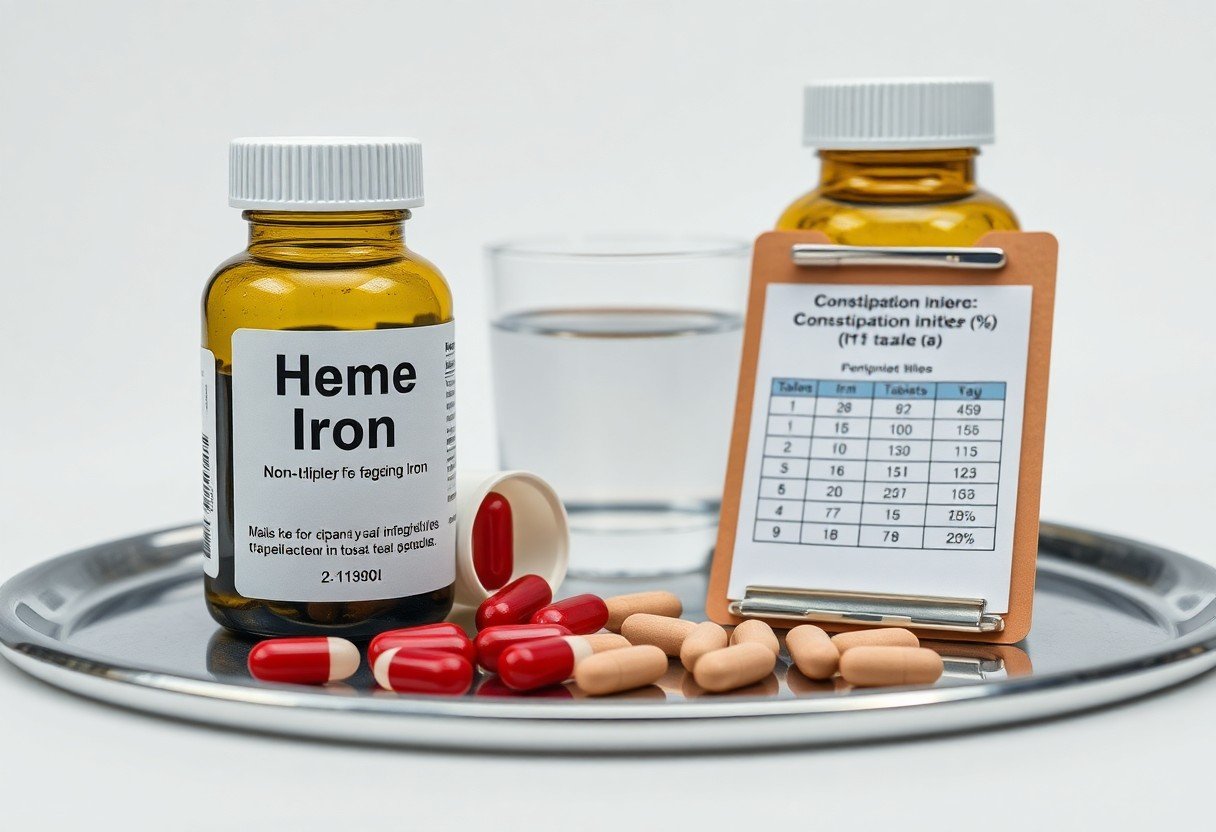
Trials comparing heme and non‑heme iron show varied tolerability; you should note that several randomized studies report lower constipation with heme iron while ferrous sulfate often causes more GI complaints. See Do Iron Supplements Cause Constipation? Guide for practical tips.
Comparative Analysis of Ferrous Sulfate and Heme Iron Polypeptide
Compared to ferrous sulfate, you may experience fewer gastrointestinal complaints on heme iron polypeptide while maintaining similar hematologic response and often improved short‑term tolerability.
Key differences
| Ferrous Sulfate | Heme Iron Polypeptide |
|---|---|
| Higher frequency of constipation and abdominal discomfort | Lower reported constipation rates; better GI tolerability |
| Widely available and low cost | Often better tolerated but more expensive |
Statistical Incidence of Gastrointestinal Side Effects
Meta-analyses report you are more likely to experience GI side effects on oral non‑heme iron, with pooled studies showing increased incidence of constipation and nausea versus heme preparations.
Across randomized trials and observational cohorts you should expect variability: side‑effect rates depend on dose, formulation, and baseline GI sensitivity; some studies report a two‑fold rise in constipation with high‑dose ferrous sulfate while others find minimal difference, so you should balance tolerability against cost and access when choosing therapy.
Factors Influencing Supplement Efficacy
Several factors determine how heme versus non-heme iron affect you, with formulation, single-dose size, co-ingested foods, gut motility, and baseline iron status all altering absorption and the likelihood of constipation.
- heme iron
- non-heme iron
- constipation
- absorption
- dosage
- mucosal block
- dietary enhancers
- dietary inhibitors
The Role of Dietary Enhancers and Inhibitors
Dietary vitamin C and meat-based heme boost non-heme uptake, while calcium, phytates and polyphenols lower absorption, so you should time supplements away from high‑inhibitor meals to reduce side effects and improve efficacy.
Dosage Frequency and the Mucosal Block Effect
Daily large doses can trigger the mucosal block, cutting absorption and worsening gastrointestinal symptoms, so you may see fewer issues by using smaller doses or spacing doses to lower constipation risk.
This single adaptive mechanism-enterocyte regulation that downregulates transporters after big oral doses-means you should consider alternate-day dosing or lower single doses, as studies show these approaches often increase fractional iron uptake and produce reduced constipation, while heme iron tends to be less affected by the block and may be better tolerated for some people.
Clinical Recommendations for Patient Compliance
Identifying Low-Constipation Formulations
Choose formulations such as ferrous bisglycinate or heme iron polypeptide, which tend to cause less bowel irritation; you should avoid high-dose ferrous sulfate if you have a constipation history.
Optimal Timing and Administration Protocols
Take iron on an empty stomach when you tolerate it, or with a small snack to reduce nausea; separate dosing from calcium, antacids, and certain antibiotics by at least two hours to preserve absorption.
Scheduling iron on alternate days (every other morning) often improves absorption and reduces constipation and nausea. You can pair doses with 50-100 mg vitamin C to increase uptake, and avoid taking iron within two hours of calcium, antacids, or PPIs. If side effects persist, consult your clinician about lower dose or switching to a heme formulation.
Monitoring Ferritin Levels While Minimizing Distress
Check ferritin 4-8 weeks after starting therapy and plan your blood draws alongside routine labs to reduce visits; ferritin below 30 ng/mL usually indicates iron deficiency requiring action.
When tracking ferritin, you should aim for incremental rises rather than frequent draws; consider point-of-care finger-prick tests or coordinate sampling with other appointments to reduce distress, and contact your clinician if ferritin remains low despite adherence or if you experience severe GI side effects.
Final Words
On the whole, you’ll find non-heme iron supplements cause more constipation than heme iron for many people, but dose, form, and personal sensitivity shape results. You can reduce symptoms by choosing lower doses or liquid/slow-release formulations, increasing fiber and fluids, and discussing options with your clinician.
FAQ
Q: What are heme and non-heme iron and how do they differ?
A: Heme iron comes from animal sources and is carried within hemoglobin and myoglobin, while non-heme iron is found in plant foods and most oral iron supplements. Heme iron uses a separate absorption pathway in the gut that is less affected by dietary inhibitors, so a higher fraction is absorbed per milligram. Non-heme iron absorption is influenced by phytates, calcium, polyphenols (tea, coffee), and enhancers like vitamin C. Typical supplement forms are non-heme (ferrous sulfate, ferrous fumarate, ferrous gluconate, iron bisglycinate); heme iron supplements exist but are less common and more costly.
Q: Which type of iron causes less constipation?
A: Heme iron supplements and well-tolerated non-heme forms (for example, iron bisglycinate) tend to cause fewer gastrointestinal side effects, including constipation, than traditional non-heme ferrous salts like ferrous sulfate. Gastrointestinal side effects are dose-dependent, so equal elemental doses of ferrous sulfate are more likely to produce constipation than lower doses of a more bioavailable form. Clinical studies and patient reports generally show lower rates of GI intolerance with heme iron preparations, although direct head-to-head data are limited. Individual response varies, so some people may still experience constipation with any iron type.
Q: How do formulation and dosing choices change constipation risk?
A: Immediate-release ferrous salts deliver a high elemental iron load at once and more often produce constipation and abdominal discomfort. Chelated forms such as ferrous bisglycinate and heme iron polypeptide release iron in a way that often reduces mucosal irritation and GI side effects. Alternate-day dosing or taking lower single doses can improve absorption and reduce side effects because hepcidin-mediated iron regulation limits uptake after high daily doses. Taking iron with a small amount of food reduces stomach upset but can lower absorption; pairing with vitamin C increases non-heme iron uptake without increasing constipation risk.
Q: What practical steps reduce constipation while taking iron supplements?
A: Increase fluid intake and dietary soluble fiber (fruits, oats, psyllium) to soften stools and improve transit time. Use stool softeners (docusate) or gentle osmotic laxatives (polyethylene glycol) short term if constipation persists, after checking with a clinician or pharmacist. Consider switching formulation to iron bisglycinate or a heme iron product, lowering the dose, or using alternate-day dosing to reduce GI effects. Avoid taking iron with calcium-rich foods, tea, coffee, or high-fiber meals at the same time; separate by two hours when possible.
Q: Who should consider heme iron vs non-heme iron and what are safety considerations?
A: People who tolerate ferrous salts poorly despite dose adjustments or who require rapid repletion with fewer side effects may be candidates for heme iron or chelated non-heme forms, subject to cost and availability. Pregnant people and those with significant anemia should make formulation choices with their healthcare provider, since dosing needs and safety vary. Monitor hemoglobin and ferritin during therapy to guide duration and dose. Overdosing on iron is dangerous, so follow prescribed doses and seek medical advice before combining supplements or using high-dose products.