
Just avoid taking D3 alone: you risk dangerous calcium buildup and toxicity, while pairing D3 with K2 directs calcium to bones for improved bone and heart health, so you should consult a clinician before supplementing.
The Biological Synergy: Why D3 and K2 are Inseparable
You depend on D3 to increase calcium absorption, but without K2 that calcium can be misdirected into soft tissues; taking D3 alone raises the risk of arterial calcification, so pairing with K2 is necessary to avoid harm and ensure bone deposition.
The Calcium Paradox: Understanding Mineral Distribution
Calcium absorbed under D3’s influence can accumulate in arteries when K2 is absent; K2 redirects calcium into bone and away from vessels, preventing the dangerous mismatch created by isolated D3 supplementation.
Synergistic Activation of Vitamin K-Dependent Proteins
K2 carboxylates osteocalcin and matrix Gla protein (MGP), enabling them to bind calcium; without K2, D3-driven calcium uptake remains unregulated, increasing cardiovascular risk.
When you increase D3, intestinal calcium and serum levels rise, and K2-dependent gamma-carboxylation activates osteocalcin to deposit calcium into bone while MGP inhibits vascular calcification; clinical data link combined D3+K2 to better bone density and lower calcification markers, whereas isolated D3 can accelerate harmful calcium deposits.
Vitamin D3: The Catalyst for Calcium Absorption
Vitamin D3 directs calcium into your intestines for absorption by upregulating transport proteins, but if you take it alone you risk soft-tissue calcium deposition, so pairing with K2 ensures calcium is guided into bone where it belongs and reduces the danger of vascular calcification.
Mechanisms of Intestinal Mineral Transport
Intestinal TRPV6 channels and calbindin expression increase when you have active D3, raising dietary calcium uptake, but without K2-activated carboxylation that absorbed calcium can circulate and endanger soft tissues.
Beyond Bones: D3’s Impact on Systemic Immunity
Immune cells use the vitamin D receptor, so you gain strengthened pathogen defense and tempered inflammation with proper D3, yet excessive D3 without K2 or monitoring can dysregulate immunity and harm tissues.
Clinically, D3 boosts macrophage antimicrobial peptides and influences T-cell balance so you may experience fewer infections and reduced chronic inflammation when levels are correct; pairing with K2 ensures calcium-handling proteins like osteocalcin are activated, which minimizes the risk of ectopic or vascular calcification if you supplement.
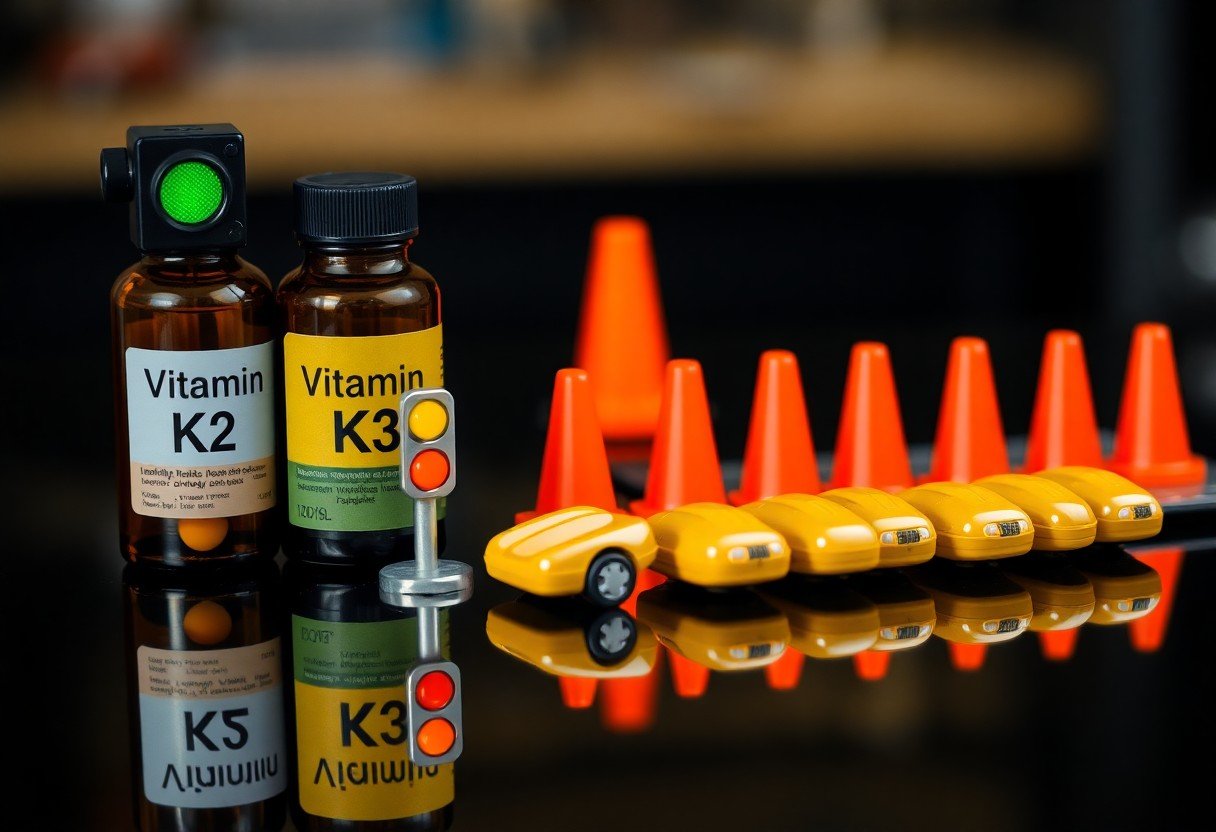
Vitamin K2: The Essential Traffic Controller
Vitamin K2 directs calcium traffic so you deposit mineral into bone instead of soft tissues; skipping K2 when taking D3 raises the chance of arterial calcification and undermines bone remodeling.
Activating Osteocalcin for Structural Bone Integrity
Osteocalcin requires K2-driven carboxylation for you to lock calcium into the bone matrix, so D3 alone can leave bone-building proteins inactive and weaken bone integrity.
Matrix Gla Protein (MGP) and the Prevention of Arterial Stiffness
MGP must be K2-activated to stop calcium from settling in arteries, so taking D3 without K2 can increase your risk of arterial stiffness and calcification.
You must ensure K2 activates MGP so calcium is shunted away from vessel walls and incorporated safely, otherwise D3-driven rises in serum calcium can accelerate vascular calcification. Clinical studies link elevated uncarboxylated MGP (dp-ucMGP) with greater arterial stiffness, making K2 status a meaningful cardiovascular marker. Monitoring dp-ucMGP or choosing MK-7 alongside D3 gives you a clear strategy to reduce the danger of calcification while preserving bone health.
The Clinical Risks of Taking Vitamin D Alone
You increase risk of hypercalcemia and ectopic calcification when you boost vitamin D without vitamin K2; research outlines how D-driven calcium mobilization requires K-dependent proteins to direct calcium safely-see The Synergistic Interplay between Vitamins D and K for Bone ….
The Hazard of Ectopic Calcification in Soft Tissues
Calcification in arteries and kidneys can follow unchecked vitamin D because uncarboxylated proteins fail to prevent calcium deposition; without K2 you face dangerous soft-tissue calcification.
Hypercalcemia and the Importance of K2 Buffering
High vitamin D increases intestinal calcium uptake and bone resorption, so lacking K2 leaves you prone to symptomatic hypercalcemia such as fatigue, nausea, and arrhythmias.
K2 activates matrix Gla protein and osteocalcin to carboxylate and sequester calcium into bone; when you supplement D without K2 those proteins remain inactive, raising serum calcium and promoting vascular calcification-clinically you can see elevated phosphate, suppressed PTH, kidney stones, and cardiac rhythm disturbances, so pairing doses reduces those risks.
Identifying and Addressing Modern Deficiencies
You face widespread shortfalls in D3 and K2 from lifestyle and diet changes; pairing is imperative because D3 without K2 can drive calcium into soft tissues, raising the risk of vascular calcification, while the combo directs calcium into bone and supports proper mineralization.
Why Soil Depletion and Food Processing Lead to K2 Scarcity
Modern intensive farming and heavy processing remove menaquinone sources from your diet, leaving you with low K2 intake unless you consume fermented foods, organ meats, or supplement K2 alongside D3 to prevent harmful calcium misplacement.
Testing and Monitoring Your Serum Vitamin Levels
Measure serum 25(OH)D and K2-status markers like dp-ucMGP or undercarboxylated osteocalcin to confirm balance and avoid excess free calcium and arterial calcification.
Aim for serum 25(OH)D around 40-60 ng/mL, retest 8-12 weeks after changing supplementation, and track dp-ucMGP or ucOC so you can adjust doses and correct deficiencies without pushing D3 into a state that risks arterial calcification.
Conclusion
Presently you should avoid taking D3 or K2 alone; D3 boosts calcium absorption while K2 directs calcium into bone and away from arteries, so pairing them or consulting a clinician reduces the risk of improper calcium deposition and optimizes bone health.
FAQ
Q: What do vitamin D3 and vitamin K2 do, and how do they interact?
A: Vitamin D3 increases intestinal absorption of calcium and phosphate and raises serum calcium availability for bone remodeling and other processes. Vitamin K2 activates proteins such as osteocalcin and matrix Gla protein (MGP) through carboxylation, directing calcium into bone and preventing calcium deposition in arteries and soft tissues. The two nutrients work as a pair: D3 makes calcium available, K2 ensures it is used properly.
Q: Why should you avoid taking vitamin D3 alone?
A: Taking D3 alone can increase circulating calcium without the regulatory guidance that K2 provides, which can raise the risk of vascular and soft-tissue calcification over time. Clinical and mechanistic studies link unopposed D-driven increases in calcium with greater MGP inactivity, a known factor in arterial calcification. Supplementing D3 without adequate K2 also leaves bone-related proteins under-carboxylated, reducing bone mineralization efficiency.
Q: What are safe dosing and testing recommendations when supplementing D3 and K2?
A: Test serum 25-hydroxyvitamin D (25(OH)D) before and during supplementation; a common target range is about 30-50 ng/mL (75-125 nmol/L), adjusted per clinician guidance. Typical maintenance doses of D3 are 1,000-4,000 IU/day for most adults; higher doses may be used short-term under supervision. For vitamin K2, MK-7 at 90-200 mcg/day is commonly used because of its long half-life; MK-4 requires higher mg-range dosing if chosen. Monitor serum calcium, PTH, and magnesium when using higher D3 doses.
Q: Who should avoid K2 or use extra caution when taking these supplements?
A: People on vitamin K antagonist anticoagulants such as warfarin must consult their prescribing clinician before starting K2, since K2 can alter INR and clotting control. Individuals with granulomatous diseases (sarcoidosis, tuberculosis) or certain lymphomas that increase endogenous vitamin D activity should avoid high-dose D3 without specialist oversight due to hypercalcemia risk. Anyone with kidney stones or hypercalcemia should seek medical evaluation before supplementing high-dose D3.
Q: How should I choose and take a D3+K2 product for best absorption and safety?
A: Choose a combined D3+K2 supplement from a reputable manufacturer with third-party testing for potency and purity. Prefer K2 in the MK-7 form for once-daily dosing unless a clinician recommends MK-4. Take the supplement with a meal that contains fat to improve fat-soluble vitamin absorption. Include adequate dietary magnesium (often 200-400 mg/day from food or supplement) because magnesium is required for vitamin D metabolism and avoids functional D resistance. Keep a clinician informed and retest 25(OH)D, calcium, and relevant labs after dose changes.