
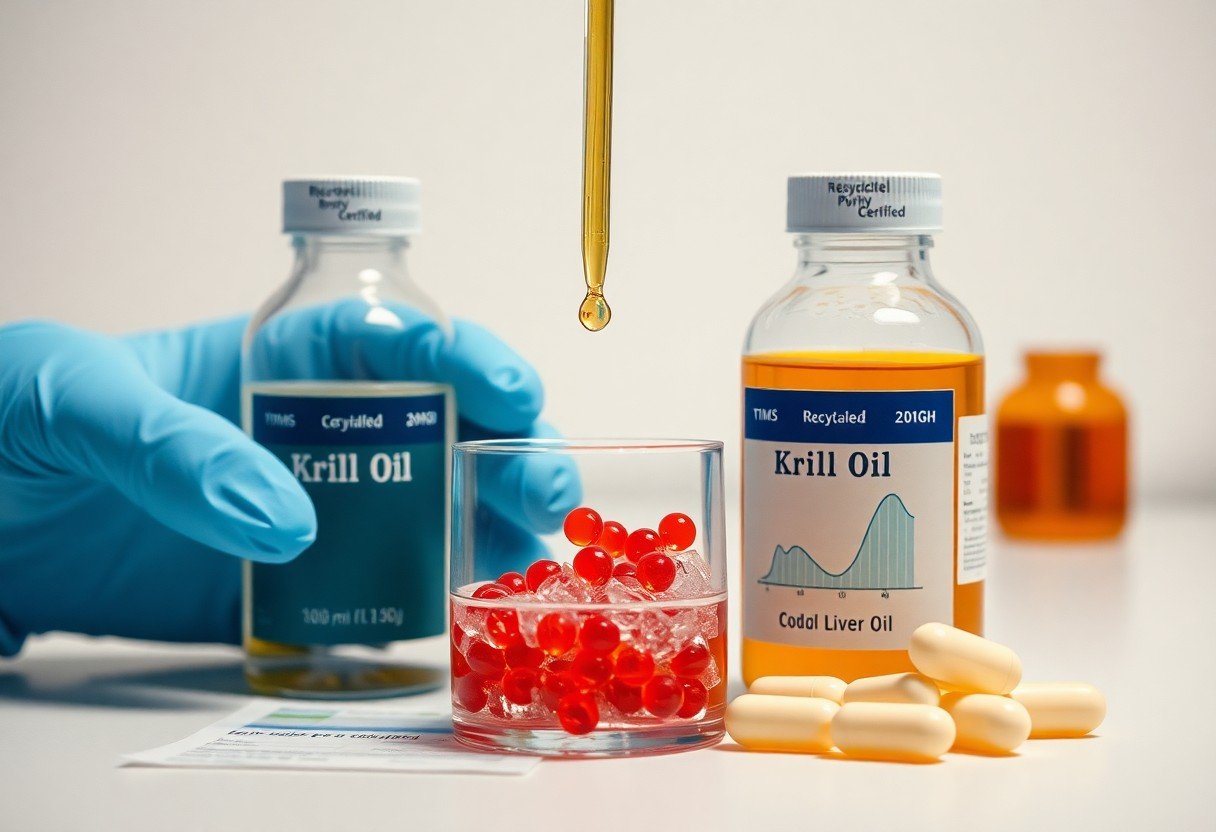
Most users weigh potency, safety, and absorption when choosing between krill oil and cod liver oil; you should compare krill’s better absorption and antioxidant astaxanthin against cod liver oil’s higher EPA/DHA but risk of vitamin A toxicity.
The Fundamentals of Omega-3 Fatty Acids
You already follow the comparison; omega-3s are long-chain polyunsaturated fatty acids mainly as EPA and DHA, obtained in different molecular forms from krill or cod liver oil and affecting absorption and function in your body.
Distinguishing Between EPA and DHA
EPA mainly modulates inflammation and vascular responses, while DHA concentrates in neural and retinal tissue; you should weigh EPA’s anti-inflammatory advantages against DHA’s neuroprotective importance when selecting a supplement.
The Role of Essential Fatty Acids in Human Physiology
Cells incorporate omega-3s into membranes to alter fluidity, signaling and gene expression, so you depend on them for cardiovascular, immune and cognitive support while watching for increased bleeding risk at very high doses.
Tissues such as brain, retina and heart preferentially retain DHA, and you will see DHA enhance synaptic function and visual development while EPA shifts eicosanoid production toward less inflammatory mediators; choose oils that deliver balanced EPA/DHA ratios and consult a clinician if you take anticoagulants because high intake can raise bleeding risk even as it offers cardioprotective and anti-inflammatory benefits.
Krill Oil: Composition and Unique Properties
Krill oil delivers omega-3s mainly bound to phospholipids, which helps you incorporate EPA and DHA into cell membranes more efficiently than triglyceride-based oils and provides naturally occurring astaxanthin that stabilizes the oil; see The Difference Between Salmon Oil, Omega-3 Fish Oil … for source comparisons.
The Phospholipid Structure and Cellular Integration
Phospholipids in krill oil improve how you absorb omega-3s, promoting faster cell membrane incorporation and more efficient cellular signaling at lower doses than many standard fish oils.
Astaxanthin: The Natural Antioxidant Defense
Astaxanthin in krill oil gives it a red hue and provides antioxidant protection, helping you limit fatty acid oxidation and maintain product potency during storage.
Concentrations of astaxanthin vary by product, so you should check labels and third-party tests to confirm levels; you benefit from reduced rancidity and added oxidative stability, which helps protect both the oil and your cells, while proper testing helps you avoid products with insufficient antioxidant content or contamination risks.
Cod Liver Oil: A Heritage of Nutrient Density
Cod liver oil has been prized for its concentration of EPA/DHA plus naturally occurring vitamins A and D3, offering you potent anti-inflammatory and bone-health support while also requiring caution because of vitamin A toxicity risk if dosed improperly.
Naturally Occurring Vitamin A and Vitamin D3
You get bioavailable vitamins A and D3 alongside omega-3s to support vision, immunity and calcium metabolism; monitor intake because excess vitamin A can cause toxicity, so follow recommended limits and consult your clinician.
Processing Methods and Retaining Potency
Processing techniques determine purity and omega-3 potency; look for molecular distillation or cold-pressed extraction so you avoid contaminants while preserving vitamins, and ensure third-party testing confirms label claims before you buy.
Manufacturers use molecular distillation, low-temperature filtration and inert-gas blanketing to minimize heat and oxygen exposure so you retain EPA/DHA levels and heat-sensitive vitamins; aggressive solvent extraction or high-heat deodorization can strip vitamin D3 and A, increase oxidation (rancidity), and create safety concerns, so choose brands with clear processing disclosures and independent purity certifications.
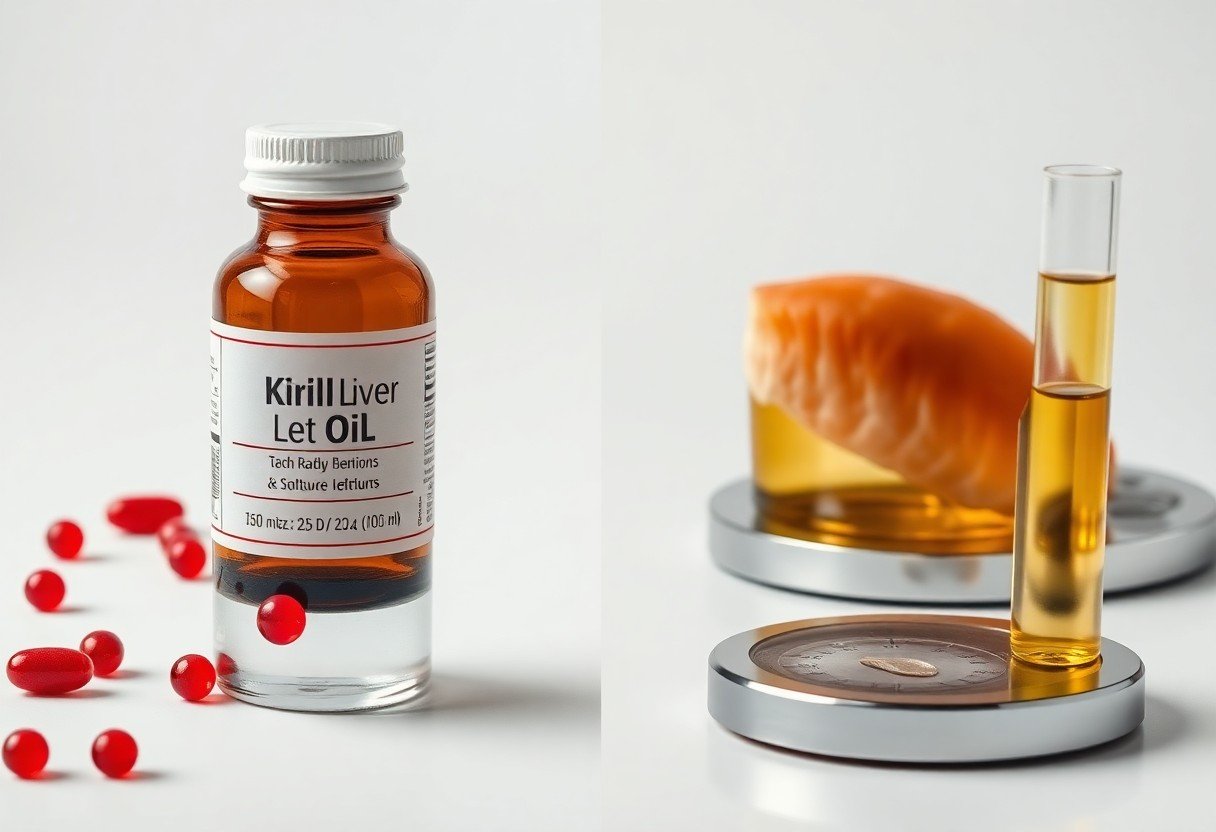
Comparative Bioavailability and Metabolic Efficiency
Quick comparison
| Krill Oil | Cod Liver Oil |
|---|---|
| Phospholipid-bound EPA/DHA that integrate into your cell membranes more readily, improving delivery to tissues you target. | Mostly triglyceride-bound EPA/DHA; your digestion must re-esterify these for uptake, which is effective but less direct. |
| Higher bioavailability per mg; efficient membrane delivery often means you need smaller doses. | Lower per-mg bioavailability; you may require larger doses to achieve the same blood saturation. |
| Contains astaxanthin, providing antioxidant support that protects the oils you consume. | Contains vitamins A and D that offer benefits but can create a vitamin A toxicity risk at high intakes. |
| EPA+DHA concentration per capsule varies, so you should check labels and adjust accordingly. | Higher absolute EPA+DHA in some preparations, yet you must monitor cumulative vitamin intake when dosing. |
Phospholipids vs. Triglycerides: Which Absorbs Better?
Krill phospholipids deliver EPA/DHA more directly into your cell membranes than triglyceride forms, so you may see higher immediate absorption, while cod liver triglycerides still provide effective uptake but often require larger quantities.
Dosage Requirements for Optimal Blood Saturation
Typical dosing suggests you need about 250-500 mg combined EPA+DHA daily for baseline health, but 1-3 g daily is commonly used to raise blood saturation depending on form and baseline levels.
Individual factors like your baseline omega-3 index, body weight, diet, and bleeding-risk medications determine exact needs, so you should adjust intake rather than follow a blanket dose. Watch cod liver oil because its vitamin A can exceed safe limits – avoid high daily doses if pregnant or taking additional vitamin A. You can confirm adequacy with an omega‑3 index test, aiming for ≈8% or higher for cardioprotective effects.
Safety, Purity, and Environmental Considerations
Heavy Metal Accumulation and Molecular Distillation
Metals in marine oils can accumulate, so you should choose products that use molecular distillation and third-party testing to remove PCBs, dioxins, and heavy metals, reducing your long-term exposure while preserving EPA/DHA potency.
Sustainability of Antarctic Krill vs. North Atlantic Cod
Krill harvesting is governed by CCAMLR, but you should check for catch limits and ecosystem impact; North Atlantic cod often suffers from overfishing, so prefer MSC-certified or transparently sourced oils.
You should weigh ecological roles: Antarctic krill forms the base of a seasonal food web supporting whales, seals, and penguins, so overharvest can cause cascading impacts and reduced prey availability; North Atlantic cod endured historical stock collapses from intense fishing, with recovery depending on rigorous quotas, habitat protection, and effective traceability from fishery to bottle.
Omega-3 Fish Oil – Krill Oil vs. Cod Liver Oil – Which Is Superior?
Cardiovascular Support and Lipid Management
Studies show you can reduce triglycerides with both krill and cod liver oil; krill may raise HDL slightly while cod liver oil supplies vitamins A and D. Monitor for bleeding risk at high doses and expect triglyceride reductions as the main clinical benefit.
Cognitive Function and Joint Inflammation Reduction
Research indicates you may see reduced joint pain and modest cognitive gains from EPA/DHA; krill’s phospholipids can improve uptake, while cod liver oil adds vitamins that support brain health but raise intake considerations.
You should prioritize EPA for joint symptoms and DHA for memory and processing speed; krill’s phospholipid-bound omega-3s may offer improved brain delivery, whereas cod liver oil supplies vitamin D for neural support but carries risk of vitamin A toxicity if you exceed recommended amounts, especially in pregnancy or when combining supplements.
Identifying the Best Option for Your Specific Needs
Consider your goals: if you want joint relief and easier absorption, krill often fits; if you need vitamins A and D, cod liver oil may be preferable. Watch for medication interactions and personal safety limits.
Assess your diet, pregnancy status, and medications before choosing; krill can be better for absorption and antioxidant protection, while cod liver oil delivers nutrient-dense vitamins that may cause harm in excess. Discuss with your clinician to balance benefit versus risk, especially if you take blood thinners or prenatal vitamins.
Conclusion
From above, you can see krill oil provides higher bioavailability and antioxidant astaxanthin, while cod liver oil delivers vitamins A and D; you should prefer krill for EPA/DHA absorption, choose cod liver oil if you need vitamins, and consult your clinician for dosing.
FAQ
Q: What are the primary compositional differences between krill oil and cod liver oil?
A: Krill oil delivers EPA and DHA largely bound to phospholipids and contains the antioxidant astaxanthin, which gives it a reddish color. Cod liver oil provides EPA and DHA primarily in triglyceride form and also supplies preformed vitamin A (retinol) and vitamin D in amounts that vary by product. Typical krill supplements contain lower absolute amounts of EPA+DHA per capsule than concentrated fish or cod liver oils, so label dosing matters when comparing total omega‑3 intake.
Q: How do krill oil and cod liver oil compare for absorption and bioavailability?
A: Phospholipid-bound omega‑3s in krill oil may integrate into cell membranes more readily in some studies, which can translate to similar blood level increases at lower doses in selected trials. Triglyceride-bound omega‑3s in cod liver oil are well absorbed, and converting to ethyl ester or re‑esterified triglyceride forms can affect uptake. Clinical results are mixed, so the practical determinant is the EPA+DHA dose and product quality rather than oil source alone.
Q: What safety issues and nutrient considerations should I know about?
A: Cod liver oil contains preformed vitamin A and can supply high vitamin A doses that raise the risk of toxicity or fetal harm during pregnancy if taken in excess; checking label IU per serving is necessary. Krill oil contains negligible vitamin A and provides astaxanthin, but it is derived from shellfish and can trigger allergic reactions in people with shellfish allergy. Both product types can interact with blood thinners and should be third‑party tested for contaminants such as PCBs and heavy metals.
Q: Are there environmental or sustainability differences between krill oil and cod liver oil?
A: Antarctic krill form the base of a sensitive food web, so harvesting practices and quotas receive close scrutiny; some krill fisheries carry independent sustainability certifications while others do not. Cod liver oil is typically a byproduct of cod fisheries, and sustainability depends on regional cod stock management and fishing methods. Choosing reputable brands that publish sourcing practices and third‑party certifications reduces environmental risk.
Q: Which oil is superior for specific health goals like heart, brain, or joint health, and what dosing should I use?
A: For general cardiovascular health, evidence supports targeting a defined EPA+DHA dose (commonly 250-1000 mg/day for maintenance) rather than preferring one source; prescription or high‑dose formulas used for triglyceride lowering provide much higher combined doses (1-4 g/day) under medical supervision. For brain support and pregnancy, a reliable DHA supply matters and cod liver oil adds vitamin D but may deliver excess vitamin A, so pregnancy‑appropriate DHA supplements or algal DHA are safer when avoiding retinol. For joint pain and inflammation, some trials report symptom benefit with krill oil at modest doses, but overall evidence is limited and dose‑dependent. Consult a clinician to match product, EPA+DHA dose, and safety for individual medical conditions and medications.