

There’s evidence that sipping diluted apple cider vinegar before meals can aid digestion; undiluted ACV may erode tooth enamel and worsen reflux, so you should dilute and limit intake.
The Biological Mechanism of Apple Cider Vinegar
The role of acetic acid in regulating stomach pH
Acetic acid modestly lowers your stomach pH, which can improve protein breakdown and reduce postprandial bloating for some people; small doses before meals may help digestion, but excess acid can irritate the esophagus or worsen reflux, so dilute and test your tolerance.
Activation of digestive enzymes and bile production
Vinegar stimulates release of digestive enzymes and bile, helping you break down fats and carbohydrates more efficiently and easing post-meal heaviness; begin with small doses because increased bile or enzyme activity may aggravate gallbladder pain in susceptible individuals.
When you take diluted apple cider vinegar before meals, the mild acidity can trigger enteroendocrine signals-especially cholecystokinin-to prompt bile release and pancreatic enzyme secretion, which enhances emulsification of fats and protein digestion; if you have gallstones or pancreatitis history, however, stimulating bile or enzyme output can trigger pain or complications, so discuss use with your clinician.
Benefits of Pre-Meal Consumption
Optimizing the stomach environment for nutrient breakdown
You can increase stomach acidity before eating by taking a small teaspoon of apple cider vinegar diluted in water, which may help break down proteins and improve absorption. Be aware that higher acidity can aggravate reflux for some people; dilute thoroughly and avoid if you have active esophagitis.
Influence on appetite suppression and metabolic signaling
Small pre-meal doses of apple cider vinegar can slow gastric emptying, helping you feel fuller and potentially reducing calorie intake. Evidence suggests modest drops in post-meal blood sugar, but effects vary and you should monitor if you use diabetes medications.
Studies show acetic acid delays gastric emptying and boosts satiety signaling, so you may naturally eat less and experience reduced postprandial glucose spikes; if you take insulin or sulfonylureas, watch for hypoglycemia and discuss pre-meal dosing with your clinician before making it routine.
Benefits of Post-Meal Consumption
Attenuating postprandial blood glucose spikes
Research shows that if you drink diluted apple cider vinegar after a carbohydrate-heavy meal you may see reduced post-meal blood glucose spikes, which can improve insulin response; monitor levels closely if you use glucose-lowering medications.
Reducing symptoms of bloating and functional dyspepsia
Some people report that a small, diluted dose of ACV after eating eases bloating and discomfort by supporting digestion, but you should avoid it if you have active reflux or esophagitis because symptoms can worsen.
If you try ACV for bloating, start with about one teaspoon to one tablespoon in a full glass of water and assess how you feel; the acetic acid may slow gastric emptying and boost digestive enzymes, which helps some people, while it can worsen reflux, erode tooth enamel, and interact with medications like insulin, diuretics, or digoxin-so drink diluted, use a straw, rinse your mouth afterward, and consult your clinician if you take prescription drugs.
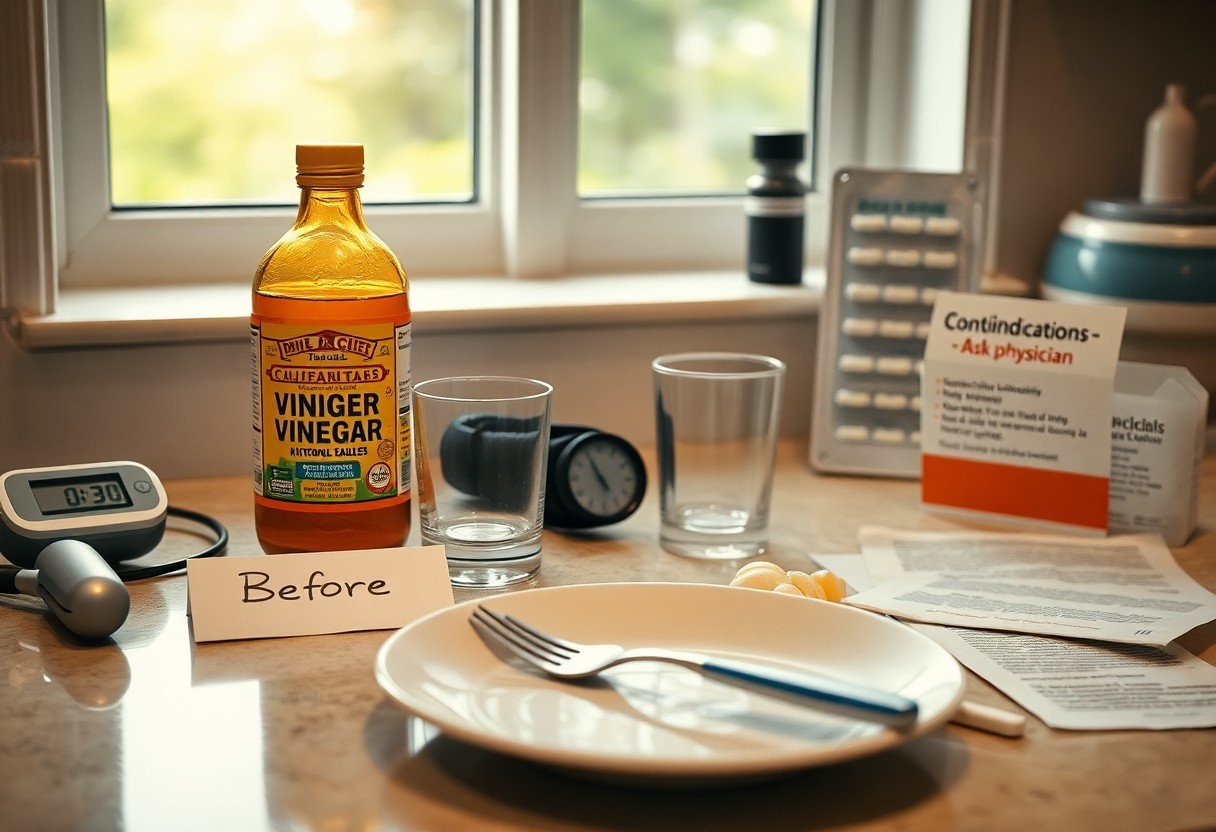
Potential Risks and Contraindications
Impact on potassium levels and medication interactions
Using apple cider vinegar can worsen low potassium if you take diuretics, insulin, or digoxin, and may alter blood sugar; check with your prescriber because dangerous drug interactions are possible.
Critical considerations for individuals with gastroparesis
If you have gastroparesis, apple cider vinegar may further delay gastric emptying and increase risk of nausea, vomiting, and aspiration; avoid taking it before meals and consult your clinician.
You should avoid apple cider vinegar when gastroparesis causes unpredictable emptying, since the acid can irritate the stomach and slow motility, raising the chance of severe vomiting and aspiration; this can also complicate blood sugar control if you use insulin or other diabetes medications, so arrange a supervised plan with your specialist before trying it.

Optimizing Your Regimen for Results
Selecting raw versus filtered vinegar with “The Mother”
Choose raw apple cider vinegar with “The Mother” for enzymes and probiotics, while filtered vinegar lacks these benefits; you should dilute 1-2 teaspoons in water to reduce acid erosion that can damage teeth and the esophagus.
Identifying the ideal 20-minute consumption window
Time your intake about 20 minutes before meals to help blunt postprandial glucose and aid digestion; you should take ACV diluted and avoid it if you have reflux to prevent symptom worsening.
When you take ACV roughly 20 minutes before eating, it may slow gastric emptying and modestly lower meal-time blood sugar, especially with high-carb meals; start with 1 teaspoon in 250 ml water, assess effects, and do not increase if you experience worsening reflux or throat pain since acid exposure can worsen reflux and damage enamel.
Monitoring individual tolerance and adjusting dosage frequency
Begin with a low dose once daily, tracking symptoms, bowel changes, and reflux; increase slowly to twice daily only if tolerated, and stop if you experience chest pain, severe heartburn, or tooth sensitivity.
If you notice increased heartburn, throat irritation, or signs of dental erosion, reduce frequency or stop and consult your clinician; also monitor blood sugar and potassium if you’re diabetic or on diuretics, and keep a two-week diary to identify patterns and adjust dose based on objective benefits versus side effects.
To wrap up
With this in mind, you can try small, diluted apple cider vinegar before meals to ease digestion, monitor symptoms, and avoid it if you have reflux or tooth sensitivity; consult your clinician for personalized advice.
FAQ
Q: Does apple cider vinegar (ACV) improve digestion?
A: Some small studies and laboratory research suggest acetic acid in ACV can increase gastric acidity and slow carbohydrate absorption, which may reduce post-meal blood sugar spikes and help break down food for people with low stomach acid. Clinical evidence for generalized digestion improvement is limited, and outcomes vary by individual. People with normal or high stomach acid or reflux may experience worse heartburn or bloating after ACV.
Q: Should ACV be taken before or after meals for digestion benefits?
A: For lowering postprandial blood glucose and potentially aiding digestion when stomach acid is low, taking ACV before or during a carbohydrate-containing meal is most commonly studied. For heartburn, reflux, or active esophagitis, avoid taking ACV around meals because it can worsen symptoms. Personal response differs, so start with a small dose before a meal to test tolerance.
Q: What is a safe preparation and dose to try?
A: Mix 1 teaspoon to 1 tablespoon of ACV in at least 8 ounces (240 mL) of water for an initial trial; if tolerated, the dose can be increased up to 2 tablespoons diluted in water once or twice daily. Sip through a straw to reduce contact with teeth, rinse the mouth with plain water afterward, and wait about 30 minutes before brushing teeth. Never ingest ACV undiluted and avoid exceeding commonly used amounts without medical supervision.
Q: Who should avoid ACV or consult a healthcare provider before use?
A: People taking insulin or other glucose-lowering medications, potassium-wasting diuretics, digoxin, or lithium should consult a clinician because ACV can alter blood sugar or potassium levels and interact with medications. Individuals with gastroparesis, severe gastroesophageal reflux disease, active peptic ulcers, a history of esophageal injury, or significant dental erosion should avoid ACV unless cleared by their provider.
Q: What side effects and interactions should I watch for?
A: Common side effects include stomach upset, throat irritation, and enamel erosion if undiluted or used frequently. Rarely, chronic excessive use can lead to low potassium and metabolic disturbances. Monitor for symptoms of hypoglycemia if you have diabetes and are using glucose-lowering drugs. Stop use and seek medical advice for severe chest or throat pain, persistent swallowing pain, dizziness, muscle weakness, or signs of low blood potassium.