
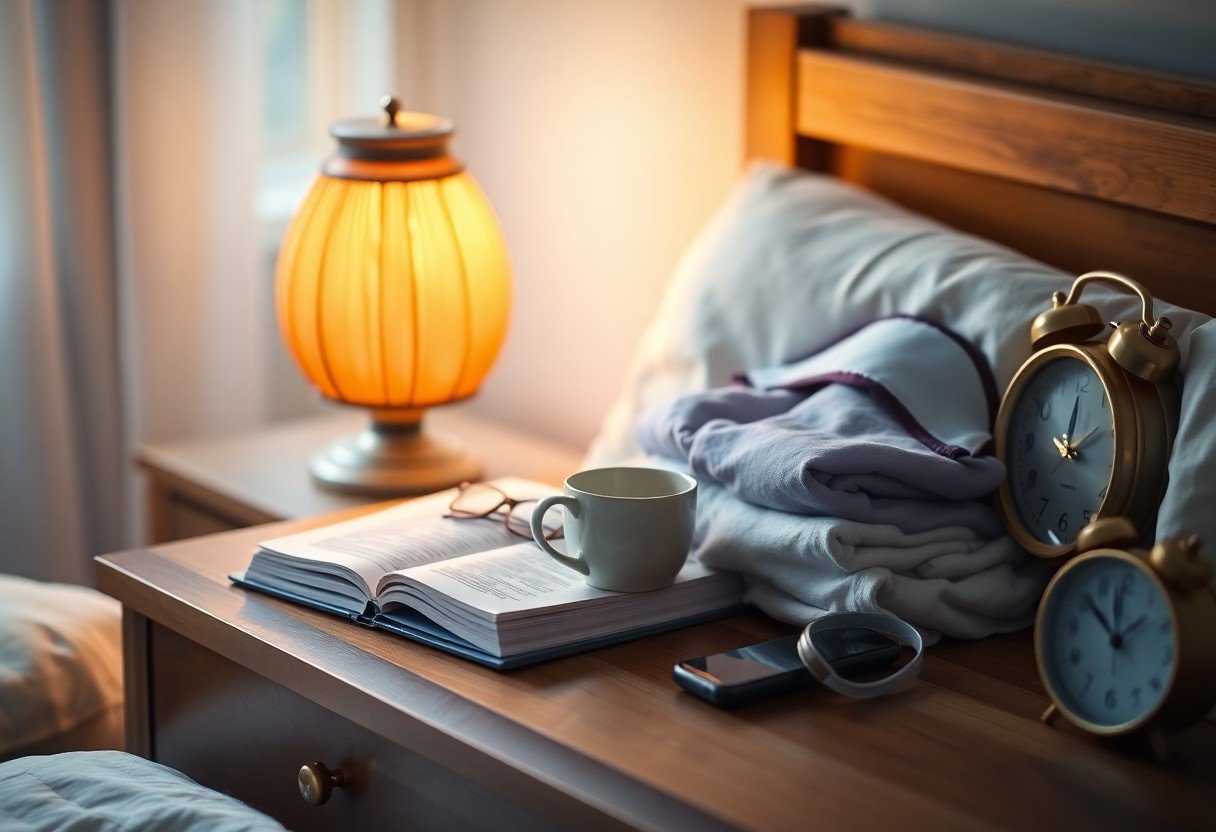
Most people sleep better when they follow a clear, repeatable plan; this post gives you a straight-forward 4-step ritual so you can fall asleep faster and wake more refreshed. Start by setting a consistent bedtime, then cut late caffeine and screens that disrupt melatonin, add a calming wind-down with light stretching and breathwork, and keep your sleep space cool and dark to lock in results you can rely on night after night.
Key Takeaways:
- Use a short, consistent 30-60 minute wind-down with four simple sequential steps (dim lights, put away devices, calming activity, fixed lights-out) to train sleep cues.
- Make each step predictable and calming: reduce light/noise, remove screens, do a low-effort relaxation (reading, breathing), and finish with sleep hygiene for comfort.
- Personalize and iterate: adjust timing and activities to fit your routine or family, simplify when needed, and track what measurably improves sleep.
Understanding the Importance of a Bedtime Ritual
A consistent bedtime ritual trains your brain and body to shift into sleep mode, reducing the time it takes to fall asleep and lowering nighttime awakenings. Most adults need 7-9 hours, and maintaining regular sleep times strengthens your circadian rhythm, improving daytime focus and mood. Small cues-dimming lights, a brief reading habit, or light stretching-produce measurable benefits in sleep continuity and recovery.
How a Routine Enhances Sleep Quality
Rituals create predictable signals that increase melatonin release and lower evening cortisol, helping you fall asleep faster; studies show consistent schedules reduce sleep latency and wake-after-sleep onset. For example, dimming lights 30-60 minutes before bed and avoiding screens can shift your physiological readiness by half an hour or more. When you follow a clear routine, sleep efficiency improves and daytime alertness rises.
Key Factors Affecting Sleep Patterns
Several variables shape your nightly rhythm: nighttime light exposure, room temperature, caffeine and alcohol timing, stress levels, and exercise scheduling all matter. Optimal sleep often occurs with a cool room around 60-67°F (15-19°C), limited evening stimulants, and low evening light to allow melatonin production. Adjusting one factor at a time helps you pinpoint what disrupts your sleep.
- Bedtime ritual
- Sleep quality
- Circadian rhythm
- Thou Sleep consistency
Digging deeper into Key Factors, light suppresses melatonin and can delay sleep onset by 30-60 minutes when screens or bright lamps are used late; caffeine has a median half-life of 5-6 hours, so a late afternoon latte can fragment sleep; vigorous exercise within 1-2 hours of bed often raises core temperature and arousal, while chronic stress elevates nighttime cortisol, reducing slow-wave sleep. You can test changes over 1-2 weeks to see measurable improvements.
- Light exposure
- Room temperature
- Caffeine timing
- Thou Exercise timing
Step 1: Establish a Consistent Sleep Schedule
Set a target bedtime and keep it within a 15-30 minute window most nights so you consistently get 7-9 hours of sleep. You should calculate bedtime by working backward from your desired wake time and track it for two weeks to adjust. Sticking to this plan stabilizes your circadian rhythm, reduces sleep-onset latency, and helps prevent accumulating sleep debt; many people notice easier sleep within 1-2 weeks.
Tips for Setting a Fixed Bedtime
Dim lights and stop screen use 30-60 minutes before bed, swapping scrolling for reading or light stretching. You should avoid caffeine after 2-4 p.m. and finish vigorous workouts at least 3 hours before sleep. Use the same pre-sleep cues-bath, tea, breathing exercises-each night so your body learns the signal. Recognizing that small, consistent shifts (even 15 minutes) compound over weeks makes the schedule stick.
- Set a fixed bedtime within 15-30 minutes nightly
- Limit screens 30-60 minutes before sleep
- Avoid caffeine after 2-4 p.m.
- Use cues like reading, stretching, or dim lighting
- Avoid long naps-keep naps under 20 minutes
The Role of Wake-Up Times
You anchor your sleep by fixing your wake-up time; waking at the same clock time every day trains your sleep-wake cycle. Aim to keep weekend wake times within 30-60 minutes of weekday wake times to prevent circadian drift. If you routinely need 7-9 hours, calculate bedtime from that wake time and avoid extending weekend sleep by more than 1-2 hours to minimize rebound insomnia and extra sleep debt.
For a practical example, pick a sustainable wake time-if it’s 6:30 a.m., aim for lights-out that yields 7-9 hours (roughly 9:30-11:30 p.m.). Get bright morning sunlight within 30 minutes of waking to shift your rhythm, place the alarm across the room to reduce snoozing, and limit naps to 20 minutes to prevent nighttime disruption. If shift work forces variability, keep wake times within a 60-minute range when possible.
Step 2: Create a Relaxing Pre-Sleep Environment
Dim lights, lower stimulation, and give your body clear cues that sleep is next: aim to reduce bright screens 30-60 minutes before bed, use a warm lamp or red-toned bulbs, and practice two simple habits from 4 Easy Nighttime Habits to Feel Energized & Sleep Better to anchor your routine. Strong, consistent cues help you fall asleep faster and sleep deeper.
How to Optimize Your Bedroom for Sleep
Set your temperature between 60-67°F (15-19°C), use blackout curtains to eliminate outside light, and keep noise masked with a white noise machine at ~40-50 dB. Replace your mattress every 7-10 years and choose breathable bedding; these changes commonly reduce awakenings and improve sleep efficiency by measurable margins.
Factors That Disrupt Sleep Environments
Ambient light from streetlights or phones suppresses melatonin and delays sleep onset by about 30-60 minutes; intermittent noise and temperature swings fragment sleep, while active devices keep your brain alert. Addressing each source prevents frequent micro-awakenings and improves total sleep time.
- Temperature: keep bedroom 60-67°F for optimal sleep onset.
- Light: install blackout curtains or use amber-lens glasses in the evening.
- After wind-down: dim lights and avoid screens 30-60 minutes before bedtime.
Traffic and neighborhood noise above WHO guidelines (>40 dB at night) increases awakenings; studies show reducing nocturnal noise by 5 dB raises sleep efficiency. You can measure bedroom sound levels with smartphone apps, add soft furnishings to absorb echoes, and fix HVAC drafts that cause temperature swings. Small, targeted fixes often yield a 10-20% improvement in subjective sleep quality.
- Noise: aim for <40 dB; use soundproofing or white noise if needed.
- Light leaks: seal gaps or use blackout layers around windows.
- After assessment: prioritize fixes that reduce nightly awakenings first.

Step 3: Incorporate Relaxation Techniques
You pick 2-3 methods to use nightly so your body associates them with sleep. Try 4-7-8 breathing for 4 cycles, 10 minutes of progressive muscle relaxation, or a 5-minute guided imagery track; these lower sympathetic arousal and slow heart rate. Perceiving sensations without judgment helps cement the shift into sleep readiness.
- 4-7-8 breathing
- progressive muscle relaxation
- guided imagery
- body scan
Effective Methods for Relaxation
You can prioritize methods with measurable effects: 4-7-8 breathing often reduces heart rate within 60 seconds, progressive muscle relaxation takes 10-15 minutes to drop measurable tension, and guided imagery for 5-12 minutes lowers cortisol in short trials; avoid more than 30 minutes of stimulating practices before bed because of increased arousal risks.
Tips for Mindfulness and Meditation
You should start with 5-10 minutes nightly and progress to 20 if it fits; use a simple breath anchor, label distractions, and return attention rather than chasing thoughts. Many 8-week MBSR-style trials report improved sleep continuity after consistent practice. Perceiving the breath as an anchor accelerates your physiological downshift and trains resilience.
- breath anchor
- body scan
- labeling
- short daily practice
You can practice a 10-minute sequence: 2 minutes of slow breathing at about 6 breaths per minute, 5 minutes of body scan tensing/relaxing major muscle groups, then 3 minutes of open awareness; use an app for timed cues and avoid intense tasks before lying down. Perceiving small shifts in tension signals when your nervous system is ready for sleep.
- 10-minute sequence
- 6 breaths per minute
- app cues
- body scan

Step 4: Limit Screen Time Before Bed
How Screens Affect Your Sleep Cycle
Exposure to blue light from phones, tablets, and TVs suppresses melatonin and shifts your circadian rhythm, delaying sleep onset; studies show screen use within 60-90 minutes of bedtime can delay melatonin by up to 90 minutes and reduce deep sleep. You also get cognitive stimulation from messages and social feeds, which raises arousal and fragments sleep quality, so both light and content matter when you’re winding down.
Tips for Reducing Screen Exposure
Aim to stop bright, interactive screens at least 60 minutes before bed, or 90 if you’re sensitive; enable night mode or use blue-light filters earlier in the evening, but don’t rely on them alone. You can switch to an e-ink reader for reading, set a strict device-free bedroom rule, and use a physical alarm to avoid keeping phones on your nightstand.
- Set a nightly digital curfew of 60-90 minutes of no screens.
- Use Do Not Disturb and schedule night mode to reduce interruptions and blue light.
- Device-free bedroom: charge devices outside the room to prevent night checks.
- After 9pm, place devices in another room to reinforce your device-free bedroom habit.
You can combine small, specific changes: swap streaming for a 10-20 minute relaxing routine, set app timers to lock social feeds after a set hour, and pick e-ink over backlit screens for late reading; studies show behavioral limits reduce nighttime awakenings by measurable amounts. If you travel or work nights, stagger a 60-90 minute wind-down and use blackout curtains to protect your circadian rhythm.
- Use an e-ink reader or paper book to avoid backlight while reading.
- Install apps that enforce a screen curfew and mute nonimperative alerts.
- Choose a physical alarm and create a dedicated device charging spot outside the bedroom.
- After enforcing these steps for a week, track your sleep quality to see improvement and adjust timing.
Additional Tips for Enhancing Your Bedtime Ritual
Keep your bedtime ritual consistent by going to bed and waking up at the same times, and dim lights 30-60 minutes before sleep to support melatonin release. You should limit screens and heavy meals; cooling your room to about 65°F (18°C) improves comfort and sleep quality. Incorporate a 5-10 minute wind-down like gentle stretching or breathing to lower arousal. Any changes you introduce should be tested for at least two weeks to judge their effect.
- Consistent schedule – wake and sleep within a 30-minute window daily
- Light control – dim lights and use blue-light filters 1 hour before bed
- Temperature – aim for ~65°F (18°C) for better sleep
- Pre-sleep routine – 5-10 minutes of relaxation or journaling
Foods and Drinks That Promote Sleep
You can improve sleep by choosing foods that raise tryptophan or magnesium-examples include kiwi, almonds, and turkey-and sipping tart cherry juice or chamomile tea before bed; some trials report up to a 30-40 minute increase in total sleep time with cherries. Avoid caffeine within 6 hours of bedtime and limit alcohol because it fragments REM sleep. A light carbohydrate snack can help if you wake hungry.
The Role of Physical Activity in Sleep Quality
Regular physical activity boosts sleep quality: aim for 150 minutes of moderate exercise per week (e.g., 30 minutes, 5 days), which improves sleep latency and duration. You should avoid vigorous workouts within 1-2 hours of bedtime since high intensity raises core temperature and arousal. Gentle evening yoga or stretching is a better late-night option.
Choose a mix of aerobic (brisk walking, cycling), resistance (twice weekly strength sessions), and flexibility work; studies link combined programs to larger gains in sleep efficiency. Schedule higher-intensity sessions earlier in the day and use 20-40 minute brisk walks in late afternoon to shift circadian timing. If you have insomnia, try morning light plus afternoon exercise-this combo often reduces sleep onset latency and daytime fatigue. Strongly avoid late-night high-intensity intervals if you notice sleep delays.
Conclusion
Following this 4-step ritual consistently helps you wind down, train your body and mind to anticipate sleep, and improve both sleep onset and depth; tailor timing and cues to your needs, enforce limits on stimulation, and practice nightly so your routine becomes automatic and reliably effective.
FAQ
Q: What are the four steps of an effective bedtime ritual?
A: Step 1 – Set a consistent cue and time: pick a nightly start time 30-60 minutes before your target lights-out and keep it regular. Step 2 – Create a sleep-friendly environment: dim lights, cool temperature, quiet or gentle noise, and comfortable bedding. Step 3 – Transition activities: choose low-arousal practices such as a warm shower, light stretching, breathing exercises, or reading a paper book to downshift physiological and mental activation. Step 4 – Final cognitive cue: spend 5-10 minutes on a brief wind-down like jotting tomorrow’s tasks, a short guided meditation, or progressive muscle relaxation to clear worries and signal it’s time for sleep.
Q: How long should each step take and when should I start the ritual?
A: Aim for a total ritual of 30-60 minutes. A practical split is 5-10 minutes to set the environment and tech boundaries, 10-20 minutes for calming activities (shower, stretch, reading), and 5-15 minutes for a short mental wind-down. Start the ritual consistently relative to your target wake time (for example, 8 hours before when possible) so your circadian rhythm receives stable timing cues.
Q: How can I cut down screen time and blue light before bed without feeling deprived?
A: Set a firm tech curfew 30-60 minutes before lights-out and replace device time with a pleasant substitute like reading, puzzles, or an analog hobby. Use app timers, grayscale mode, or do-not-disturb to reduce temptation. If you must use devices, lower screen brightness, enable true night mode that shifts color temperature, and keep screens out of the bedroom or at arm’s length to reduce impulse checking.
Q: I follow the ritual but still lie awake – what should I change?
A: Tweak one variable at a time: shift the ritual earlier or later by 15-30 minutes, shorten stimulating activities, or add relaxing components (breathing, progressive muscle relaxation). Check daytime factors: reduce late caffeine or heavy evening exercise, increase daylight exposure earlier in the day, and limit alcohol near bedtime. If your mind races, keep a 5-minute “worry” journal during the final cognitive cue or get out of bed for 10-15 minutes until sleepiness returns. Seek a sleep specialist if problems persist for several weeks.
Q: How do I adapt the four-step ritual for young children or people who work nights?
A: For children: make the ritual predictable and playful-bath, teeth, story, cuddling-with consistent timing and dim lighting so the child learns the cue sequence. Keep steps brief and age-appropriate. For night-shift workers: anchor the ritual to your main sleep episode rather than night hours; use blackout curtains, white noise or earplugs, and a fixed pre-sleep wind-down after work. Use bright light exposure when awake to reinforce wakefulness and consider short naps strategically to reduce sleep debt.