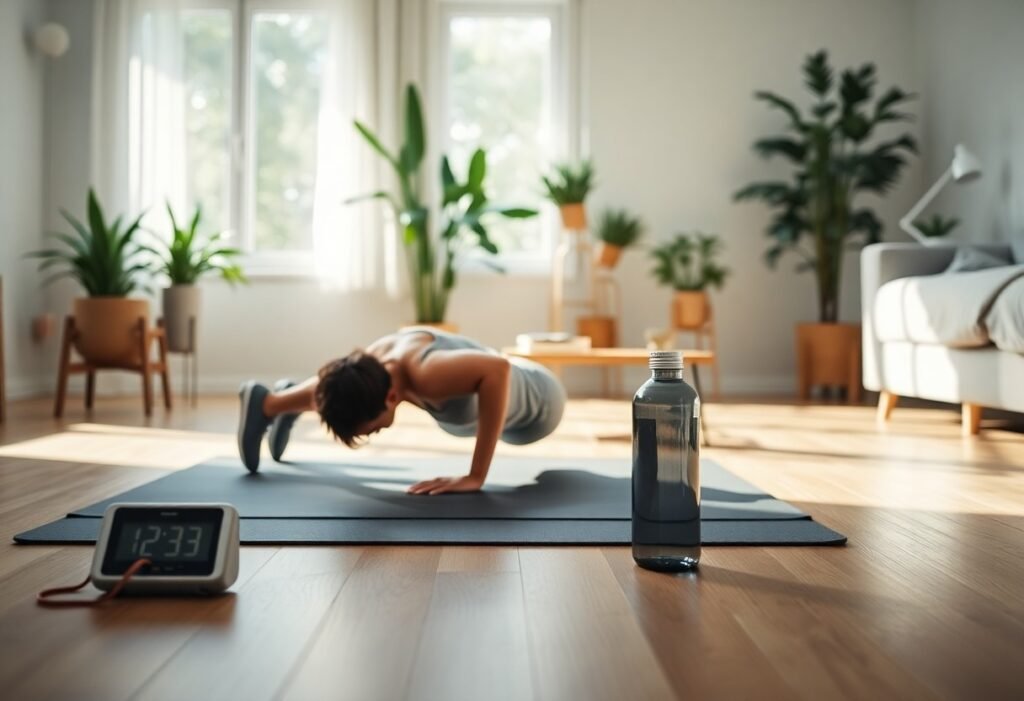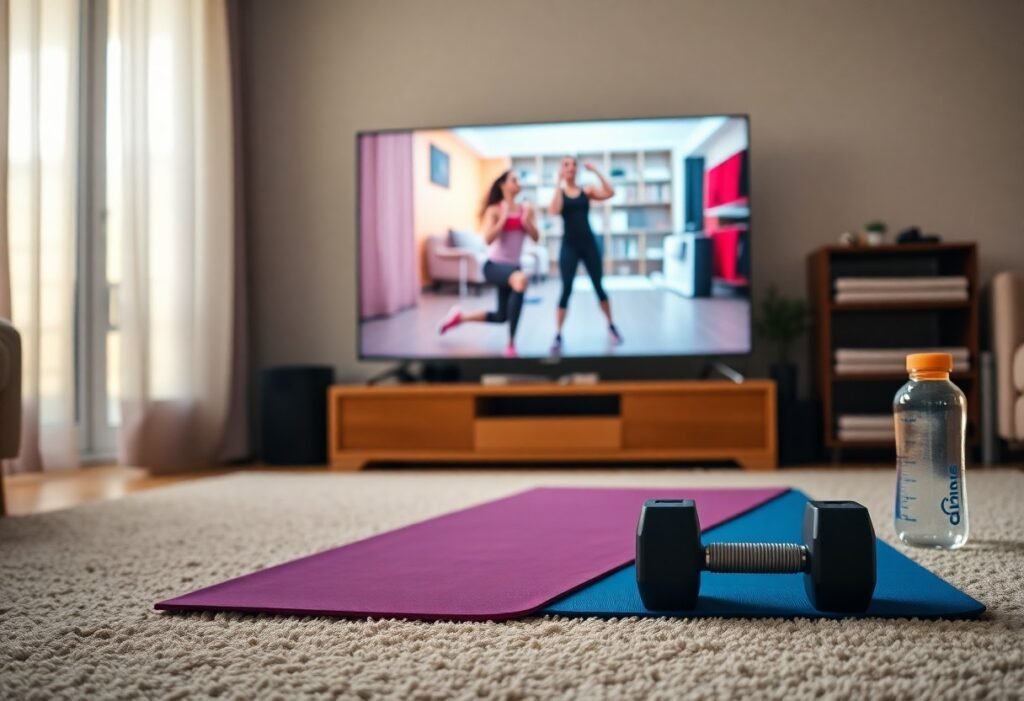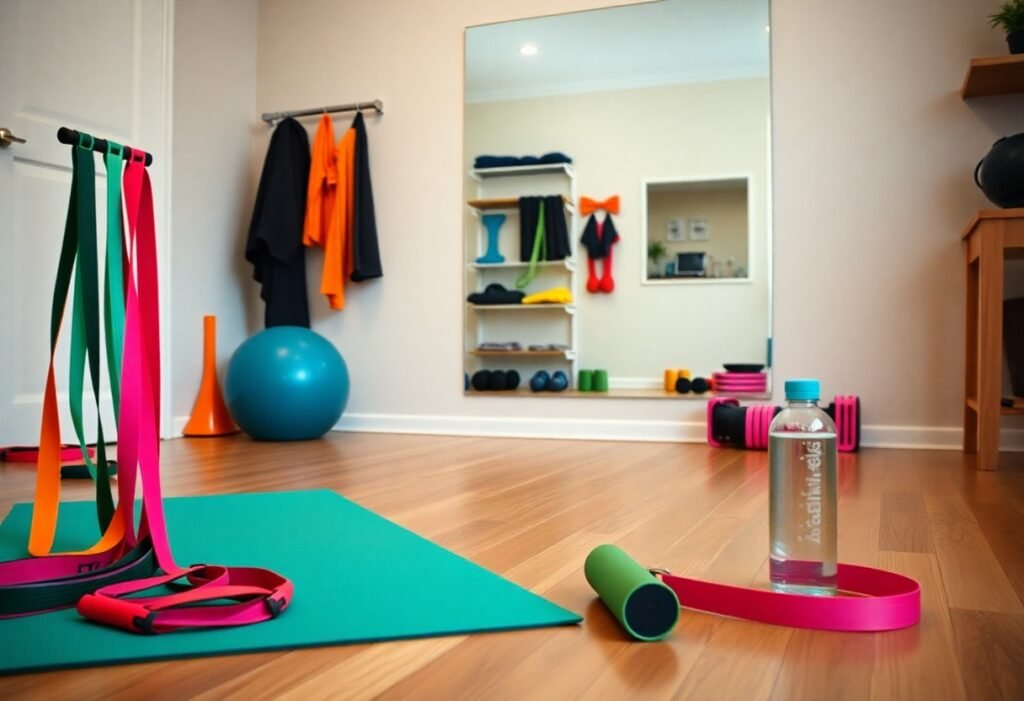

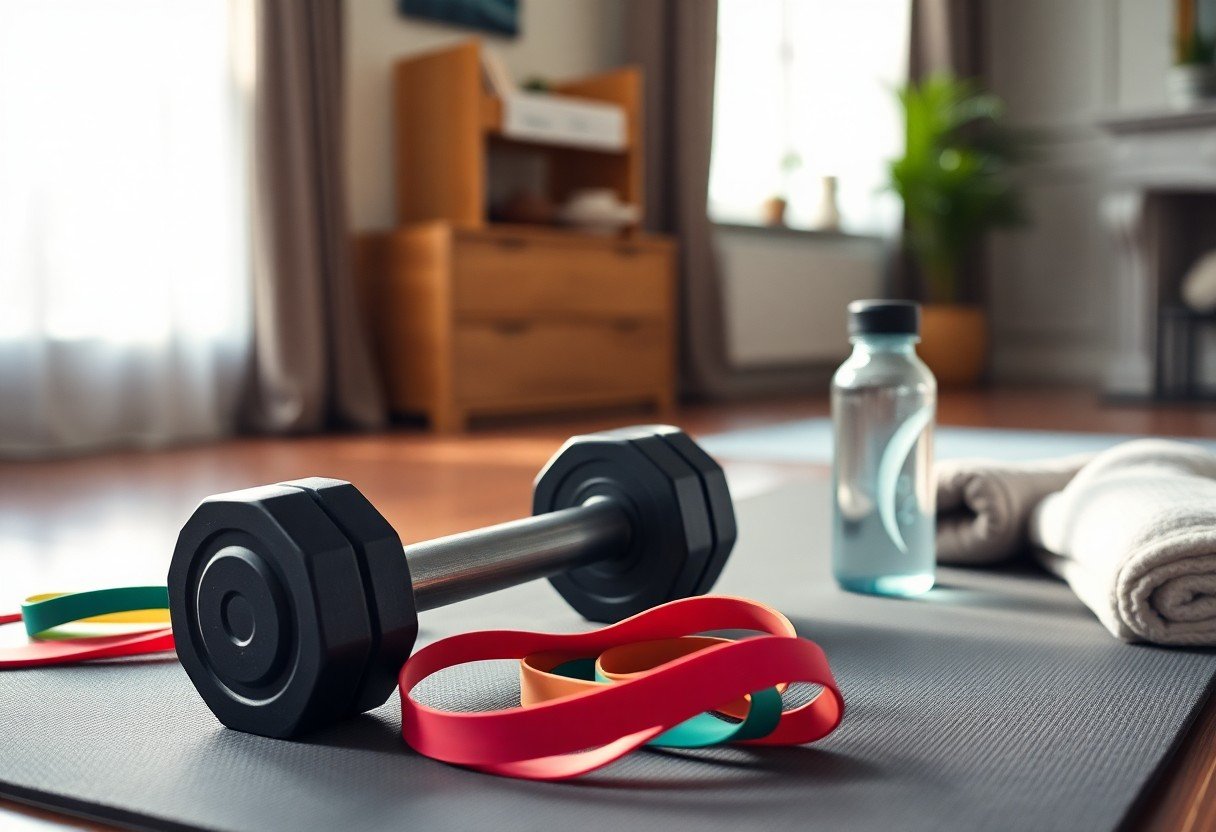
With the right approach and minimal equipment, you can achieve effective workouts right at home using dumbbells and resistance bands. These versatile tools allow you to build strength, improve flexibility, and maintain your fitness levels without the need for an expensive gym membership. Focus on proper form and a balanced routine to maximize your results while minimizing the risk of injury. In this post, you’ll discover key insights on how to optimize your home workouts and transform your fitness journey.
Key Takeaways:
- Focus on compound movements for maximum muscle engagement and efficiency.
- Incorporate resistance bands and dumbbells to enhance workout versatility and intensity.
- Prioritize consistency and progression over complexity for sustainable results.
Understanding Minimal Equipment Workouts
Definition and Benefits
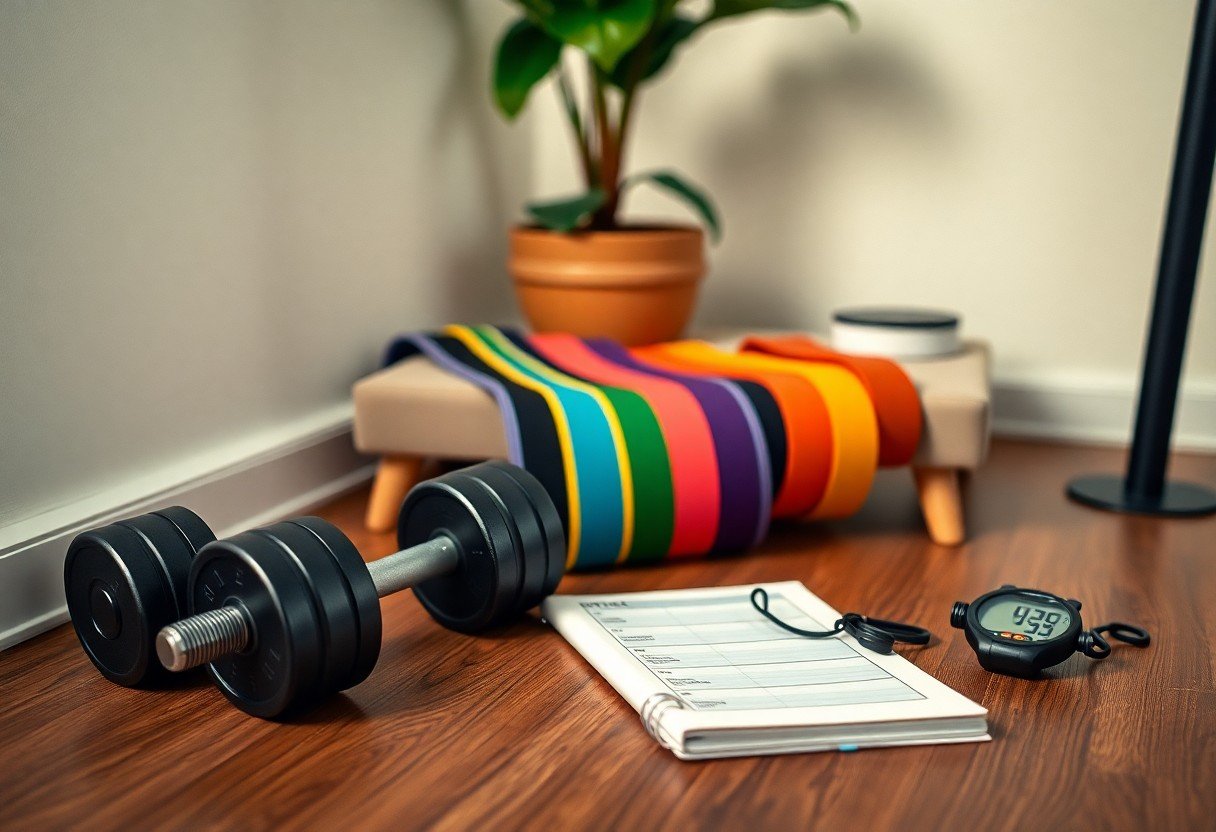
Minimal equipment workouts focus on achieving effective fitness results with limited tools, usually incorporating only dumbbells and resistance bands. This approach not only saves space and reduces costs, but also encourages versatility and creativity in your training. You can experience improved strength, endurance, and mobility with fewer distractions, allowing for greater focus on your form and technique.
The Importance of Minimalism in Exercise
Minimalism in exercise promotes efficiency, ensuring that each workout is purposeful and effective. The idea is to strip away excess, honing in on core movements that yield maximum benefit. With fewer distractions and complications, you can create a consistent routine tailored to your needs, ultimately leading to sustained motivation and long-term health gains.
In practical terms, minimalism encourages a focus on high-quality movements over quantity. For instance, utilizing a pair of dumbbells can facilitate compound exercises that engage multiple muscle groups simultaneously, such as squats and presses. This style can translate to improved functional strength and better daily performance. Research indicates that engaging in full-body workouts with minimal gear can lead to significant strength gains and fat loss when paired with proper nutrition. By eliminating the intimidation that often accompanies larger equipment, you empower yourself to prioritize movement and consistency, critical factors in any fitness journey.
Choosing the Right Equipment
Selecting Dumbbells
When deciding on dumbbells, consider your fitness level and goals. Start with a set that allows you to perform a variety of exercises comfortably, typically ranging from 5 to 25 pounds. Adjustable dumbbells can also be a wise choice, giving you the versatility to increase weight as you progress without requiring additional space.
Resistance Bands
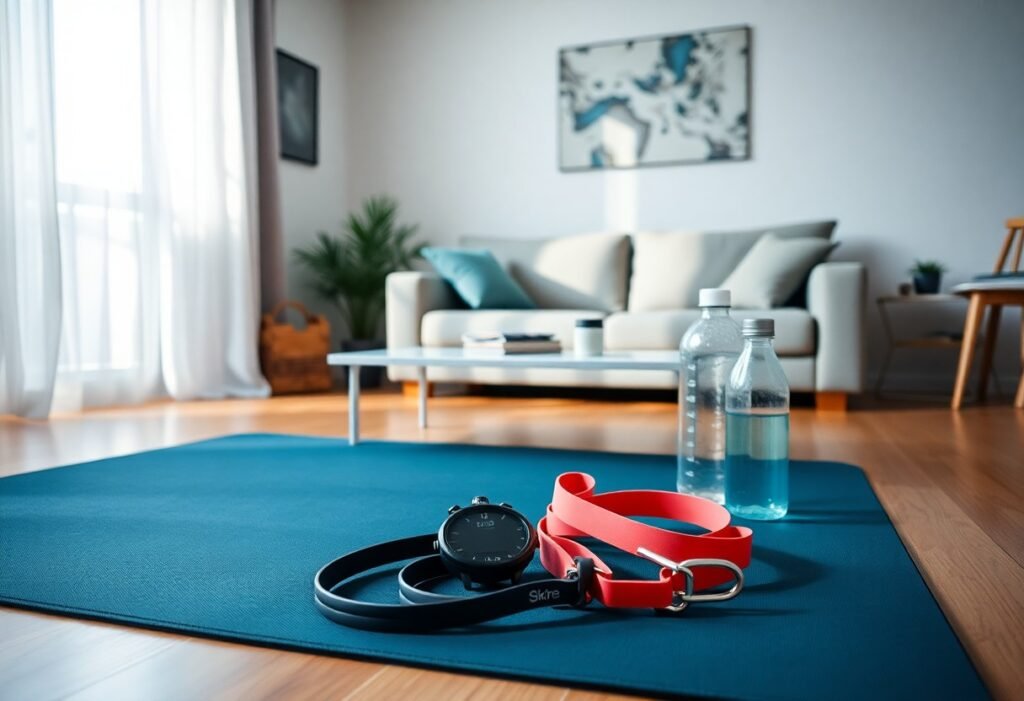
Resistance bands are a fantastic addition to your home workout setup, offering versatility and portability. Look for bands with varying resistance levels, typically measured in light, medium, and heavy, to accommodate all exercise intensities and muscle groups.
These bands come in different types-loop bands, tube bands with handles, and therapy bands-each serving unique purposes. For instance, loop bands are excellent for lower body workouts, while tube bands with handles are ideal for upper body training. Their ability to provide continuous tension during movements enhances muscle engagement, making them beneficial for both strength training and rehabilitation exercises. Additionally, resistance bands are perfect for adjusting the difficulty of your workouts without needing heavy weights, ensuring you can challenge yourself as your strength improves.
Essential Exercises with Dumbbells
Upper Body Workouts
For effective upper body workouts, incorporate exercises such as dumbbell bench presses, rows, and shoulder presses. These movements target major muscles, including the chest, back, and shoulders, ensuring you build strength and define your upper physique. Aim for 3 sets of 8-12 reps to promote muscle growth and endurance.
Lower Body Workouts
Lower body workouts using dumbbells can significantly enhance your strength and stability. Focus on exercises like dumbbell squats, lunges, and deadlifts. Not only do these variations engage the quadriceps, hamstrings, and glutes, but they also promote balance and functional movement.
For an effective lower body routine, you might start with dumbbell squats to engage the largest muscles in your legs. Try 3 sets of 10-15 reps, ensuring proper form-feet shoulder-width apart and weight in your heels. Incorporate dumbbell lunges next, alternating legs for 3 sets of 10-12 reps. Finish off with Romanian deadlifts, focusing on hip hinge motions while keeping the dumbbells close to your legs, which significantly strengthens your hamstrings and glutes. This combination delivers an efficient, comprehensive workout for your lower body.
Effective Resistance Band Exercises
Full-Body Workouts
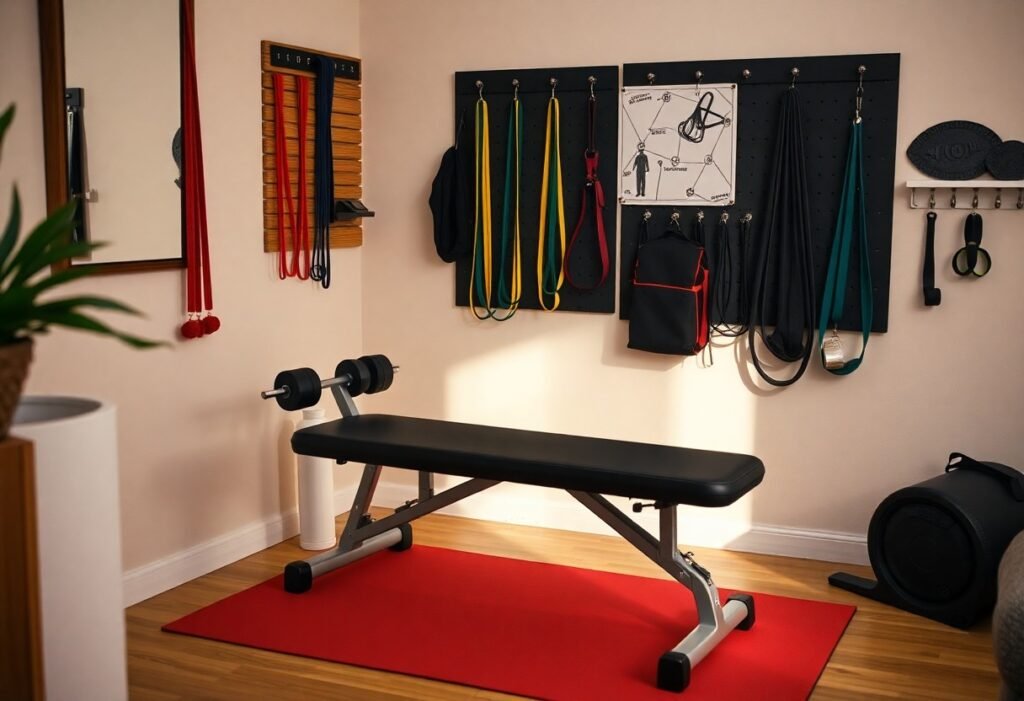
Resistance bands are versatile tools for your full-body workouts. With just a band, you can perform compound movements like squats with overhead presses, engaging multiple muscle groups simultaneously. This efficiency matches the effectiveness of traditional weights while being easy on your joints. Integrate exercises such as banded deadlifts and push-ups to challenge your strength and stability. For a deeper probe a minimalist home gym setup with dumbbells and bands, explore the possibilities you can create at home.
Targeting Core Strength
Incorporating resistance bands into your routine significantly enhances your core strength training. Exercises like standing band rotations and band-resisted planks activate your abs and obliques, promoting stability and balance. This added resistance forces your core to work harder, yielding faster results compared to bodyweight alone.
Focusing on your core with resistance bands can yield impressive benefits. By using bands, you create constant tension throughout the movement, maintaining engagement in your abs. For instance, try a banded bicycle crunch where you anchor one end to a sturdy object and hold the other while performing the crunch. This variation not only intensifies the workout but also enhances overall functional strength, beneficial for daily activities and sports performance.
Structuring Your Home Workout Routine
Creating a Balanced Schedule
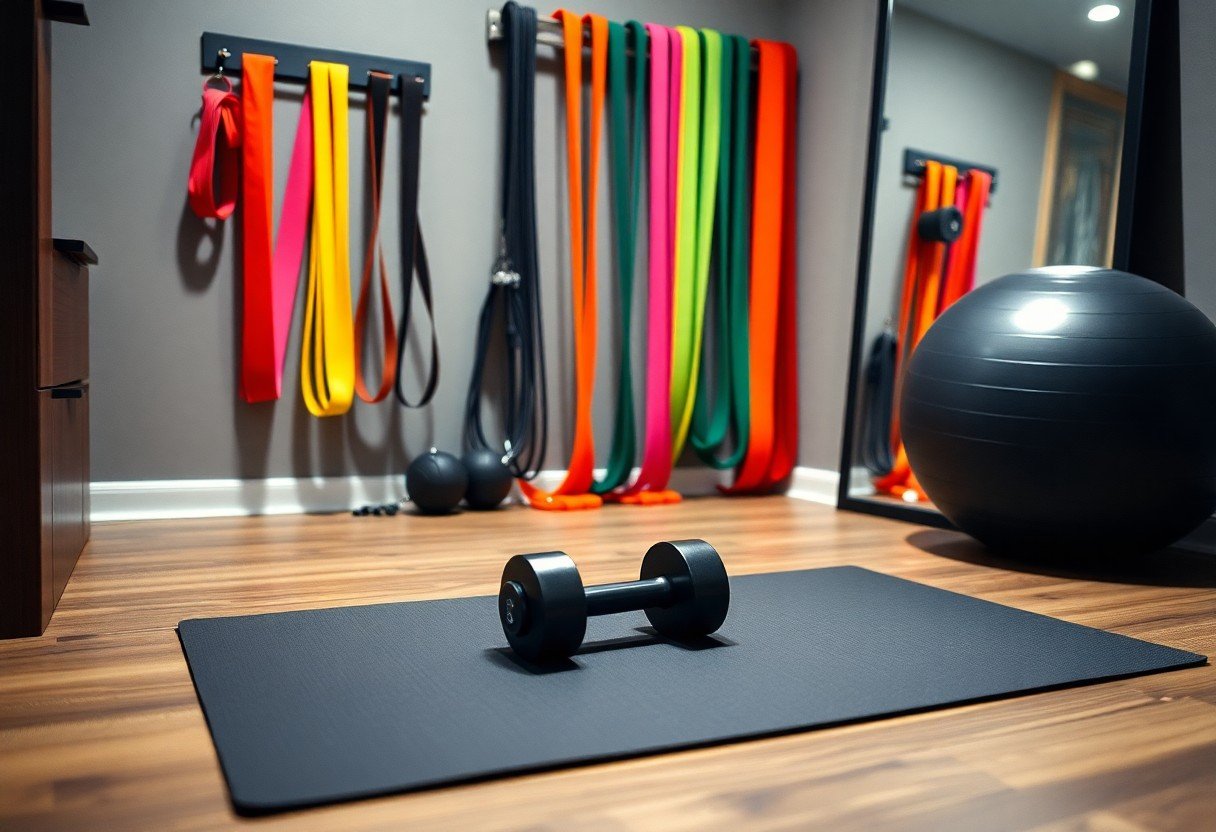
To achieve a well-rounded fitness routine, you should design a balanced schedule that incorporates strength training, cardio, and flexibility. Aim for at least three days of strength training targeting different muscle groups, interspersed with cardio workouts on alternate days to promote cardiovascular health. Incorporate rest days to allow your body to recover, ensuring you maintain a consistent and effective workout regimen.
Incorporating Flexibility and Cardio
Integrating flexibility and cardio into your routine enhances overall fitness and prevents injuries. Aim for a minimum of 150 minutes of moderate-intensity cardio each week, such as jogging, cycling, or skipping rope. Pair this with flexibility exercises like yoga or static stretching sessions to improve your range of motion and reduce muscle stiffness.
Further enhancing your routine, consider adding dynamic stretching before workouts to warm up your muscles, followed by a cool-down session consisting of static stretches. This balanced approach not only supports muscle recovery but also promotes better overall performance. Additionally, utilizing tools like yoga mats or foam rollers can improve your flexibility workouts, making your routine even more effective.
Common Mistakes to Avoid
Poor Form and Technique
Using incorrect form during exercises can lead to injuries and hinder your progress. Whether you’re lifting dumbbells or using resistance bands, ensure your body is aligned correctly. For instance, during a squat, keep your knees behind your toes and your back straight to avoid strain. Watching instructional videos or consulting a trainer can provide the guidance you need to develop proper technique.
Overtraining and Recovery
Overtraining can lead to burnout and injuries, stalling your progress. Balancing workouts with adequate recovery time is necessary. If you feel persistent fatigue or notice a decrease in performance, it might be time to reassess your training volume and intensity. Incorporate rest days and listen to your body to maintain a sustainable fitness routine.
Striking the right balance between workouts and recovery is fundamental to your success. Aim for 48 hours of rest for the same muscle group before working it again, and don’t neglect active recovery such as light stretching or low-intensity activities on off days. This ensures your muscles repair and grow stronger, paving the way for continuous improvement without the risk of injury.
Summing up
With this in mind, prioritizing minimal equipment like dumbbells and resistance bands allows you to create an effective home workout routine that fits your lifestyle. Focusing on the vitals and ensuring proper form will maximize your results while minimizing the risk of injury. Adapt your workouts to your available space and equipment, and stay consistent to achieve your fitness goals. Ultimately, what truly matters is your dedication and approach, transforming your home into a space where you can thrive physically and mentally.
FAQ
Q: What minimal equipment is needed for a home workout?
A: For an effective home workout focusing on strength and resistance training, you can start with a pair of dumbbells, a resistance band, and a workout mat. These items provide versatility and allow for a variety of exercises targeting different muscle groups.
Q: How can I structure a workout using dumbbells and bands?
A: A typical workout can include a warm-up, followed by sets of exercises such as dumbbell squats, resistance band rows, push-ups, and lunges. Aim for 3 sets of 8-12 repetitions for each exercise, resting 30-60 seconds between sets.
Q: What are the benefits of using resistance bands in workouts?
A: Resistance bands enhance muscle activation, improve flexibility, and add variety to workouts. They are portable, low-impact, and can be adjusted for different resistance levels, making them suitable for all fitness levels.
Q: Can I achieve a full-body workout with just minimal equipment?
A: Yes, a full-body workout can be effectively performed using dumbbells and bands. Exercises like deadlifts, chest presses, shoulder presses, and core work can engage multiple muscle groups for a comprehensive workout.
Q: How often should I perform home workouts with minimal equipment?
A: It is generally beneficial to aim for at least 2-3 strength training sessions per week, combined with cardiovascular activities. This frequency allows for muscle recovery and promotes overall fitness improvements over time.