

Just as biohacking moves into 2025, you can leverage targeted interventions-from personalized genomics and intermittent metabolic therapies to advanced sleep and redox optimization-to extend healthy lifespan; weigh proven benefits against serious risks like unregulated supplements or off-label procedures, consult professionals, track biomarkers, and prioritize evidence-based protocols so your experiments yield measurable longevity gains rather than harm.
Key Takeaways:
- Data-driven personalization: genomics, metabolomics and AI tailor diets, exercise and supplement regimens (including NAD+ precursors and investigational senolytics) instead of one-size-fits-all plans.
- Focus on metabolic and mitochondrial resilience: time-restricted eating, exercise timing, sleep optimization and mitochondrial-supportive compounds dominate both practice and research.
- Real-time monitoring and governance ramp up: continuous biomarkers and wearables enable dynamic adjustments while demand grows for clinical validation, safety standards, privacy protections and equitable access.

Understanding Biohacking
Definition and Principles
You encounter biohacking as a mix of quantified-self tracking, nutritional strategies, and targeted biological interventions: wearables and continuous glucose monitors (CGMs) provide minute-level data, you optimize using protocols like 16:8 intermittent fasting, and some pursue nootropics or microbiome tweaks. Practical principles emphasize measurement, iteration, and risk mitigation; for high-risk tactics such as DIY gene editing you must weigh potential benefits against infection or unintended genetic changes.
Historical Context
Biohacking matured from the Quantified Self movement (founded 2007 by Gary Wolf and Kevin Kelly) and community labs like BioCurious and Genspace (~2009), accelerated by the 2012 CRISPR breakthrough (Doudna & Charpentier) and later high-profile self-experiments such as Josiah Zayner’s public self-CRISPR in 2017; these events pushed both mainstream interest and regulatory scrutiny, making accessibility a double-edged sword.
Delving deeper, you see milestones shaping practice: wearables (Fitbit rose around 2009) normalized daily biometrics, the 2012 CRISPR discovery earned a Nobel Prize in 2020 and lowered technical barriers, and clinical initiatives like the proposed TAME trial (~3,000 participants) brought longevity drugs into formal study. At the same time, increased oversight followed public self-experiments, underscoring that innovation without safeguards can be dangerous.
Trends in Biohacking for Longevity
You’re seeing a shift toward personalized, data-driven protocols that combine nutrition, drugs, and tech; practitioners now layer time-restricted feeding, targeted supplements, and intermittent rapalog dosing based on biomarkers. Several clinics publish outcome dashboards and pilot data; for deeper clinic-level case examples see Optimizing Your Body for a Longer, Healthier Life with …, which illustrates integrated programs and measured biomarker changes. Strong oversight is needed as off-label therapies proliferate.
Nutritional Interventions
You’ll optimize muscle and metabolism with specific patterns: time-restricted feeding (16:8 or 10-hour windows), periodic 5-day fasting-mimicking cycles, and protein targets of 1.2-1.5 g/kg for older adults with ~2.5-3 g leucine per meal to stimulate synthesis. Some trials pair these with NAD+ precursors or metformin as a CR-mimetic; weigh potential benefits against unregulated high-dose supplement risks and always monitor labs.
Technological Advances
You’ll rely on continuous glucose monitors (CGMs), advanced wearables (HRV, sleep staging), and at-home fingerprick panels to iterate diet, sleep, and training; epigenetic clocks and proteomic panels inform biological-age trends. Many practitioners use AI to integrate these streams into actionable nudges. Note the upside: real-time personalization; the downside: proliferation of unvalidated tests and privacy or biosecurity gaps that carry significant risks.
More specifically, CGMs let you identify postprandial spikes and tailor meals (studies show large inter-individual responses), while HRV-guided recovery reduces overtraining and improves performance metrics. Multi-omic reports can cost several hundred to a few thousand dollars but enable trial-and-measure approaches; small intervention studies show epigenetic clock shifts of roughly 1-3 years in selected cohorts, so you can track meaningful change if you pair data with structured interventions.
Popular Biohacking Techniques
You’ll encounter a mix of lifestyle, thermal and dietary hacks with real data behind them: time-restricted eating like 16:8, calorie-targeted plans such as 5:2 (two 500-600 kcal days), cold exposure (cold showers, ice baths, cryotherapy), and targeted supplements. Several interventions show measurable effects-multiple trials report modest weight loss (about 1-5%) and improved metabolic markers-so you should prioritize protocols that match your health status and monitoring capabilities.
Intermittent Fasting
You’ll likely start with practical regimens: 16:8 (16-hour fast, 8-hour eating window), 5:2, or alternate-day fasting. Human studies link these to improved insulin sensitivity, lower fasting insulin, and modest fat loss; clinical reviews report metabolic benefits within 8-12 weeks. If you take glucose-lowering drugs or are pregnant, consult a clinician-fasting can cause hypoglycemia and needs medication adjustments.
Cold Exposure
You can use cold showers (10-15°C for 2-5 minutes), ice baths (0-4°C for 2-10 minutes), or whole-body cryotherapy (≈−110°C for 2-3 minutes). Evidence shows brown adipose tissue activation, short-term metabolic rate increases and boosted norepinephrine, aiding mood and recovery. Apply caution: abrupt cold causes intense vasoconstriction and can precipitate arrhythmia or hypothermia in vulnerable people.
Progressive protocols work best: start with 30-60-second cool showers, build to 2-5 minutes, then consider supervised ice baths. Screen for cardiovascular disease, avoid alcohol before exposure, and warm up gradually after immersion. Athletes often combine post-workout 10-15°C immersion for 5-10 minutes to reduce soreness, while longevity-focused users favor moderate, repeated exposures to stimulate thermogenesis without pushing into prolonged hypothermia risk.
The Role of Supplements
Targeted supplementation works best when you use blood tests and specific goals to guide choices: aim for serum 25(OH)D 30-50 ng/mL with 800-2,000 IU/day or tailored dosing, take 1 g/day EPA+DHA for cardiovascular support, and consider creatine 3-5 g/day to preserve muscle and cognition; avoid blind iron or vitamin A dosing because excess iron or vitamin A can be toxic and interact with medications.
Essential Nutrients for Longevity
For bone, neuromuscular and metabolic health you should prioritize vitamin D, B12, magnesium, K2 and omega‑3s: supplement B12 at ~500-1,000 µg/day if absorption is impaired, magnesium 200-400 mg/day, and vitamin K2 100-200 µg/day alongside vitamin D for bone matrix; combine these with a protein intake of ~1.2-1.6 g/kg/day to protect lean mass, and use creatine 3-5 g/day to further maintain strength with age.
Emerging Supplements
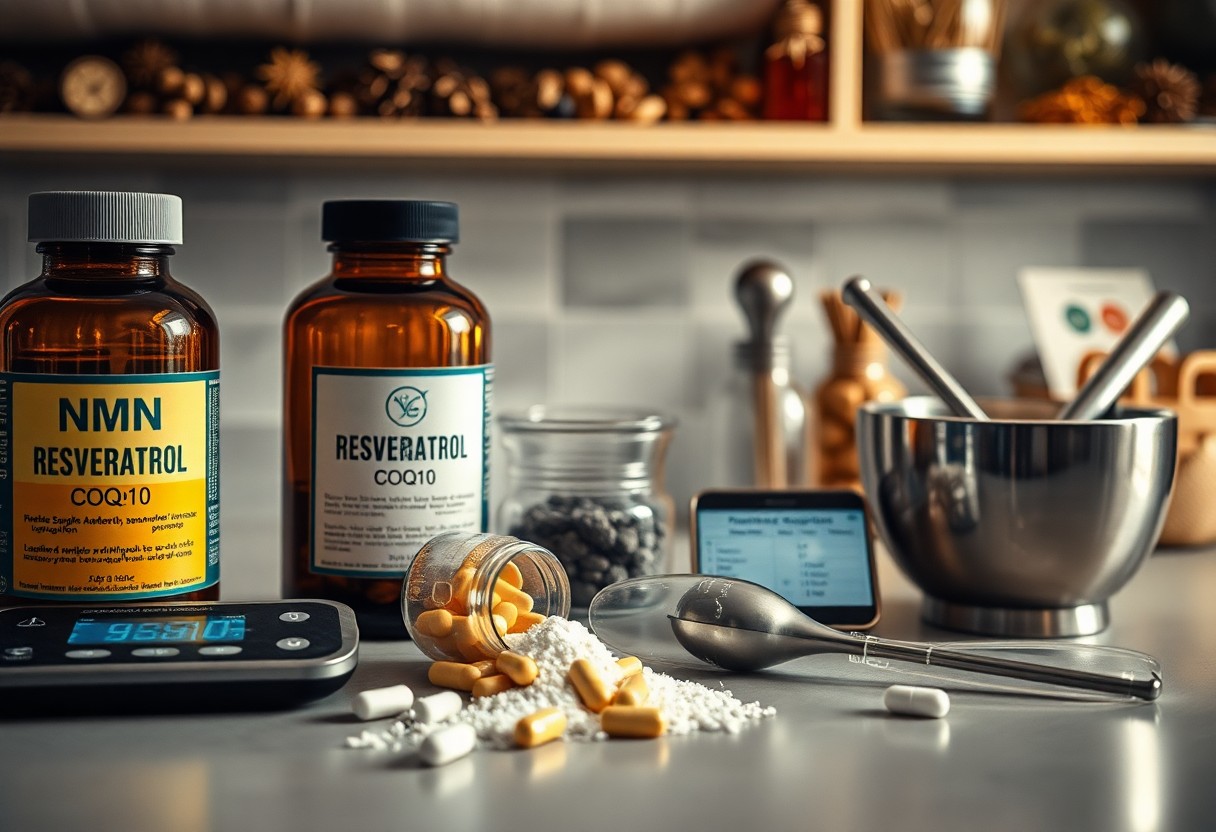
NAD+ precursors (NR, NMN) at ~250-500 mg/day reliably raise NAD metabolites in short human trials, while intermittent senolytics like fisetin (pilot dosing ~20 mg/kg/day short courses) and dasatinib+quercetin show early signals for reducing senescent-cell markers; be aware these approaches are experimental and may interact with drugs or cause adverse effects, so you should only pursue them with clinician oversight and appropriate biomarkers.
NAD+ falls substantially with age (tissue declines often reported near ~50%), and boosting it improves mitochondrial markers in short studies; senolytics target p16+ cells and can lower SASP cytokines in preclinical models and small human pilots. You should monitor p16INK4a, circulating inflammatory cytokines and metabolic panels if you try these strategies, because long‑term safety and optimal dosing remain under study and mTOR inhibitors can cause immunosuppression at higher or chronic doses.
Genetic and Epigenetic Considerations
You can combine whole-genome sequencing (clinical WGS now often < $1,000) with blood-based methylation clocks (Horvath, GrimAge) to map inherited risk and biological age. For example, a top 10% polygenic risk score for coronary artery disease confers roughly 3× risk, while accelerated GrimAge strongly predicts mortality. Integrating both helps you prioritize interventions and monitor real-world responses rather than relying on single snapshots.
Genetic Testing and Personalization
You should apply pharmacogenomics and polygenic risk in practice: CYP2C19/CYP2D6 genotypes guide antiplatelet and antidepressant choices, VKORC1/CYP2C9 inform warfarin dosing, and SLCO1B1 variants increase statin myopathy risk. Direct-to-consumer reports (e.g., 23andMe) can flag issues, but clinical sequencing plus genetic counseling turns raw variants into actionable plans and reduces the risk of misinterpretation and privacy exposure.
Lifestyle Changes and Epigenetics
Exercise, diet, sleep and smoking produce measurable methylation shifts: Mediterranean-style diets, 150-300 minutes/week of moderate activity, and smoking cessation correlate with reduced epigenetic age. Several intervention cohorts report 1-5 year shifts in methylation-clock estimates, and reversing harmful exposures (like quitting smoking) often yields the fastest gains; use repeat testing to see meaningful change.
For practical implementation, target 150-300 minutes/week aerobic plus two resistance sessions, 7-9 hours sleep, a Mediterranean diet high in olive oil, berries and 25-35 g fiber daily, and limit processed meats and added sugars. Consider intermittent fasting (16:8) cautiously and add 10-20 minutes/day of mindfulness to lower stress-related epigenetic impacts. Clinical studies monitor outcomes at 6-12 months, so track epigenetic age every 6-12 months to assess effectiveness and adjust your regimen.

Community and Support Systems
You plug into networks that accelerate learning and safety: online forums, local meetups, and community labs. Many practitioners prioritize peer-reviewed evidence and shared biomarker data while vetting protocols through peers. Events like the Biohacker Summit attract thousands annually, and local Meetup chapters often host 30-150 attendees. Stay alert to unvetted advice-DIY wet-lab or gene-editing guidance from anonymous sources can be dangerous.
Online Platforms and Forums
You rely on Reddit, Discord, Quantified Self threads and academic portals to crowdsource protocols and N=1 experiments. Some Discord communities exceed 10,000 members and provide rapid feedback, while PubMed and ResearchGate let you validate claims. These platforms power shared biomarker dashboards and supplement audits, but misinformation and unverified supplement stacks remain a major risk, so always cross-check with primary literature or a clinician before acting.
Local Biohacking Groups
You join meetups or community biology labs like Genspace or BioCurious for hands-on mentorship and tool access. Memberships commonly grant use of PCR machines, centrifuges, and safety training, enabling pilot projects and hardware prototyping. Groups speed skill transfer, but unsupervised experiments-especially involving gene editing or live pathogens-pose significant hazards, so verify the lab’s biosafety protocols and oversight.
You should expect formal onboarding: mandatory safety workshops, signed liability waivers, and project reviews by a designated biosafety officer. Many labs run quarterly training on PCR, sequencing basics, and data analysis for wearables, and they partner with universities or startups for mentorship and funding pathways. If your work involves CRISPR, live cultures, or human-subject data, confirm institutional oversight and insurance; otherwise legal and biological risks can escalate quickly.
Summing up
As a reminder, you should prioritize validated biohacking strategies-precision nutrition, sleep optimization, targeted supplementation, regular biomarker monitoring, and personalized exercise-to extend healthy lifespan; pair evidence-based 2025 trends with medical guidance, track outcomes, and tailor protocols to your genetics and risk profile to maximize benefits while minimizing harm.
FAQ
Q: What are the top biohacking trends for longevity in 2025?
A: 2025 trends emphasize personalization and translation of preclinical findings into early human applications. Major areas include AI-driven multi-omics plans (genome, epigenome, metabolome, microbiome plus wearable data), senolytics and senescence-targeting therapies, precision mTOR modulation (intermittent rapalog strategies under clinical study), NAD+ boosting and mitochondrial optimization (NR/NMN, mito-targeted antioxidants), microbiome engineering and personalized pre/probiotics, chrononutrition and metabolic switching (time-restricted eating combined with glucose/ketone feedback), photobiomodulation and infrared therapies, and expanded at-home biomarker monitoring. Many interventions are supported by strong animal data and promising early human trials, but long-term human lifespan evidence is limited and heterogenous.
Q: How do AI-guided, multi-omics longevity plans work and what are their limits?
A: These platforms combine genetic variants, epigenetic age measures, metabolite and proteomic profiles, the gut microbiome, clinical labs and wearable-derived physiology. Machine-learning models identify individualized risk patterns and suggest prioritized interventions (diet/exercise, supplements, pharmaceuticals, monitoring schedules). Strengths: better targeting, integration of many weak signals into actionable plans, continuous update as new data arrives. Limits: predictive models depend on training data quality and population diversity, transparency and interpretability vary, clinical validation for hard endpoints (disease incidence, mortality) is sparse, and data privacy and cost are significant considerations. Clinical oversight and independent validation remain important.
Q: What are senolytics, which ones are being used in 2025, and what are the risks?
A: Senolytics are agents that selectively eliminate senescent cells to reduce SASP-driven inflammation and tissue dysfunction. Commonly discussed candidates in 2025 include fisetin, intermittent dasatinib + quercetin regimens (investigational), and novel small molecules in human trials. Preclinical models show improved function and lifespan; early-phase human studies report biomarker and functional improvements in specific conditions. Risks and unknowns: off-target toxicity, transient inflammatory responses after cell clearance, optimal dosing schedules unclear, interaction with other medications, and limited long-term safety data. Use within regulated clinical trials or under specialist supervision is advised rather than unsupervised self-administration.
Q: Are NAD+ precursors, mitochondrial therapies, and peptide interventions effective for longevity?
A: NAD+ precursors (nicotinamide riboside, nicotinamide mononucleotide) increase cellular NAD+ in humans and can improve metabolic readouts in some studies, but definitive evidence for lifespan extension in humans is absent. Mitochondrial-supporting compounds (CoQ10, PQQ, mito-targeted antioxidants) have mechanistic rationale and symptom-level benefits for select conditions; robust longevity data are lacking. Peptide therapies (various growth-hormone-related or tissue-repair peptides) are areas of intense interest with mixed evidence: some show biologic activity, but many lack large, well-controlled trials for safety and long-term outcomes. Quality control and sourcing are major concerns; clinical consultation and validated testing should guide any use.
Q: How should individuals monitor progress and reduce risk while pursuing longevity biohacks?
A: Prioritize baseline and longitudinal monitoring with clinically validated labs and objective functional tests. Core panels often include metabolic markers (fasting glucose, insulin, HbA1c, lipid panel), inflammation (hs-CRP, IL-6 if available), kidney and liver function, thyroid, complete blood count, vitamin D, and micronutrient levels as indicated. Advanced options: epigenetic clocks (with caveats about interpretation), metabolomics, and repeat telomere or senescence-associated biomarkers in research contexts. Use wearable data for sleep, heart-rate variability and activity but interpret within clinical context. Minimize harm by staging interventions (start lifestyle measures first), consulting qualified clinicians, preferring regulated products, avoiding unsupervised use of prescription drugs or unregulated peptides, and enrolling in clinical trials when possible to access oversight and contribute to evidence generation.