
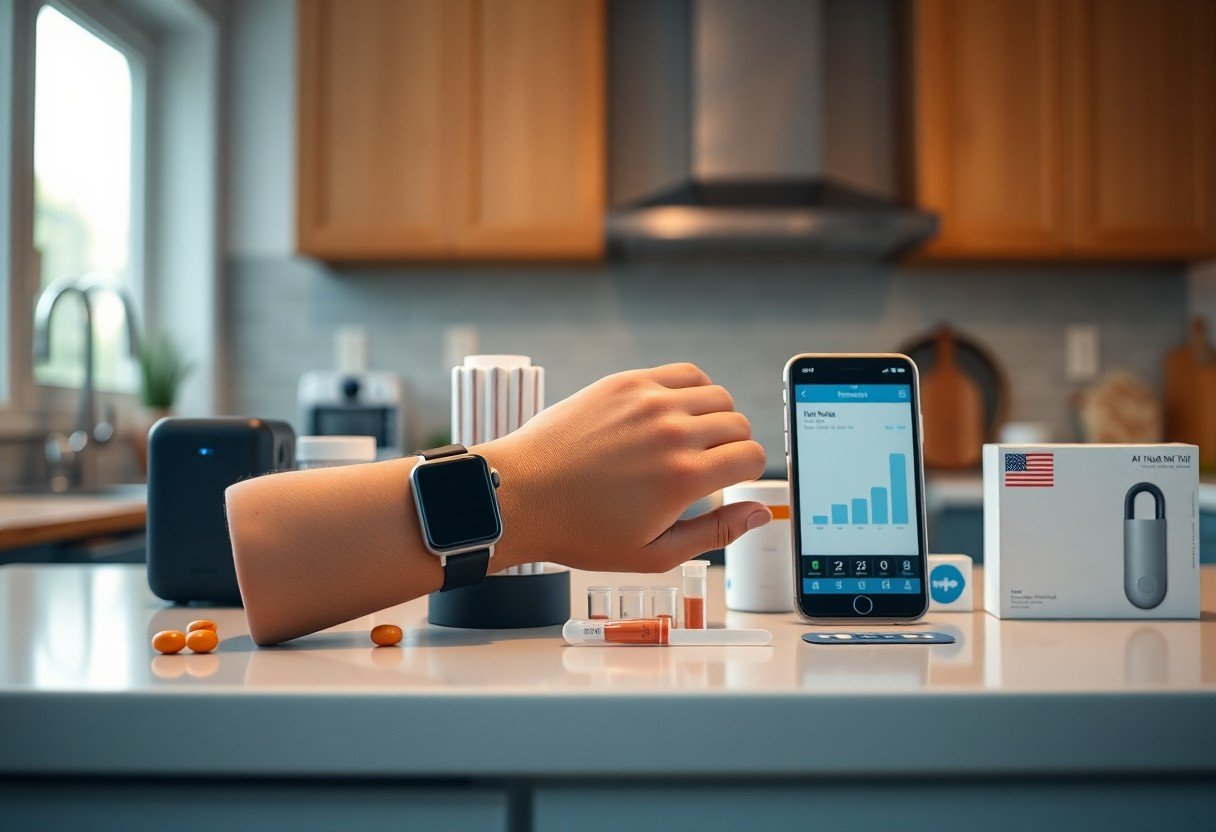
With rapid advances in wearables and home diagnostics, you can monitor sleep, heart rhythm, glucose and fitness with devices that increasingly deliver useful data; choose models that are clinically validated or FDA-cleared and integrate with your provider. Be aware that some devices carry privacy and false-alarm risks that can lead to anxiety or misdiagnosis, while properly selected tools can improve health outcomes and simplify care.
Key Takeaways:
- Clinically validated wearables (advanced smartwatches, ECG patches) reliably detect arrhythmias, track SpO2 and sleep trends for actionable alerts.
- Connected at-home diagnostics (FDA-cleared tests, blood pressure and glucose monitors) deliver clinic-grade measurements and seamless telehealth sharing.
- Smart inhaler, CPAP and indoor-air sensors generate objective adherence and air-quality data that improve management of asthma, COPD and sleep apnea.
Wearable Fitness Trackers
Wrist devices, rings and chest straps now pack ECG, SpO2 and sleep sensors; Apple Watch Series 9, Fitbit Charge 5 and Oura Ring Gen3 illustrate trade-offs between accuracy and battery life (Apple ~18 hours, Oura/fitbands ~5-7 days). You’ll get step counts, HR, HRV and guided workouts, and some models offer FDA-cleared ECG/AF detection, but you must watch for noisy SpO2 and stage estimates that can mislead training or health decisions.
Heart Rate Monitors
Chest straps like the Polar H10 deliver the best exercise accuracy (about ±1-2 bpm), while wrist PPG sensors can vary more under load (±3-10 bpm); you’ll notice wrist error spikes during sprints and cycling. For recovery and HRV, chest or ring-based sensors give more reliable trends, so use a chest strap for interval training and reserve wrist data for daily activity tracking.
Sleep Quality Analyzers
Most trackers combine accelerometry and PPG to infer sleep stages, with consumer-stage agreement roughly ~70-85% versus polysomnography; you’ll see sleep efficiency, REM minutes and respiratory rate in apps. They offer actionable insights like consistent sleep timing, but can miss or under-detect sleep apnea, so treat scores as trend indicators rather than diagnoses.
Digging deeper, you’ll get metrics such as sleep onset latency, wake after sleep onset, overnight HRV and respiratory rate-Oura reports HRV and RR trends, while Dreem and EEG headbands approach clinical accuracy. Validation studies show >85% sensitivity for sleep detection but lower specificity for wake and staging; therefore if you suspect a sleep disorder, confirm with clinical polysomnography.
Smart Health Devices
These devices use Bluetooth Low Energy and Wi‑Fi to feed continuous data into apps and platforms like Apple Health or Google Fit, and you can buy reliable models from about $30-$300. Many integrate with telehealth visits and medication reminders, so you get actionable trends rather than single snapshots. Be aware that data privacy and third‑party sharing are the most serious risks you’ll face when syncing sensitive readings.
Smart Thermometers
You can choose contact, contactless, or stick thermometers that log readings automatically to apps; brands like Kinsa and Withings pair via Bluetooth and timestamp every measurement for trend analysis. A standard fever threshold is 100.4°F (38°C)
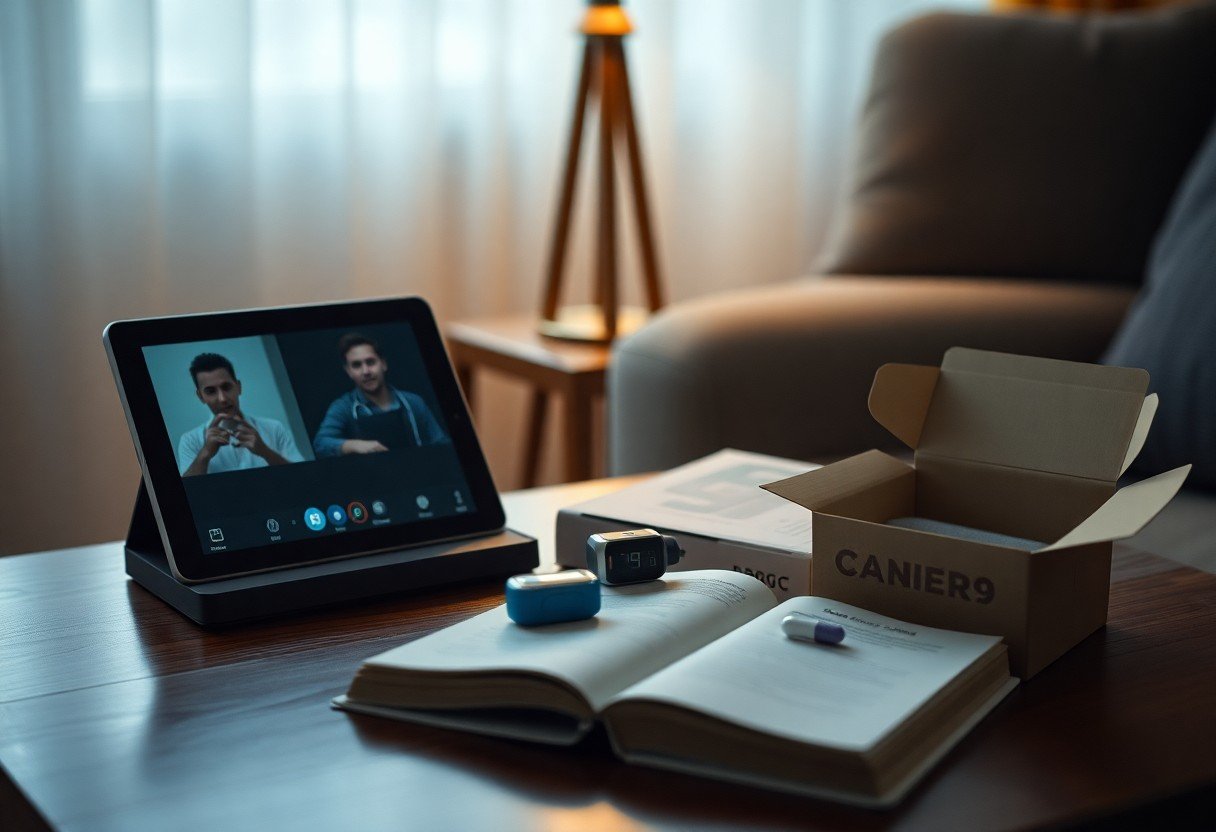
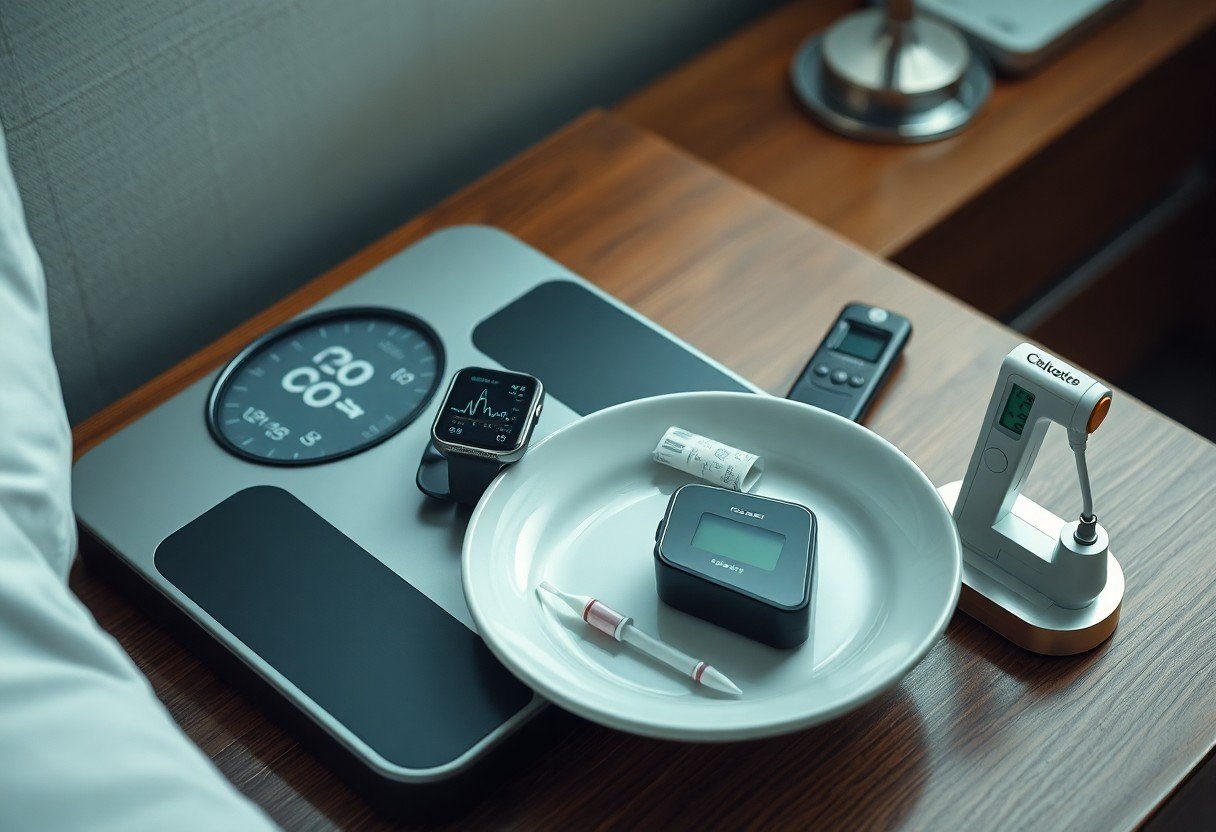
These scales use bioelectrical impedance (BIA) to report weight, BMI, body fat, muscle mass, bone mass, and hydration percentage, syncing to apps so you can track weeks or months of progress. Prices range roughly $25-$200, and popular models include Withings Body+ and Renpho. Keep in mind that hydration, recent exercise, and placement can skew the numbers you see. To get useful data, you should weigh at the same time each morning, barefoot on a hard surface, and avoid measurements after intense workouts or dehydration; this lowers typical BIA variance, which can be around a few percentage points compared with DEXA scans. Many scales still provide value because trend consistency matters more than single‑day accuracy, and they sync automatically to fitness apps for long‑term insight. Telehealth has stabilized as a staple of care, accounting for roughly 10-20% of outpatient visits and letting you see primary care, psychiatry, dermatology and urgent care from home. Many platforms integrate video, secure messaging and EHRs so your records follow the visit. Pay attention to data security risks when choosing vendors, and favor services that support direct billing or Medicare/Medicaid reimbursement to avoid surprise charges. RPM leverages devices like CGMs, Bluetooth blood-pressure cuffs, pulse oximeters and smart scales to stream vitals to clinicians in real time. Providers typically bill using CPT codes 99453, 99454, 99457/99458, which helps you get monitoring reimbursed. Health systems using RPM for heart failure and COPD report fewer ER visits and lower readmission rates, with some programs citing reductions in the 20-40% range. Virtual coaching pairs you with a certified coach who programs workouts, reviews form via video, and tracks progress through apps and wearables (Apple Watch, Garmin). Services vary-subscriptions commonly run about $40-200/month-and many coaches use cadence, heart-rate zones and training load to drive progress. Stick with an 8-12 week plan and you should see measurable improvements in strength and endurance. Live sessions give real-time cueing while asynchronous programs let you train on your schedule and receive weekly plan adjustments. Expect coaches to use objective data-reps, velocity, HR metrics-and video analysis to refine technique. If you have prior injuries or cardiac history, verify coach credentials and get medical clearance; improper progression raises injury risk, whereas properly managed plans deliver consistent, trackable gains within months. You can use smart meal planners like Eat This Much or PlateJoy to generate 7-day menus, tailored grocery lists, and swap recipes based on allergies or macros. Many planners auto-adjust portions to hit calorie or protein targets and offer 3-5 ingredient recipes for busy evenings. Integration with grocery delivery services or pantry syncing cuts decision time and often reduces food waste by helping you reuse ingredients across meals, so you spend less time shopping and more time eating intentionally. Apps such as MyFitnessPal and Cronometer let you log foods via barcode scan, search a database (MyFitnessPal lists over 14 million foods) or photo entry, while Cronometer tracks more than 80 micronutrients for precise nutrient checks. You’ll get immediate macro breakdowns, meal history, and trend charts that expose gaps-helpful if you’re targeting iron, vitamin D, or protein goals. Be aware that accuracy depends on consistent logging and correct portion estimates. Beyond basics, these apps sync with wearables, allow recipe imports, and offer AI-powered portion estimates from photos. You should review privacy settings since data sharing with advertisers is common, and be cautious about over-reliance: obsessively chasing calorie numbers can increase the risk of underfueling or disordered eating for some users. Use tracking to guide adjustments, not to replace professional dietary advice. You’re seeing wearables and apps move from novelty to measurable therapy; for device roundups see Wearable Tech Health Guide 2025: The Best Devices and …. HRV trainers, EEG headbands and vibration wearables now track physiology and deliver interventions that in trials cut stress markers by roughly 20-30%. Use them as complements to clinical care, and be skeptical of any product promising a cure. You can use HRV biofeedback (HeartMath-style), vibration wearables like Apollo Neuro, or EEG headbands such as Muse to lower arousal and improve sleep continuity; multiple studies report measurable drops in subjective anxiety after 4-8 weeks of use. Manufacturers vary on data fidelity, battery life and sensor placements, so compare validation studies. If you have a pacemaker, seizure disorder or serious cardiac issues, avoid electrical/neurostimulation devices and consult your clinician. You’ll find Headspace, Calm, Insight Timer and niche apps offering guided courses, with meta-analyses showing mindfulness interventions yield small-to-moderate effect sizes (around 0.3-0.6) for anxiety and depression. Many apps offer free trials, then subscriptions typically range $50-$70/year; pick programs with published RCTs or university partnerships, and audit privacy settings before syncing sensitive practice or biometrics. More deeply, look for apps that pair guided curricula with wearable data-sleep tracking or HRV-to personalize pacing and nudges; clinical trials show daily practice for 6-8 weeks gives the largest gains. You’ll also want apps that export progress reports for therapists and have clear data-use policies, since data sharing without consent is the biggest privacy risk in this category. Across devices you buy now, Bluetooth syncing and FDA clearance matter more than flashy features; many models send data straight to your clinician for trend review. You’ll use home tools for blood pressure, glucose, pulse oximetry and weight, and evidence shows persistent self-monitoring improves control when paired with clinical follow-up. Target thresholds differ – for example, home BP hypertension is generally ≥135/85 mmHg – so pick validated devices and follow manufacturer instructions for consistent readings. Choose an upper-arm, clinically validated model rather than a wrist unit; studies and guideline panels favor arm cuffs for accuracy. Ensure the cuff fits your arm – typical adult sizes are 22-42 cm – because an improper cuff can shift readings by more than 10 mmHg. You should average multiple readings (two in the morning, two at night) and log trends, since isolated values can mislead treatment decisions. Fingerstick meters remain reliable for spot checks, while continuous glucose monitors (CGMs) give trend data and alarms that change management. Look for meters meeting ISO 15197 accuracy (95% within ±15 mg/dL or ±15%), and be aware that drugs like acetaminophen or vitamin C can interfere with some strips. Use quality control solutions and compare occasional lab values if your readings seem inconsistent. With glucose devices you should track both numbers and patterns: aim for ADA-based targets if you and your clinician set them (commonly fasting 80-130 mg/dL, postprandial <180 mg/dL). CGMs (examples: Dexcom, FreeStyle Libre) have a 5-15 minute physiological lag versus capillary blood; older CGMs required frequent calibrations, while newer models are factory-calibrated. If your meter differs from a lab by >20% repeatedly, replace strips, check expiration/storage, or get the device evaluated. With these considerations you can prioritize wearables, smart scales, validated at-home tests, and clinically backed sleep and fitness devices that deliver measurable benefits; by checking peer-reviewed studies, regulatory clearances, and interoperability with your care team, you ensure your investments improve outcomes and usability, letting you focus on sustainable habits, actionable data, and devices that actually help manage your health. A: Continuous glucose monitors are small wearable sensors that measure interstitial glucose every few minutes and transmit data to a phone or receiver. FDA-cleared devices like Dexcom and Abbott Freestyle Libre have clinical evidence showing improved time-in-range and better glucose control for people with diabetes, and many users without diabetes use them for actionable metabolic insights. Benefits include trend visualization, hypoglycemia alerts, and data to guide diet, exercise and medication adjustments; limitations include sensor cost, periodic replacements, possible skin irritation and occasional lag versus blood glucose during rapid changes. CGMs work best when used with clinical guidance for interpretation and therapy changes. A: Several smartwatches now include FDA-cleared single-lead ECGs and algorithmic atrial fibrillation detection; studies and real-world data show they can detect AFib episodes that would otherwise go unnoticed, enabling earlier medical evaluation. They are valuable for screening and monitoring intermittent palpitations, but a smartwatch ECG is not a full diagnostic 12-lead tracing and false positives/negatives can occur, especially with movement artifacts or poor contact. If a smartwatch flags AFib you should get a confirmatory medical evaluation (clinical ECG, Holter or event monitor) before starting treatment. Battery life, software updates and device placement affect performance. A: Automated upper-arm cuffs that meet validation standards (AAMI/ESH/ISO or listed in validated-device databases) provide accurate readings and are the best choice for home monitoring; wrist and finger devices are generally less reliable. Regular home monitoring with a validated cuff has been shown to improve hypertension detection and management when combined with clinician review. For best results, take readings seated after five minutes rest, use the correct cuff size, avoid caffeine/exercise before measurement and take multiple readings, recording trends rather than single values. Calibrate or compare a new device with in-office measurements periodically and share data with your clinician. A: Home sleep apnea testing (HSAT) devices are clinically validated for diagnosing moderate-to-severe obstructive sleep apnea in appropriate patients and are widely used as an alternative to in-lab polysomnography; many are FDA-cleared and integrated with clinical workflows for CPAP initiation. Consumer EEG headbands and advanced wearables can track sleep stages and improve sleep habits, and some show reasonable agreement with PSG for sleep duration and basic architecture, but they are less accurate for complex breathing events and certain sleep disorders. If apneas, loud snoring, daytime sleepiness or cardiovascular risk are present, a formal HSAT or in-lab study is recommended for diagnosis and treatment planning. A: Smart inhalers (with sensors that record date/time of use and send reminders) and connected spirometers that measure peak flow or FEV1 have been shown in multiple studies to increase medication adherence, detect patterns of poor control and reduce exacerbations when tied to coaching or clinician follow-up. They help identify overuse of rescue inhalers, trigger early intervention and support personalized action plans. Limitations include user technique dependence, data privacy concerns, device costs and variable integration with electronic health records; successful use typically requires clinical oversight and patient engagement.Multi-Functional Scales
Telehealth Solutions
Remote Patient Monitoring
Virtual Fitness Coaching
Nutrition and Diet Gadgets
Smart Meal Planners
Dietary Tracking Apps
Mental Wellness Tech
Stress Management Devices
Meditation and Mindfulness Apps
Home Health Monitoring Tools
Blood Pressure Monitors
Blood Glucose Meters
Conclusion
FAQ
Q: What are continuous glucose monitors (CGMs) and do they really help?
Q: Are smartwatch ECG and AFib detection features reliable?
Q: Which home blood pressure monitors are worth buying and how should they be used?
Q: Can consumer sleep gadgets diagnose or treat sleep apnea?
Q: Do smart inhalers and connected spirometers actually improve asthma/COPD outcomes?