You can eat satisfying evening meals that support your weight and health goals by choosing recipes that deliver under 500 calories, emphasize balanced macros and fiber-rich vegetables, and limit empty calories; be alert that hidden sodium, added sugars, or high saturated fat can be dangerous if ignored, so follow portions and ingredient guidance for consistent results.
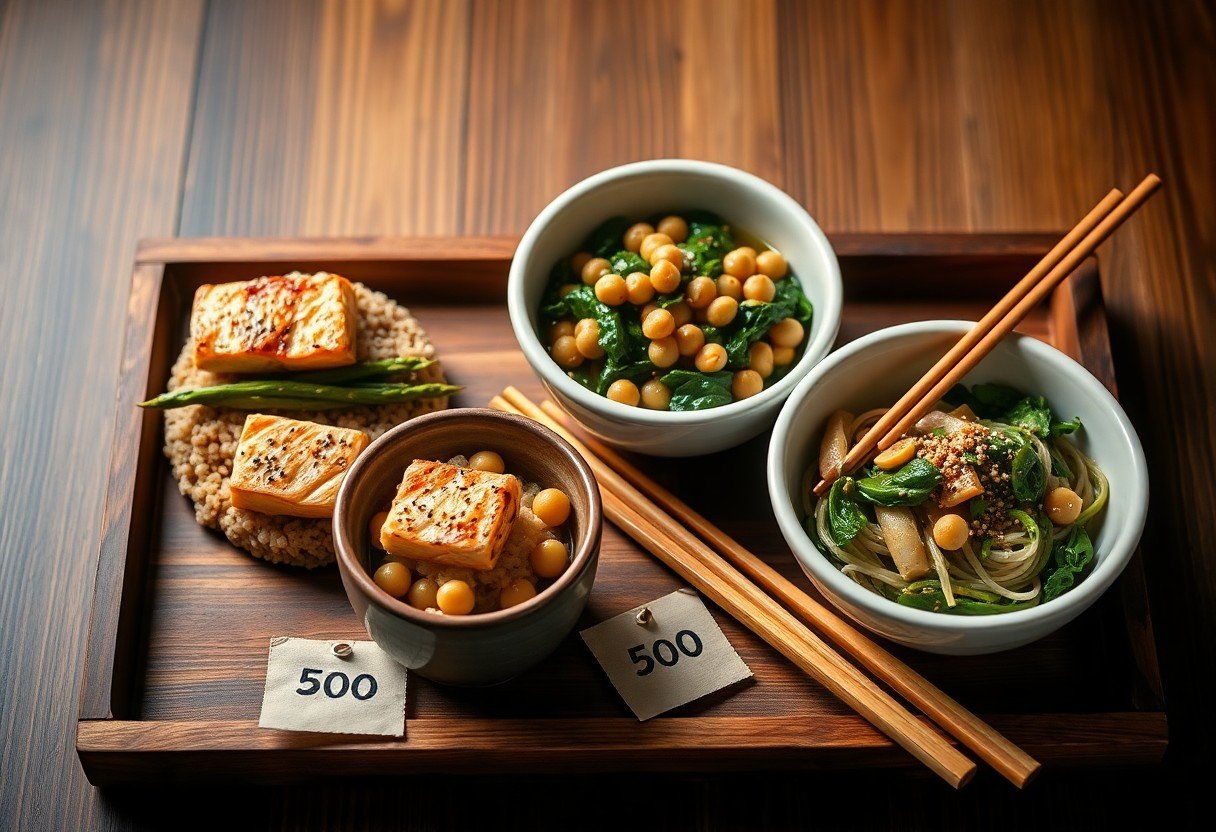
Key Takeaways:
- Emphasizes lean protein, high-fiber vegetables and modest whole grains to deliver balanced macronutrients within 500 calories.
- Uses portion control and simple swaps (e.g., brown rice for white, yogurt for cream) to keep calories low without sacrificing flavor.
- Encourages batch cooking and seasoning with herbs and spices to make healthy, satisfying dinners easy and repeatable.
Importance of Balanced Meals
For a dinner under 500 calories to work long-term, you need balance: half your plate non-starchy vegetables, a quarter lean protein and a quarter whole grain or legume. This composition sustains energy, limits evening cravings, and helps you preserve muscle during a calorie deficit. Aim for meals that deliver satiety through volume and protein rather than empty calories, so your evening blood sugar and sleep quality stay steady.
Nutritional Guidelines
Set a dinner target of 350-500 kcal. Include 25-30 g protein, 8-12 g fiber, ~30-45 g complex carbs, and 10-20 g healthy fats. Keep sodium under 600 mg when possible. You can achieve this with 4 oz chicken (≈120 kcal, 26 g protein), 2 cups mixed greens (≈40 kcal, 4 g fiber) and 1/2 cup cooked quinoa (≈110 kcal).
Benefits of Low-Calorie Dinners
Eating a lighter dinner supports weight management by reducing overall daily intake and often lowers nighttime snacking; cutting dinner to ~400-500 kcal can reduce total daily calories by roughly 15-25% versus typical larger evening meals. It also reduces postprandial glucose excursions and may improve sleep quality, especially when dinner is timed 2-3 hours before bed and balanced in protein and fiber.
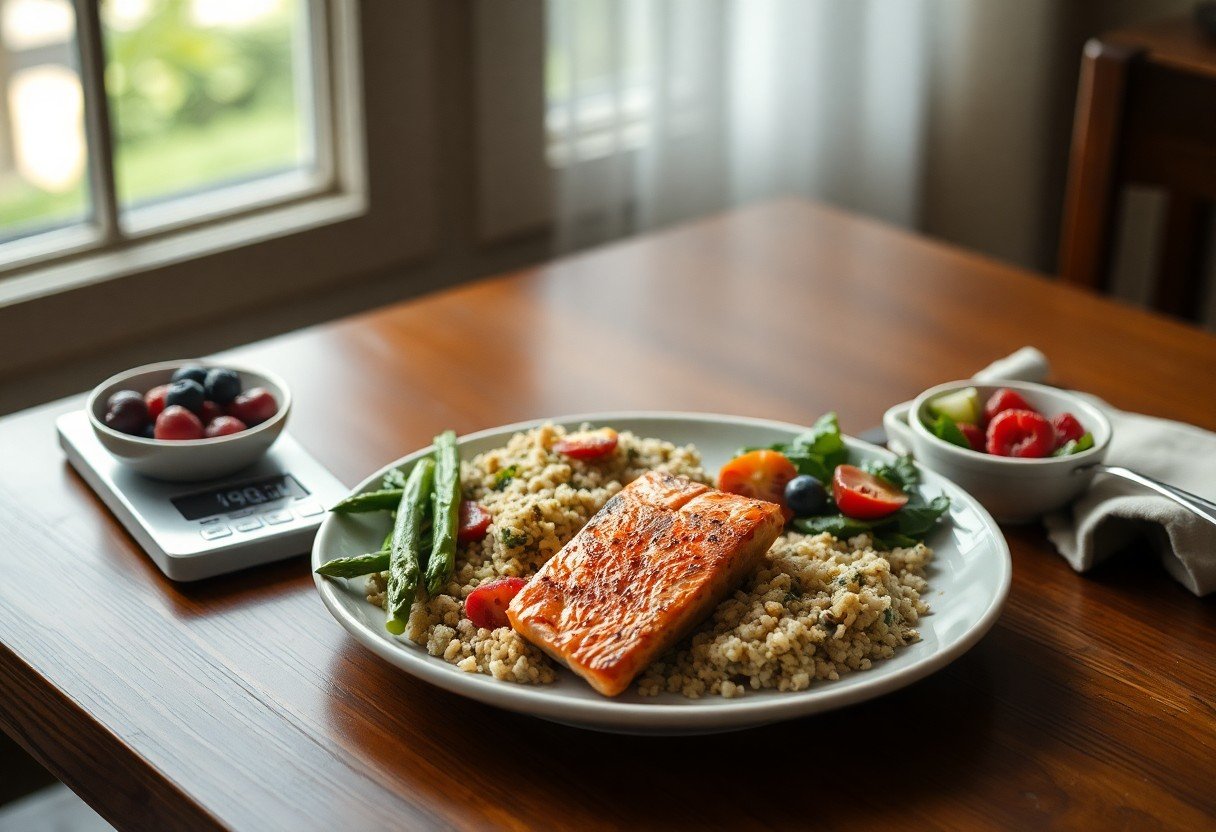
Practical examples show how this works: 4 oz salmon (~230 kcal, 22-24 g protein) + 2 cups roasted broccoli (~110 kcal, 8 g fiber) + 1/3 cup cooked farro (~100 kcal) totals ~440 kcal while delivering protein, fiber and micronutrients. Avoid dinners under 300 kcal regularly, since too few calories can lead to nutrient gaps and lowered metabolic rate; instead prioritize protein and vegetables to hit targets.
Recipe Categories
You’ll find recipes grouped by approach: hearty vegetarian plates, lean poultry and fish mains, grain-and-veg bowls, and light soups or salads. Most entries target 300-480 calories and aim for 20-35 g protein per serving so you hit satiety without exceeding 500 kcal. Expect concrete portion sizes, prep times, and swaps that show how simple swaps keep flavor high and calories low.
Vegetarian Options
You can build filling vegetarian dinners around legumes, tofu, tempeh, eggs or dairy to reach satiation and protein goals; for example, a lentil-and-roasted-veg bowl (~400 kcal, ~22 g protein) or zucchini noodles with 150 g firm tofu. Swap full-fat cheese or excess oil to stay below 500 kcal and favor fiber-rich veggies for volume. Watch added oils and cheeses, as 1 tbsp oil equals ~120 kcal and can push a dish over the limit.
Poultry and Fish Dishes
You’ll rely on skinless chicken and fatty fish for lean protein and healthy fats: 100 g skinless chicken breast ≈ 31 g protein, 165 kcal, while 100 g cooked salmon ≈ 22 g protein, 206 kcal plus omega-3s. Keep portions to 3-4 oz (85-113 g) and skip breading to keep most plates under 500 kcal; avoid breading and deep-frying to prevent large calorie spikes.
When you cook these proteins, use fast methods-grill, bake, poach-or pan-sear with minimal oil: roast chicken at 375°F (190°C) for ~20-25 minutes until internal temp hits 165°F (74°C), and bake a 1-inch salmon fillet at 400°F (204°C) for 12-15 minutes. Sauce choices matter: 1 tbsp olive oil adds ~120 kcal, while a lemon-herb yogurt sauce can cut calories and add protein.
Ingredients to Include
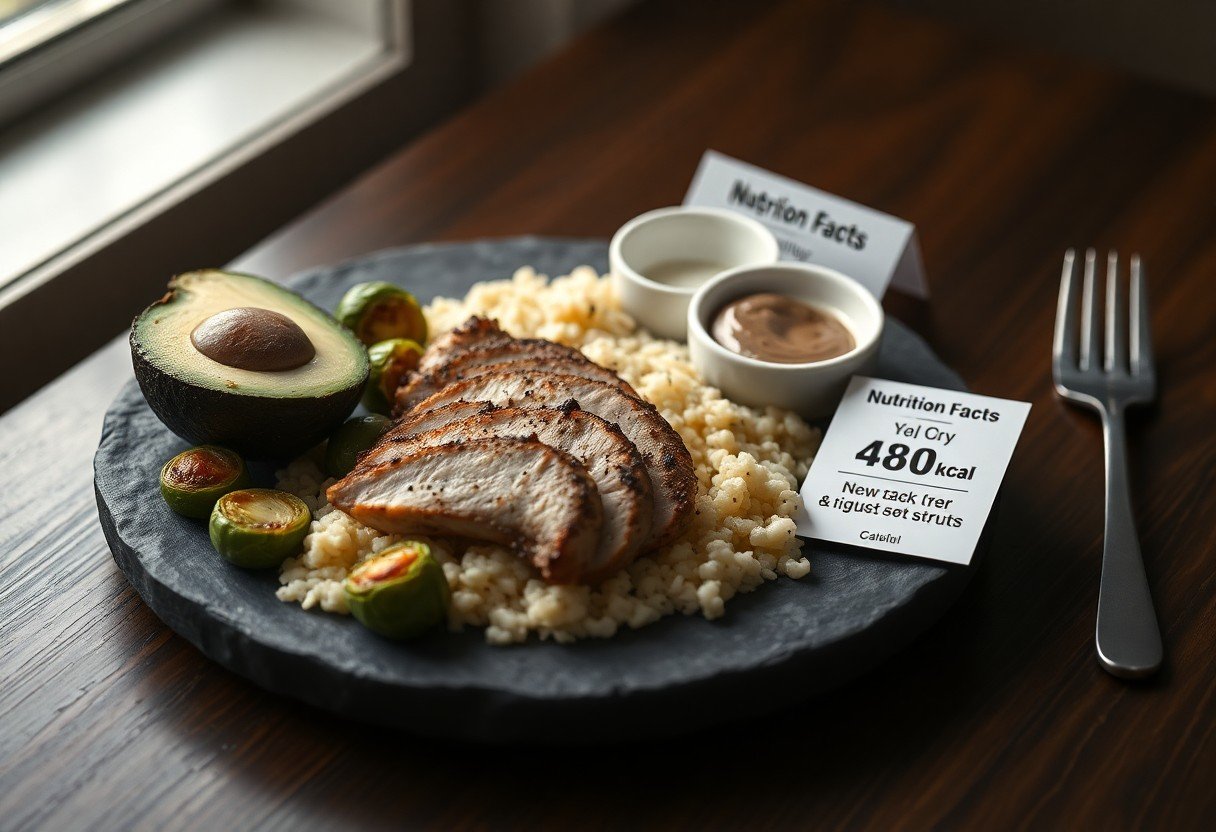
Pack your plate with lean proteins, high-fiber vegetables, whole grains and healthy fats; for example, a 3-oz portion of chicken breast (~140 kcal) or salmon (~175 kcal) plus 1 cup broccoli (31 kcal) and 1/2 cup quinoa (≈111 kcal) keeps dinners under 500 kcal while satisfying hunger. Watch sauces and toppings-1 tablespoon of oil is ~120 kcal, which can easily push your meal past the target if you’re not careful.
Proteins
You should aim for a 3-4 oz cooked protein (about 20-30 g protein) per meal: 3 oz chicken breast ≈140 kcal and ~26 g protein, 3 oz salmon ≈175 kcal and ~22 g, a large egg ≈70 kcal and ~6 g, and 1/2 cup cooked lentils ≈115 kcal and ~9 g. Favor lean cuts, fish and legumes for satiety and micronutrients, and avoid processed deli meats since high sodium and hidden calories can undermine your goals.
Vegetables
You should load at least 1-2 cups of non-starchy vegetables: 1 cup raw spinach ≈7 kcal, 1 cup chopped broccoli ≈31 kcal, and 1 cup bell pepper ≈24 kcal. These provide fiber and bulk so your plate feels full with few calories. Use frozen mixes for convenience and cook with minimal oil or broth. Note that starchy options like a medium potato (~150 kcal) or heavy butter dressings will raise meal calories quickly.
Pair vegetables strategically: a salad of 2 cups mixed greens (≈10-20 kcal) plus 1 cup roasted Brussels sprouts (≈38 kcal) delivers volume and roughly 5-7 g fiber; steam or pan-sauté with 1-2 tbsp vegetable broth to avoid excess oil. You’ll get vitamin C from red peppers and antioxidants from broccoli, while cooked spinach adds potassium. When you dress or finish veggies, limit high-calorie dressings and oils-1 tbsp oil ≈120 kcal to keep your dinner under 500 kcal.
Cooking Methods
Different techniques change calories and nutrients: pan-frying with 1 tablespoon of oil adds ~120 kcal, while steaming can preserve up to ~90% of vitamin C in some vegetables compared with boiling. You should favor methods that reduce added fat and preserve protein texture-grilling or roasting at 200-230°C (400-450°F) for 15-30 minutes or quick high-heat stir-frying for 2-4 minutes both work well; avoid charring to limit harmful compounds.
Grilling and Roasting
Grilling lets excess fat drip away and intensifies flavor; for lean proteins aim for a 4-6 oz portion (a 4 oz grilled chicken breast is ~187 kcal). Roast vegetables at 220°C (425°F) for 20-30 minutes to caramelize sugars without excess oil-use 1 tsp oil (≈40 kcal) per 2 cups veg. You must limit high-heat charring because PAHs and HCAs form on overly charred meats.
Stir-Frying and Steaming
Stir-frying uses very high heat and minimal oil-1 tsp oil per serving (~40 kcal) and 2-4 minutes of tossing preserves texture and nutrients; steaming keeps vitamins and minerals intact and suits fish or greens. You should use a hot nonstick wok or a tight-steamed basket, control oil amount, and time fish 6-8 minutes or vegetables 3-7 minutes to balance tenderness with nutrient retention.
For practical builds, try 3 oz firm tofu (~70 kcal) with 2 cups mixed veg (~80 kcal), 1 tsp oil (~40 kcal) and ½ cup cooked brown rice (~110 kcal) for a ~300 kcal dinner; you should cut ingredients uniformly, preheat the pan until it smokes slightly, and toss constantly for 2-4 minutes to get crisp-tender results, or steam broccoli 5 minutes to keep high vitamin content while avoiding sogginess.
Meal Planning Tips
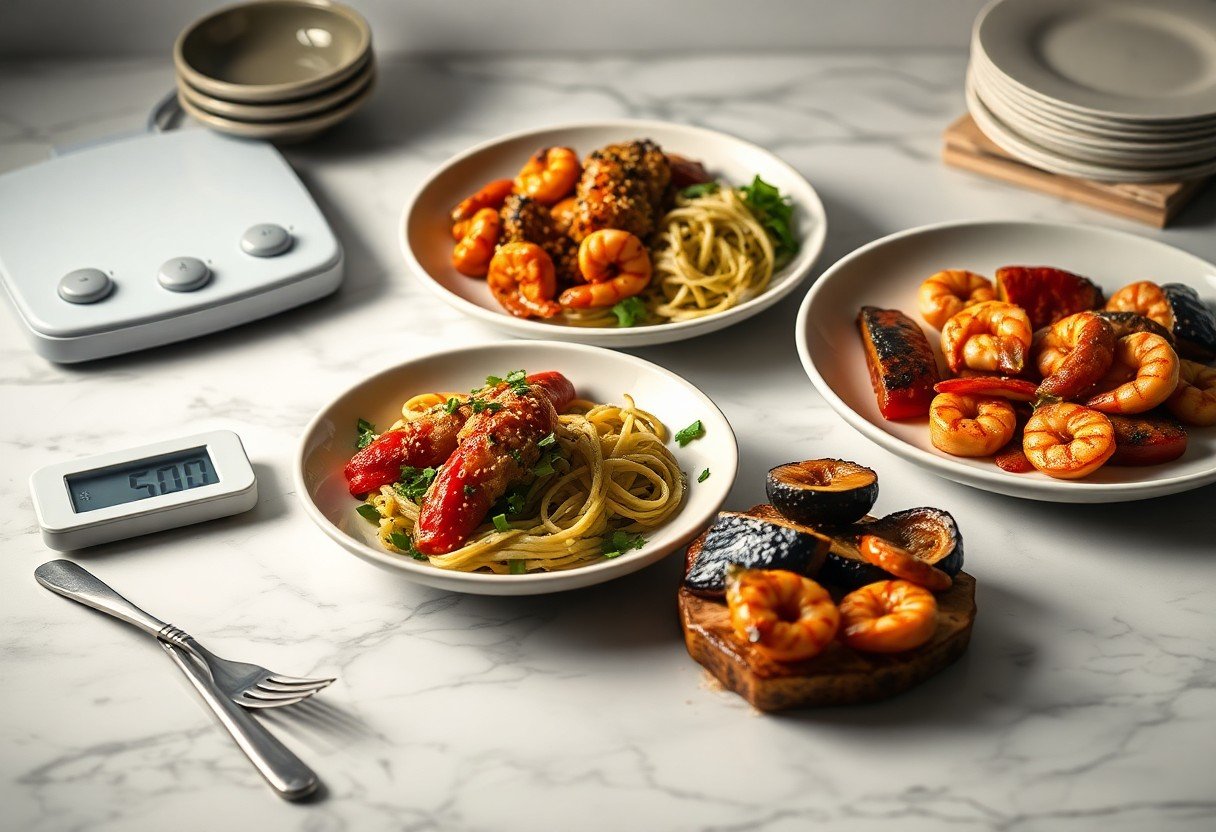
Plan batches twice weekly to keep dinners under 500 calories, aiming for 25-35 g protein and 2 cups of vegetables per meal. Swap 1 cup cooked white rice (≈205 kcal) for 1 cup cauliflower rice (~25 kcal) to save ≈180 kcal and avoid high-sodium sauces that add hidden calories and sodium. Recognizing that small swaps, protein-first portions, and simple swaps like grilled chicken + roasted veg make consistent 500-calorie dinners practical.
- Batch-cook lean proteins for 2-3 meals per week.
- Measure portions with a scale or cups to hit calorie targets.
- Swap ingredients (e.g., cauliflower rice, spiralized zucchini) to cut 100-200 kcal.
Portion Control
Use a food scale to portion proteins to 3-4 oz (85-113 g) – typically 150-220 kcal – and limit oils to 1 tablespoon (~120 kcal) per serving; aim for 2 cups nonstarchy vegetables to add volume with minimal calories. You can track one week by weighing meals and noting calories: most people find shaving 50-150 kcal per component (rice, oil, dressing) reliably keeps dinners under 500 calories.
Preparing in Advance
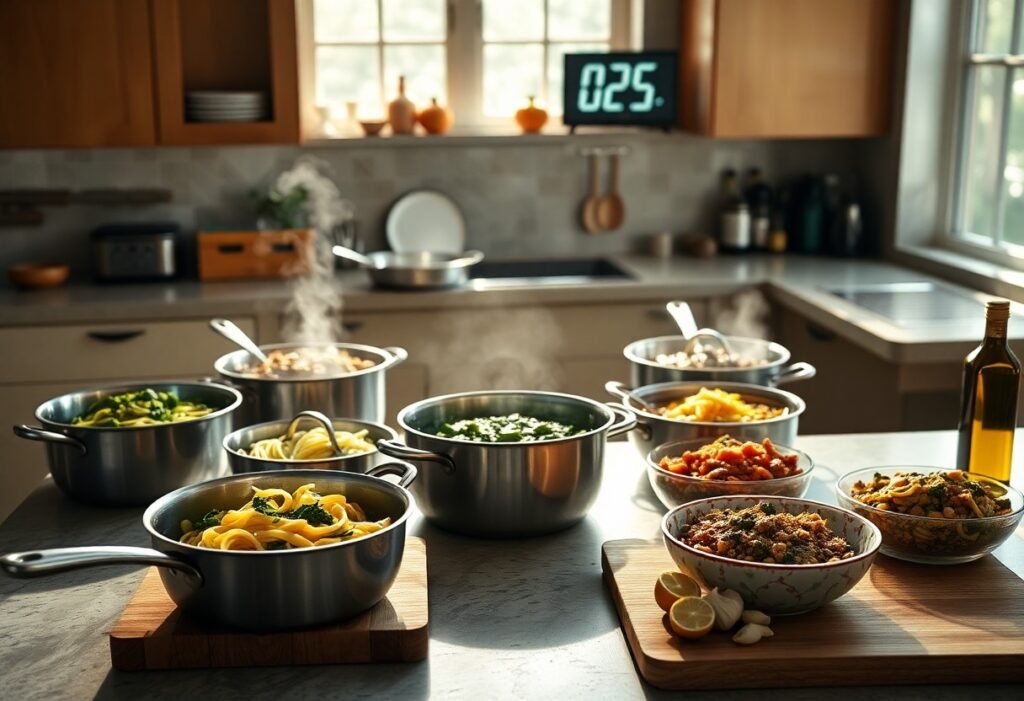
Batch-cook proteins twice weekly (for example, 8 oz salmon fillets or 6 chicken breasts) and portion into airtight containers so you can assemble meals in 10 minutes; pre-chop 4-5 cups mixed vegetables and store for 3-5 days to speed prep. Freeze single-meal portions and label them with dates to control portions and avoid waste.
When you prep, cool cooked food within 2 hours and refrigerate at or below 40°F (4°C); do not leave perishable food out for more than 2 hours. Reheat to 165°F (74°C) when serving from frozen or refrigerated portions. Use clear containers, date labels, and separate sauces to prevent sogginess; this approach saves you 20-30 minutes nightly and reduces impulse additions that push meals above 500 calories.
Sample Menu Plan
You can structure a week by combining a 450-kcal salmon bowl with a 150-kcal side salad to keep dinner under 500 calories; explore more quick options at 15+ 500-Calorie 20-Minute Dinner Recipes – EatingWell. Rotate lean proteins, whole grains, and vegetables so you hit ~25-35% of daily protein at dinner on a 2,000-kcal plan while avoiding sodium-heavy convenience meals.
Breakfast, Lunch, and Dinner Pairings
You should aim for a 200-300 kcal breakfast (Greek yogurt with berries, ~15-20g protein), a 350-450 kcal lunch (grilled chicken salad, ~30g protein), and a 400-500 kcal dinner to balance daily intake. Include whole grains and fibrous vegetables to stabilize blood sugar and skip sugar-sweetened drinks that add empty calories.
Snack Suggestions
Choose snacks between 100-200 calories to bridge hunger without derailing dinner: an apple with 1 tbsp peanut butter (~165 kcal), 20 almonds (~140 kcal), or 5 oz plain Greek yogurt (~90-120 kcal) with cinnamon are good picks. Favor combos with protein and fiber so you stay satisfied for 3-4 hours.
Prep single-serve portions (zip bags, measured scoops) to avoid overeating; aim for 5-10g protein and 3-5g fiber per snack. Check labels-many bars exceed 250 kcal and contain >10g added sugar-so pick options with under 10g added sugar and clear serving sizes.
Conclusion
On the whole you can rely on this Dinner Under 500 Calories Balanced Recipe List to provide satisfying, nutrient-dense meals that support weight management and overall health. By combining lean proteins, fiber-rich vegetables, whole grains, and healthy fats, your dinners will be flavorful, varied, and simple to prepare-helping you meet nutritional goals without excess calories.
FAQ
Q: What counts as a “balanced” dinner under 500 calories?
A: A balanced dinner under 500 calories includes a lean source of protein (20-35 g), a generous serving of nonstarchy vegetables (at least 1-2 cups), a controlled portion of whole grains or starchy vegetables (about 1/2 cup cooked or 3-4 oz cooked), and a small amount of healthy fat (1 tsp-1 tbsp). Aim for a mix of protein, fiber, complex carbs, and unsaturated fats so the meal provides satiety and steady energy while staying near the calorie target.
Q: How can I reliably keep recipes under 500 calories without losing flavor?
A: Use lean proteins (chicken breast, fish, turkey, tofu), bulk up with low-calorie vegetables, and measure starchy components. Favor cooking methods that add flavor without fat-grilling, roasting, steaming, broiling-and use herbs, spices, citrus, vinegar, and low-sodium broths. Limit high-calorie add-ins (cream, large amounts of cheese, oil) or apply them sparingly (measure oils, serve sauces on the side). Weigh portions or track with a calorie app for accuracy.
Q: Can you give sample dinner recipes with estimated calories and portions?
A: Grilled salmon (4 oz, 230 kcal) + 1 cup roasted asparagus (40 kcal) + 1/2 cup cooked quinoa (110 kcal) + 1 tsp olive oil for roasting (40 kcal) = ~420 kcal; Turkey and vegetable stir-fry: 4 oz ground turkey (160 kcal) + 1 cup mixed bell peppers & broccoli (50 kcal) + 1/2 cup cooked brown rice (110 kcal) + 1 tbsp reduced-sodium soy + 1 tsp sesame oil (60 kcal) = ~380-400 kcal; Chickpea spinach curry: 3/4 cup canned chickpeas, drained (200 kcal) + 1.5 cups spinach & tomatoes (50 kcal) + 1/2 cup light coconut milk (100 kcal) + spices and 1/2 cup cauliflower rice (25 kcal) = ~375 kcal; Zucchini noodles with shrimp: 5 oz shrimp (140 kcal) + 2 cups zoodles (60 kcal) + 1/4 cup cherry tomatoes & basil (15 kcal) + 1 tbsp light pesto (80 kcal) = ~295 kcal.
Q: How do I adapt the list for vegetarian, vegan, or gluten-free needs while staying under 500 calories?
A: Swap animal protein for legumes, tempeh, tofu, edamame, or seitan (if not gluten-free) and adjust portion sizes to hit protein targets. Use cauliflower rice, quinoa, or gluten-free grains for gluten-free meals. For vegan meals, replace dairy with plant-based yogurts or light coconut/soy milk and use nutritional yeast for savory flavor. Cut added oils or nuts where necessary and add herbs, citrus, and fermented condiments to boost flavor without many calories.
Q: What meal-prep and storage tips help maintain calorie accuracy and freshness across the week?
A: Portion meals into single-serving containers immediately after cooking and label with calories and date. Keep dressings and high-calorie toppings separate until serving. Use airtight containers in the fridge for 3-4 days and freeze portions you won’t eat within that window; thaw in the fridge overnight. Reheat gently to preserve texture, and weigh or measure ingredients during prep so calorie counts remain consistent.