
If you are lying awake at 3 a.m., drenched in sweat and staring at the ceiling, you are not alone. Sleep problems are one of the most common — and most frustrating — symptoms women experience during perimenopause and menopause. Hormonal changes during this transition disrupt sleep in multiple ways, affecting millions of women worldwide.
Research consistently shows that poor sleep during menopause is not just an inconvenience. Chronic sleep deprivation affects memory, mood, immune function, cardiovascular health, and weight regulation. For many women, it becomes one of the most debilitating aspects of the entire menopausal transition.
Hormone replacement therapy (HRT) is often discussed as a treatment for hot flashes and mood swings, but its impact on sleep quality is equally significant — and often underappreciated. In this guide, you will learn exactly how HRT affects sleep, what the research says, who it is right for, the different types available, and what to do if HRT is not your best option.
⚕️ Medical Note: This article is for informational purposes only. Always consult a qualified healthcare provider before starting or stopping any hormone therapy.
Why Does Menopause Disrupt Sleep?
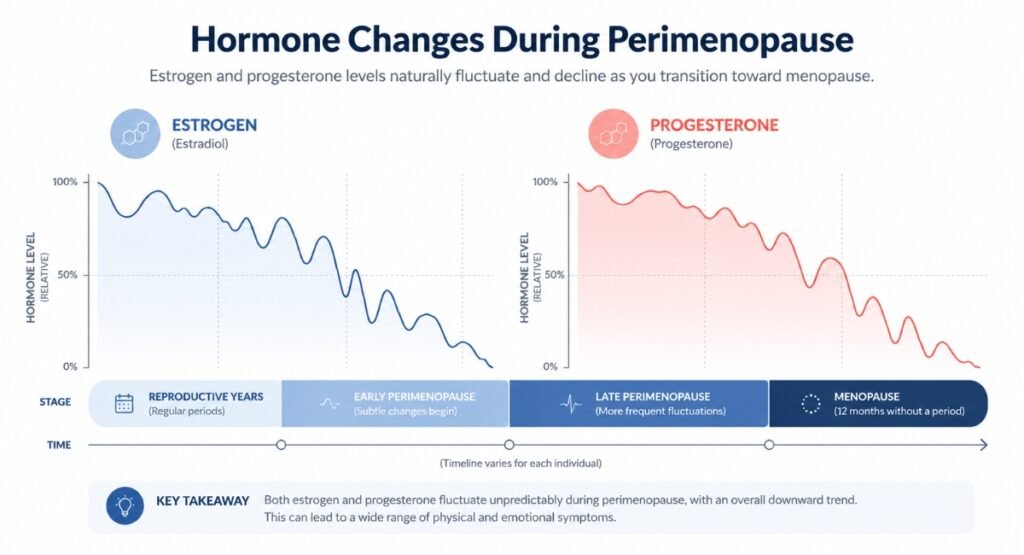
Sleep disturbances during menopause are not imaginary — they are rooted in measurable hormonal changes. Research shows that between 40% and 60% of women experience significant sleep difficulties during the perimenopausal transition. Yet despite how common this is, sleep problems remain one of the most underdiagnosed and undertreated aspects of menopause care.
Understanding why sleep breaks down during this time is the first step to finding the right solution.
The Role of Estrogen
Estrogen helps regulate body temperature and plays a direct role in serotonin production — a neurotransmitter closely tied to sleep regulation and mood stability. When estrogen levels were steady, your body maintained a reliable internal thermostat. As estrogen declines, that thermostat becomes erratic.
The result is vasomotor instability — hot flashes and night sweats that can strike multiple times per night, jolting you out of deep sleep and making it difficult to fall back asleep. Even on nights when you do not fully wake, these thermal surges can pull you out of restorative deep sleep into lighter sleep stages, leaving you exhausted despite technically spending eight hours in bed.
Estrogen also influences the production of melatonin, the hormone that signals your body it is time to sleep. Lower estrogen levels are associated with reduced melatonin sensitivity, which can make it harder to feel sleepy at your usual bedtime.
The Role of Progesterone
Progesterone has a naturally sedating effect on the brain. It acts on GABA receptors — the same receptors targeted by many prescription sleep medications and anti-anxiety drugs — to promote feelings of calm, reduce anxiety, and induce drowsiness. It is, in many ways, your body’s natural sleep aid.
As progesterone levels fall during perimenopause, the loss of this calming effect is profound. Many women notice they feel wired at night, unable to wind down even when physically exhausted. They fall asleep more slowly, wake more frequently in the early hours of the morning, and rarely reach the deep, slow-wave sleep that leaves you feeling genuinely refreshed.
This is why progesterone is considered such an important component of HRT for sleep — not just as a protective measure for the uterus, but as an active contributor to better rest.
How Hormonal Changes Alter Sleep Architecture
Sleep is not a single state. It cycles through stages — light sleep, deep sleep, and REM sleep — approximately every 90 minutes. Each stage serves a different function. Deep sleep (slow-wave sleep) is when physical restoration happens: tissue repair, immune function, and memory consolidation. REM sleep is essential for emotional processing and cognitive function.
Hormonal changes during menopause specifically reduce time spent in slow-wave sleep and increase the frequency of brief awakenings. Many women in perimenopause describe sleeping for a full eight hours yet feeling completely unrestored — this is the hallmark of disrupted sleep architecture, not just reduced sleep duration.
Other Contributing Factors
Beyond hormones, menopause-related sleep problems often involve a cluster of additional factors that compound the problem:
- Anxiety and mood changes linked to hormonal fluctuations and life stressors common at midlife
- Sleep-disordered breathing, including snoring and sleep apnoea, which becomes significantly more common after menopause as the loss of estrogen affects upper airway muscle tone
- Restless leg syndrome, which is associated with lower estrogen and iron levels
- Increased cortisol sensitivity, causing the stress response to become more reactive and harder to switch off at night
- Joint pain and musculoskeletal discomfort, which can make finding a comfortable sleep position difficult
- Nocturia — waking to urinate — which becomes more frequent as bladder tissue changes with declining estrogen
How HRT Helps With Sleep
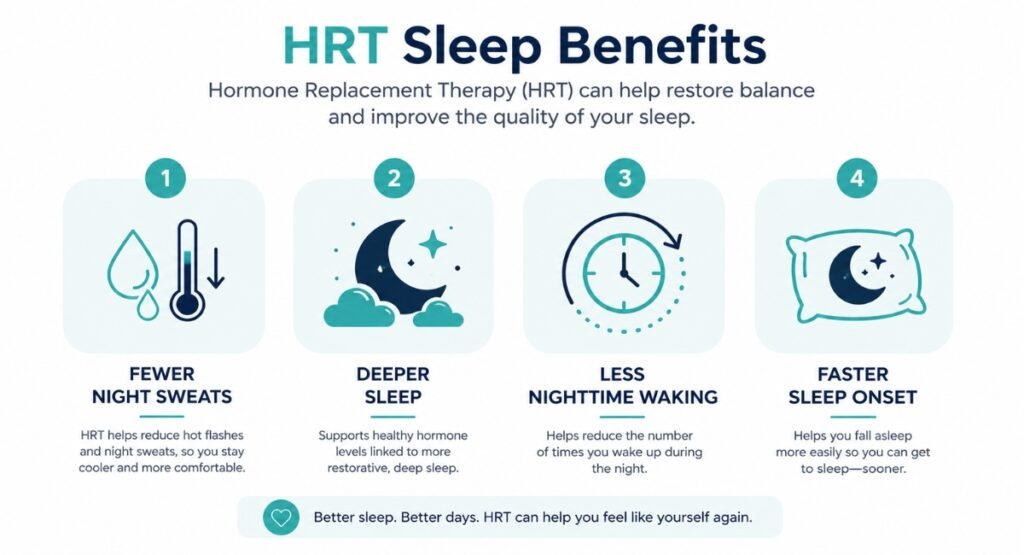
Hormone replacement therapy works by supplementing the estrogen and progesterone your body is no longer producing in sufficient quantities. For sleep specifically, HRT addresses the problem at its root cause rather than simply suppressing symptoms on the surface.
Reducing Night Sweats and Hot Flashes
The most direct way HRT improves sleep is by reducing vasomotor symptoms. Studies consistently show that estrogen therapy significantly decreases the frequency and intensity of hot flashes and night sweats, which in turn reduces the number of times women wake during the night.
The evidence for this is robust. A systematic review and meta-analysis examining the efficacy of menopausal hormone therapy on sleep quality found that women using HRT reported meaningful reductions in nighttime waking and improvements in overall sleep satisfaction compared to those using placebo.
Crucially, when women stop HRT after a period of use, sleep problems typically return within one to two months. This pattern — improvement with HRT, deterioration after stopping — strongly supports the direct role hormones play in sleep quality, rather than improvement being a placebo effect or coincidence.
Improving Sleep Architecture
Beyond simply reducing night sweats, HRT appears to improve the actual structure of sleep. Research published in the journal Menopause found that women using low-dose HRT were significantly more likely to report restful sleep and spend more time in the deeper, restorative stages of sleep compared to those not using hormone therapy.
This means HRT does not just help you stay asleep — it helps you sleep better while you are asleep. Women on HRT often report waking up feeling genuinely rested for the first time in years, which speaks to this improvement in sleep quality rather than simply sleep duration.
Progesterone’s Direct Sedative Effect
When combined HRT is prescribed — estrogen plus progesterone or progestogen — the progesterone component offers its own independent sleep benefit, separate from any reduction in hot flashes.
Oral micronized progesterone in particular has been shown to shorten sleep latency (the time it takes to fall asleep), reduce the number of nighttime awakenings, and increase total sleep time. This is largely due to its action on GABA receptors in the brain — the same pathway that makes you feel calm and drowsy.
This is one reason why oral micronized progesterone is often preferred over synthetic progestogens in modern HRT regimens. Synthetic progestogens do not act on GABA receptors in the same way and do not offer the same sleep benefit — and in some women, can actually worsen sleep quality or cause vivid dreams.
💡 Key Finding: A large population-based study found that women who had never used hormone therapy had significantly higher odds of poor sleep efficiency and more frequent long-wake episodes compared to current HRT users — independent of age and other health factors.
The Mental Health Connection
It is worth noting that HRT’s positive effect on sleep is partly mediated through its impact on mood and anxiety. Hormonal fluctuations during perimenopause are strongly associated with increased rates of anxiety, low mood, and depressive symptoms — all of which are well-established drivers of insomnia.
By stabilising hormonal levels, HRT can reduce anxiety and improve mood, which in turn makes it easier to fall asleep and stay asleep. For women whose sleep problems are closely intertwined with mood symptoms, addressing the hormonal root cause often produces improvements in both simultaneously.
Types of HRT and Their Effect on Sleep
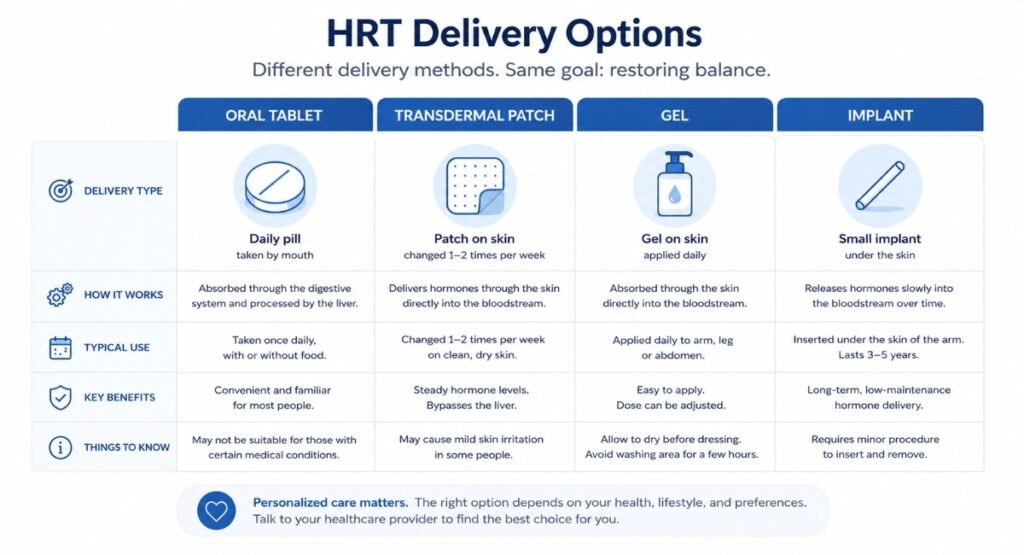
Not all HRT formulations work the same way, and the type you use can make a meaningful difference to how much your sleep improves. Understanding the options helps you and your doctor choose the approach most likely to address your specific needs.
Estrogen-Only HRT
Prescribed for women who have had a hysterectomy (removal of the uterus), estrogen-only HRT is highly effective at reducing vasomotor symptoms and the sleep disruptions they cause. It is available in several delivery forms:
- Oral tablets — convenient and well-studied, but associated with slightly higher risk of blood clots compared to transdermal options
- Transdermal patches — deliver estrogen steadily through the skin, bypassing the liver and carrying a lower clot risk
- Gels and sprays — applied daily to the skin, offering flexible and adjustable dosing
- Implants — small pellets placed under the skin that release estrogen consistently over several months
For sleep specifically, transdermal estrogen is often preferred because it provides more stable hormone levels without the peaks and troughs that oral tablets can cause, which can contribute to more consistent symptom relief overnight.
Combined HRT (Estrogen + Progestogen)
Women who still have their uterus must take a progestogen alongside estrogen to protect the uterine lining from the stimulating effects of unopposed estrogen, which can otherwise increase the risk of endometrial cancer.
The progestogen component also adds direct sleep benefit. As discussed above, oral micronized progesterone (body-identical progesterone, often sold under brand names such as Utrogestan) is generally preferred over older synthetic progestogens for its more favourable sleep profile. It is typically taken at night, which aligns well with its sedating properties.
Local vs Systemic Delivery
Some women use low-dose vaginal estrogen to address local symptoms such as vaginal dryness and urinary discomfort. This is applied directly to the vaginal tissue and is not absorbed into the bloodstream in meaningful amounts. While it is excellent for local symptoms, it does not deliver enough estrogen to address hot flashes or improve sleep.
Women whose sleep is significantly disrupted by menopausal symptoms generally need systemic HRT — delivered via patch, gel, spray, or tablet — to achieve meaningful improvement.
Body-Identical vs Synthetic Hormones
A term you will increasingly hear is body-identical HRT — hormones that are chemically identical to those produced naturally by the body (estradiol and micronized progesterone), as opposed to older synthetic versions. Body-identical hormones are generally associated with a better side effect profile and are increasingly preferred by both clinicians and patients, particularly for sleep-related benefits.
Who Should Consider HRT for Sleep Problems?
HRT is most appropriate when sleep disruption is clearly linked to menopausal symptoms — particularly vasomotor symptoms like night sweats and hot flashes. Your doctor will take a full picture of your health before recommending it.
Good Candidates for HRT
- Women aged under 60 or within 10 years of their last menstrual period
- Women whose sleep problems began or significantly worsened around the time of perimenopause
- Women whose sleep is primarily disrupted by night sweats, hot flashes, or both
- Women who have tried lifestyle modifications without adequate relief
- Women experiencing other menopausal symptoms alongside sleep problems, such as mood changes or vaginal dryness
Who Should Exercise Caution or Avoid HRT
HRT is not appropriate for everyone. Your doctor will advise against it or recommend alternatives if you have a personal or significant family history of:
- Hormone-receptor-positive breast cancer
- Blood clots, deep vein thrombosis, or pulmonary embolism
- Stroke or cardiovascular disease
- Unexplained or undiagnosed vaginal bleeding
- Active liver disease
⚠️ Important: The decision to use HRT is individual and should be made collaboratively with a knowledgeable healthcare provider. Current guidelines from major menopause societies recommend using the lowest effective dose for the shortest time needed, with regular review — typically annually.
Non-HRT Options for Better Sleep During Menopause

For women who cannot or choose not to use HRT, or who want to maximise their results alongside hormone therapy, several well-evidenced alternatives exist.
Sleep Hygiene Strategies
Sleep hygiene refers to the habits and environment that set the stage for good sleep. These are foundational for every woman navigating menopause-related sleep problems:
- Keep your bedroom cool — aim for 16 to 18 degrees Celsius, as a cooler environment reduces the frequency and intensity of hot flash triggers
- Maintain a consistent sleep schedule — go to bed and wake at the same time every day, even on weekends, to reinforce your circadian rhythm
- Avoid caffeine after 2 p.m. and alcohol within three hours of bedtime — both fragment sleep and worsen night sweats
- Wear loose, breathable nightwear made from natural fibres such as cotton or bamboo
- Limit screen exposure for at least one hour before bed — blue light suppresses melatonin production
- Consider a cooling mattress topper or moisture-wicking bedding designed for night sweats
Cognitive Behavioural Therapy for Insomnia (CBT-I)
CBT-I is a structured, evidence-based programme that targets the thoughts and behaviours that perpetuate insomnia. It is recommended as the first-line treatment for chronic insomnia by sleep medicine bodies worldwide — including for menopausal women — and has been shown to produce durable improvements even after the programme ends.
CBT-I typically involves sleep restriction therapy, stimulus control, relaxation training, and challenging unhelpful beliefs about sleep. It is available through trained therapists, and increasingly through digital programmes and apps, making it accessible without a long waiting list.
Non-Hormonal Medications
For women who cannot use HRT, several medications have good evidence for reducing hot flashes and improving sleep:
- Low-dose SSRIs and SNRIs — paroxetine and venlafaxine in particular have been shown to reduce vasomotor symptoms by 50–60% in clinical trials
- Gabapentin — originally an anticonvulsant, it reduces night sweats and has direct sleep-promoting properties
- Clonidine — a blood pressure medication that modestly reduces hot flash frequency
- Fezolinetant — a newer, specifically approved non-hormonal option that targets the neurokinin pathway driving vasomotor symptoms, with promising sleep outcomes in clinical trials
Lifestyle and Complementary Approaches
While lifestyle changes alone are unlikely to eliminate severe menopausal sleep disruption, they can make a meaningful difference — particularly when combined with medical treatment:
- Regular aerobic exercise reduces hot flash frequency and improves sleep quality, but avoid vigorous exercise within three hours of bedtime
- Mindfulness-based stress reduction (MBSR) has evidence for improving sleep quality and reducing anxiety in perimenopausal women
- Reducing alcohol — even moderate alcohol intake fragments sleep architecture and significantly worsens night sweats
- Soy isoflavones and phytoestrogens — found in tofu, edamame, and flaxseed — act as weak estrogens and may offer modest benefit for some women, particularly those of Asian descent who consume them regularly
What to Expect When Starting HRT for Sleep
Managing expectations from the outset is important. HRT is not an overnight solution, and understanding the timeline helps prevent early abandonment of a therapy that needs time to work.
Most women begin to notice a reduction in hot flashes and night sweats within two to four weeks of starting HRT. This initial improvement in vasomotor symptoms often produces an immediate — if partial — improvement in sleep.
Full improvement in sleep quality, including changes to sleep architecture and the ability to feel genuinely rested, typically takes eight to twelve weeks. This is because the brain’s sleep regulation systems need time to recalibrate once hormonal stability is restored.
If your sleep has not meaningfully improved after three months, return to your doctor. Possible next steps include:
- Adjusting the dose of estrogen upward if symptoms remain poorly controlled
- Switching the progestogen component to oral micronized progesterone if sleep is still disrupted
- Investigating other causes of sleep disruption — sleep apnoea, anxiety disorder, or primary insomnia — that may require separate treatment
- Considering adding CBT-I alongside HRT for a combined approach
Frequently Asked Questions
Does HRT improve sleep quality?
Yes, for many women. HRT primarily improves sleep by reducing the hot flashes and night sweats that cause nighttime waking. Combined HRT that includes oral micronized progesterone also benefits sleep through progesterone’s direct calming and sedating effect on the brain. Most women using HRT report meaningful improvements in sleep within two to three months.
How long does it take for HRT to help with sleep?
Most women notice early improvement in sleep within four to eight weeks as vasomotor symptoms begin to reduce. Full sleep quality improvement — including feeling genuinely rested upon waking — typically takes up to three months as the body’s sleep regulation systems stabilise.
Can HRT cause sleep problems?
In some women, HRT can initially cause vivid dreams or temporarily disrupt sleep — particularly those using certain synthetic progestogens. Switching to oral micronized progesterone often resolves this. Some women also experience initial breast tenderness or bloating as they adjust to new hormone levels. These side effects typically settle within six to eight weeks.
Is there a best type of HRT for sleep?
Current evidence favours combined HRT using transdermal estradiol (patch, gel, or spray) alongside oral micronized progesterone taken at night. This combination provides stable estrogen levels to control vasomotor symptoms while the progesterone’s sedating effect directly promotes sleep. However, the best formulation always depends on your individual health history and preferences.
Can I take HRT just for sleep problems?
HRT is generally prescribed when sleep disruption is part of a broader pattern of menopausal symptoms, particularly when vasomotor symptoms are the identified trigger. If night sweats are clearly disrupting your sleep, this is a valid clinical reason to discuss HRT with your doctor. If your sleep problems appear unrelated to hormonal symptoms, other approaches — particularly CBT-I — may be a better starting point.
What happens to sleep when I stop HRT?
Research clearly shows that stopping HRT — even for just one to two months — is associated with a significant return of sleep problems, including worsened nighttime waking and early morning waking. If you plan to stop HRT, discuss a gradual dose-tapering approach with your doctor to minimise the abruptness of hormonal withdrawal and reduce the likelihood of symptom rebound.
Does HRT help with sleep apnoea?
HRT does not directly treat sleep apnoea, and sleep apnoea requires its own investigation and treatment (typically with a CPAP device). However, because the risk of sleep-disordered breathing increases after menopause — partly due to changes in airway muscle tone — addressing hormonal changes with HRT may offer some indirect benefit. If you snore heavily or your partner notices pauses in your breathing, raise this with your doctor regardless of your HRT status.
Final Thoughts
Sleep disruption during menopause is common, but it is not something you simply have to accept as an inevitable part of ageing. For many women, the hormonal changes of perimenopause and menopause are the primary driver of their sleep problems — and addressing those hormonal changes with HRT can produce meaningful, lasting improvements in sleep quality and overall wellbeing.
The right approach is not the same for every woman. Some will benefit greatly from HRT alone. Others will do best combining HRT with behavioural strategies like CBT-I. And some will need to explore non-hormonal options entirely. What matters most is that you do not suffer in silence or assume poor sleep is simply your new normal.
Work with a healthcare provider who takes your symptoms seriously — ideally one with specific training or interest in menopause medicine. Ask about the full range of options, discuss your personal risk profile honestly, and give whatever treatment you choose adequate time to work.
Better sleep is not a luxury. It is a foundation for your health, your mood, your relationships, and your quality of life — and you deserve to fight for it.
📋 Medical Disclaimer: This article is written for educational purposes and does not constitute medical advice. The information is based on current clinical evidence as of 2025–2026. Please consult your doctor or a registered menopause specialist before making any decisions about hormone therapy or other medical treatments.