
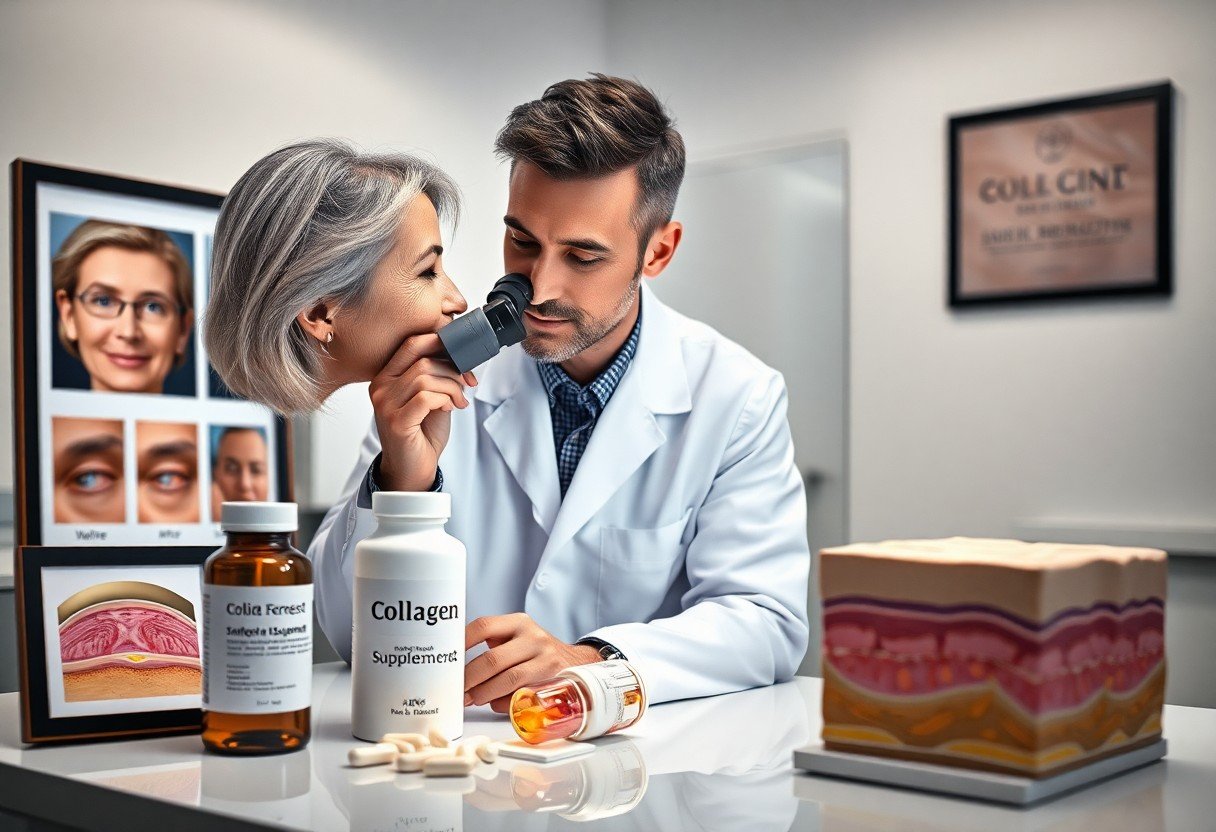
Most people ask whether collagen supplements will meaningfully improve your aging skin; evidence shows modest gains in skin elasticity for some, while unregulated products and allergic reactions pose potential risks, so you should discuss supplementation with a dermatologist before starting.
The Biological Role of Collagen in Dermal Integrity
Structural Architecture: Type I and Type III Collagen
Collagen types I and III create your dermal scaffold: Type I supplies tensile strength, Type III preserves elasticity, and shifts in their ratio reduce the firmness and resilience you expect from youthful skin.
The Impact of Chronological Aging and Photoaging on the Dermal Matrix
Aging and sun exposure accelerate collagen loss: intrinsic decline in synthesis and UV-driven collagen fragmentation by MMPs leave you with dermal thinning, laxity, and increased mechanical fragility.
Ultraviolet exposure generates reactive oxygen species and DNA damage, triggering inflammatory signaling and persistent MMP upregulation that cleaves existing collagen fibrils. Fibroblast senescence and protein glycation reduce your synthesis of new collagen, slowing repair so wrinkles, sagging, and fragility accumulate; sunscreen, topical retinoids, and targeted peptides can partially restore turnover and tensile properties.

Mechanism of Action: How Ingested Collagen Works
Bioavailability and the Absorption of Hydrolyzed Peptides
Hydrolyzed collagen breaks into small peptides and amino acids that enter circulation; you’ll absorb a portion within hours. Studies show di‑peptides like prolyl‑hydroxyproline appear in plasma, but absorption rates vary with formulation, dose, and your gut health.
Signaling Fibroblasts: Stimulating Endogenous Collagen Production
Peptides from ingested collagen can act as signaling molecules that prompt your fibroblasts to increase collagen synthesis; you may see improved dermal matrix markers. Effects are modest and dose-dependent, and work best when combined with adequate vitamin C and overall protein intake.
Clinical studies show repeated oral dosing over 8-12 weeks increases dermal collagen content and elasticity, and you can expect biochemical changes before visible results. Mechanisms include peptide-driven fibroblast activation, upregulation of collagen genes via TGF‑β and MAPK pathways, and supply of glycine/proline as substrates. Benefits include measurable dermal density gains and reduced wrinkle depth, while risks include possible allergenicity from source proteins and variable product quality, so you should choose tested formulations and ensure vitamin C to support synthesis.

Analyzing the Clinical Evidence
Review of Double-Blind, Placebo-Controlled Human Trials
Clinical trials are limited, but when you review several double-blind, placebo-controlled studies they report modest, statistically significant improvements in skin elasticity and hydration after 8-12 weeks; sample sizes are small and supplements are generally well tolerated with occasional allergic reactions.
Measuring Outcomes: Elasticity, Hydration, and Dermal Density
Measurements use instruments like cutometers, corneometers and high-frequency ultrasound to quantify elasticity, hydration and dermal density; you should note that objective device improvements often translate into small clinical changes, and methodological variability limits cross-study comparisons.
You should interpret device-measured gains in elasticity, hydration and dermal density against study context: most trials run 8-24 weeks, enroll middle-aged women, and use hydrolyzed collagen with co-ingredients. Device outputs like cutometer elasticity units or ultrasound dermal thickness are objective, but small numeric changes may not equal visible clinical benefit. Seasonal variability, placebo responses and inconsistent dosing reduce comparability; prioritize studies that report meaningful effect sizes and safety data and flag those noting allergic reactions or contamination risks.
Sourcing and Formulation Efficacy
Marine vs. Bovine Collagen: Bioavailability Comparisons
Marine collagen often delivers higher bioavailability because of smaller peptides, but you must weigh fish-allergy risks and sourcing practices before choosing a product.
Sourcing at a glance
| Marine | Bovine |
|---|---|
| Smaller peptides – better absorption | Larger peptides – may require hydrolysis |
| Allergy risk for seafood-sensitive users | Lower seafood allergen risk; BSE concerns mitigated by sourcing |
| Often higher cost; sustainability varies | Wider availability; cost-effective |
| Typically lower molecular weight | Variable molecular weight depending on processing |
The Importance of Molecular Weight and Peptide Purity
Molecular weight determines absorption: you absorb low-molecular-weight peptides more efficiently, so check labels for verified peptide size and purity.
You should prioritize brands that publish peptide profiles, heavy-metal screens, and microbial testing; consult independent analyses such as Will Oral Collagen Supplements Keep My Skin Healthy? to confirm peer-reviewed evidence and third-party purity testing, which reduce contamination risk and improve expected skin outcomes.
Synergistic Factors in Skin Health
Synergy between systemic and topical strategies shapes how your skin ages: oral collagen supplies building blocks, but enzymes need Vitamin C and copper, while uninterrupted SPF use prevents ongoing UV damage. Combining supplements with targeted topicals like retinoids improves structural repair. Thou integrate these elements for consistent results.
- Collagen – structural substrate
- Vitamin C – hydroxylation cofactor
- Copper – cross‑linking support
- Retinoids – stimulates synthesis
- SPF – prevents UV breakdown
Essential Cofactors: The Role of Vitamin C and Copper
Vitamin C and copper enable enzymatic cross‑linking and limit oxidative injury so your body converts peptides into functional collagen. Thou prioritize dietary sources and consider supplementation when intake is inadequate.
- Vitamin C – collagen hydroxylation
- Copper – lysyl oxidase activity
Complementary Topical Treatments: Retinoids and Sun Protection
Topical retinoids accelerate turnover and boost dermal collagen, while daily broad‑spectrum sun protection halts photoaging; both outperform isolated supplement use. Thou adopt retinoids and reliable SPF together.
Retinoids reduce fine lines, improve texture and increase dermal density, but you must introduce them gradually to minimize irritation and pair with emollients; avoid combining strong actives initially. Daily broad‑spectrum SPF remains the most protective measure against UV‑driven collagen loss. Thou make sunscreen daily and adjust retinoid strength to your skin’s tolerance.
Limitations and Professional Considerations
As a dermatologist, you should treat collagen supplements as an adjunct with clear limits: studies show only modest improvements for some patients, outcomes vary by product and individual, and oral collagen does not replace sun protection, topical retinoids, or evidence-based procedures.
Addressing the “Digestive Breakdown” Argument
You will note that digestion breaks proteins down, yet some hydrolyzed collagen peptides can be absorbed and may act as signaling molecules for skin repair; this mechanism supports modest benefit but not dramatic reversal of aging.
Potential Risks, Contaminants, and Supplement Regulation
Regulation of supplements is limited, so you should assume variability in purity and potency; look for third-party testing and be wary of products that lack transparent sourcing.
Contamination risks include heavy metals, microbial contamination, and undeclared allergens, and manufacturing lapses can produce inconsistent peptide concentrations. You should avoid products without batch testing, check for certifications like USP/NSF/ConsumerLab, disclose supplement use if pregnant or immunocompromised, and report adverse effects. Your safest approach pairs clinician guidance with verified brands rather than relying on marketing claims.
To wrap up
With this in mind, you can expect modest improvements in skin elasticity and hydration from collagen supplements when paired with sunscreen and healthy habits, while topical retinoids and procedural options remain the primary evidence-based strategies for aging skin.
FAQ
Q: Does collagen supplementation improve signs of skin aging?
A: Clinical trials of oral hydrolyzed collagen peptides report modest improvements in skin elasticity, hydration, and wrinkle depth compared with placebo. Published randomized controlled trials commonly show measurable changes after 8-12 weeks of daily use. Proposed mechanisms include absorption of short peptides that stimulate dermal fibroblasts, increase procollagen and hyaluronic acid production, and provide amino acids needed for matrix repair. Results vary by study design, baseline skin condition, age, and concurrent skin care, so supplements are not a replacement for sun protection and topical antiaging therapies.
Q: Which type of collagen and what dose should I choose?
A: Most clinical data support hydrolyzed collagen peptides rather than intact gelatin, with typical daily doses ranging from 2.5 g to 10 g depending on the product. Marine, bovine, porcine, and chicken sources have been studied; marine collagen may offer slightly higher absorption in some experiments, but direct clinical superiority is inconsistent. Select products with third-party testing for purity and heavy metals, review the source if you have allergies or dietary restrictions, and consider pairing the supplement with vitamin C (for example 50-500 mg/day) to support enzymatic collagen synthesis.
Q: How quickly will I see changes, and how long should I keep taking collagen?
A: Early effects on skin hydration can appear within 4 weeks in some studies, while measurable improvements in elasticity and wrinkle reduction are more common after 8-12 weeks of continuous use. Sustained intake is required to maintain gains because dermal collagen turnover continues; stopping supplementation typically leads to gradual loss of those benefits over months. Combine supplements with consistent sunscreen use and evidence-based topical agents for longer-lasting results.
Q: Are there safety concerns, side effects, or interactions to be aware of?
A: Oral collagen supplements are generally well tolerated. Reported side effects are usually mild and include gastrointestinal symptoms such as bloating or an unpleasant taste. Allergy risks depend on the source: marine collagen can trigger fish or shellfish allergies, and some formulations contain egg-derived ingredients. Little evidence exists for significant drug interactions, but safety data in pregnancy and lactation are limited, so discuss use with a clinician if pregnant or breastfeeding. Choose reputable manufacturers to reduce risk of contamination.
Q: Can collagen supplements replace topical treatments, procedures, or prescription therapies?
A: Collagen supplementation should be considered an adjunct rather than a replacement for proven dermatologic interventions. Topical retinoids, sunscreen, vitamin C serums, professional procedures (chemical peels, lasers, microneedling, injectables), and lifestyle measures address different aspects of skin aging and often produce larger, more predictable results. A combined approach that includes targeted topicals, photoprotection, and selective use of oral collagen can provide additive benefits under a dermatologist’s guidance.