
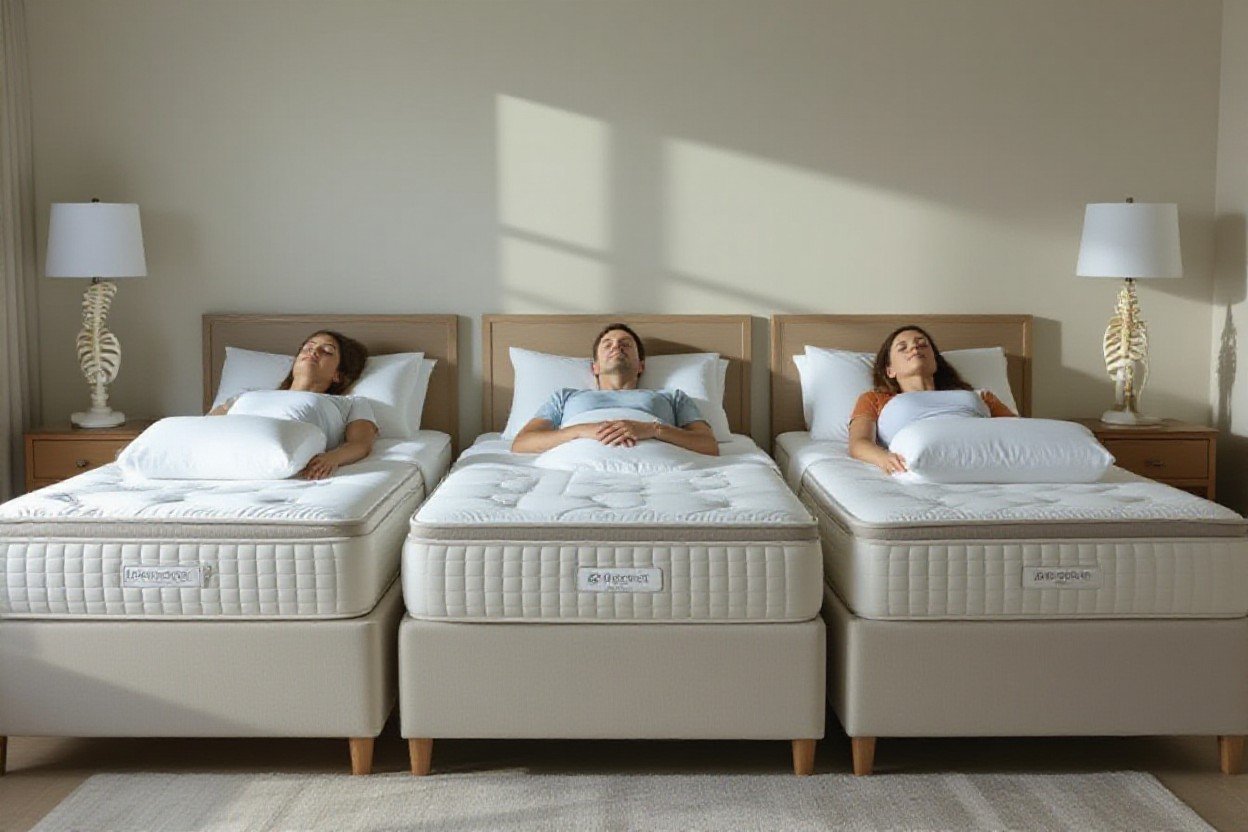
Posture determines how well you recover overnight and whether your spine and neck stay healthy; this guide helps you choose positions that support spine alignment, reduce risk of chronic neck pain, and promote improved breathing. You learn which positions ease pressure on your back, which to avoid if you have pain, and simple adjustments to protect your sleep and overall health so you wake with reduced pain and better function.

Key Takeaways:
- Back sleeping best supports a neutral spine when using a supportive pillow for the neck and a small pillow under the knees to reduce lower-back strain.
- Side sleeping (left side for reflux and pregnancy) is a strong alternative; place a pillow between knees and use a medium-loft pillow to keep hips and neck aligned.
- Stomach sleeping increases neck and lower-back stress-avoid it when possible; optimize mattress firmness and pillow height for head-spine alignment and consult a clinician for persistent pain or breathing issues.
The Importance of Sleep Position
Your sleep position drives spinal alignment, breathing efficiency and pressure distribution; about 80% of adults report back pain at some point and sleep posture is a common factor. Back sleeping with a pillow under the knees helps maintain the lumbar curve, while side sleeping with a pillow between the knees keeps the pelvis neutral. Avoid prolonged stomach sleeping, since it forces awkward rotation of the spine and neck and raises the likelihood of morning pain and stiffness.
How Sleep Position Affects Your Back
Sleeping on your stomach puts the lumbar spine into extension and often raises disc and facet stress, so you’re more likely to wake with low back pain. If you sleep on your back, placing a pillow under your knees reduces lumbar load and can ease sciatica symptoms; research and clinicians commonly recommend back or side positions for low-back complaints. When you choose side sleeping, use a firm pillow between the knees to keep hips aligned and limit rotational strain.
How Sleep Position Affects Your Neck
Your neck depends on pillow height and head rotation for neutral alignment: side sleepers typically need a thicker pillow (about 4-6 inches) to fill the shoulder-to-head gap, while back sleepers often do better with 2-4 inches. Stomach sleeping forces prolonged cervical rotation and extension, which increases muscle strain and morning headaches. Select a pillow that keeps your ear roughly in line with your shoulder to maintain neutral cervical posture throughout the night.
For more precision, try a contour or adjustable pillow and test alignment: lie on your side and check that your neck isn’t bent up or down; on your back, ensure a small curve supports the natural lordosis. If you have persistent neck radiculopathy or frequent nocturnal numbness, consider a cervical roll or consult a physical therapist for a tailored pillow and position strategy to reduce nerve loading and improve overnight recovery.
Best Sleep Positions for Back Health
You should prioritize positions that keep your spine neutral: sleeping on your back with a pillow under your knees or on your side with a pillow between your knees both promote alignment and reduce lumbar strain. Use a medium-firm mattress (about 5-7/10) and a neck-supporting pillow to maintain cervical curve. These adjustments often lower pressure on intervertebral discs and can reduce nightly pain and morning stiffness for many people.
Recommended Positions
On your back, place a 4-6 inch pillow under your knees to flatten lumbar lordosis and support the natural curve; when on your side, keep knees slightly bent and use a 2-4 inch pillow between them to prevent pelvic rotation. If you have sciatica, try a slight recline (around 30°) in a reclining posture to ease nerve tension. These specific tweaks improve alignment and distribute pressure more evenly across the spine.
Positions to Avoid
Avoid sleeping on your stomach because it forces your neck into rotation and hyperextends the low back, producing increased spinal stress and nerve irritation. Also skip sleeping with one arm overhead or with the torso twisted, since those postures can compress the shoulder and lumbar joints and trigger morning pain. Stomach sleeping is consistently linked to worse neck and back outcomes in clinical observations.
More detail: stomach sleeping can rotate your neck up to levels that strain the cervical joints and keeps your lumbar spine arched throughout the night, which increases disc loading and muscle fatigue; if you cannot break the habit, minimize harm by using a very thin pillow or none under your head and place a small thin pillow under your pelvis to reduce lumbar extension. Also avoid high pillows that push your head forward, as they compound cervical compression.
Best Sleep Positions for Neck Health
Recommended Positions
You’ll get the best neck alignment by sleeping on your back or side with targeted support; back sleeping with a contour/cervical pillow that fills the 2-4 inch (5-10 cm) gap under your neck keeps the cervical curve neutral, while side sleeping requires a pillow thickness matching your shoulder width so your head stays level. Memory-foam or latex pillows maintain shape through the night and can reduce morning stiffness when used consistently.
Positions to Avoid
Sleeping on your stomach forces your neck into rotation up to 90°, creating sustained torsion that increases strain and the risk of chronic pain; stacked pillows or overly high cushions also hyperextend or flex the neck, so you should avoid multiple pillows under just your head. Try to limit head rotation and extreme pillow height to protect cervical discs and nerves.
For more detail, note that turning your head >45° for hours compromises joint mechanics and can reduce soft-tissue recovery; likewise, tucking your chin with thick pillows increases vertebral loading. If you currently sleep prone or use excessive pillow height, transition by gradually reducing pillow thickness by 0.5-1 inch per week or retrain to a side/back position using a firm cervical roll to keep your spine neutral and reduce long-term wear on facet joints.

Special Considerations
When dealing with spine or neck issues you should tailor positions: side sleeping with a pillow between knees often reduces lumbar strain, and lying on your back with a pillow under knees can decompress discs. For position-specific guidance, consult The Best – and Worst – Sleep Positions for Back Pain. If you use pillows, choose one that maintains neutral cervical alignment to avoid increased neck strain.
Sleeping with Chronic Pain
If you live with chronic pain, adjust to what lowers your nightly symptoms: for sciatica, sleep on the unaffected side with the top knee bent and a pillow between knees to reduce nerve tension; people with widespread pain often benefit from a medium-firm mattress and pressure-relieving topper; adjustable beds that elevate the head by 15-30° can cut nocturnal discomfort. Avoid stomach sleeping, which increases spinal rotation and typically worsens pain.
Pregnancy Sleep Positions
After about 20 weeks you should favor the left lateral position to improve uterine blood flow and reduce vena cava compression; a pillow between knees and one under your abdomen supports alignment and eases low back pain. Use a full-body pregnancy pillow if needed; sleeping flat on your back can reduce venous return and is best minimized.
Try switching sides every 1-2 hours to prevent pressure buildup on one hip and keep your spine neutral by aligning head and pelvis with pillows. If you wake on your back, tilt to the left or place a small wedge under your right hip; side-sleeping has been associated with better maternal comfort and improved fetal oxygenation compared with prolonged supine rest.

Choosing the Right Mattress and Pillow
When opting for a mattress and pillow, prioritize spinal alignment and pressure relief: choose a mattress in the mid-firm range (about 5-7 on a 1-10 firmness scale) for most back sleepers, softer (3-5) for side sleepers, and firmer (6-8) if you sleep on your stomach. Combine that with a pillow whose loft matches your shoulder width-adjustable or memory-foam options help you fine-tune support and reduce neck strain.
Impact on Sleep Positions
Different mattresses change how your body settles: a 2-4 inch comfort layer of memory foam cushions shoulders for side sleepers, while a firmer coil or latex base keeps hips from sinking for back and stomach sleepers. Your pillow loft should be about 4-6 inches for back, 5-7 for side, and 2-3 for stomach sleepers; mismatched loft causes neck angle issues and can produce ongoing pain.
Recommendations
You should test mattresses for at least 15-30 minutes in your usual position and take advantage of 90+ night trials when available. Prefer a medium-firm hybrid or latex model if you change positions frequently; choose contouring memory foam if you have shoulder or hip pressure. Replace pillows every 1-2 years (synthetic) or 3-4 years (down/latex) and mattresses every 7-10 years to preserve support.
More info: If your mattress feels too soft, add a 2-3 inch firm latex topper to raise support; if it’s too firm, a soft memory-foam topper can improve pressure relief. Use a contoured or adjustable-fill pillow to tune neck height by 0.5-1 inch increments. For reflux or snoring, a 6-8 inch wedge helps. Stomach sleepers should avoid very soft beds-this often causes lower back strain.
Tips for Improving Your Sleep Position
Small changes can relieve pain fast: use a 4-6 inch loft pillow if you’re a side sleeper to keep your neck aligned, or a 2-4 inch low loft for back sleepers to support your back. Place a pillow between your knees or a lumbar roll to maintain neutral spine and avoid stomach sleeping, which forces neck rotation. Many studies link 7-9 hours with better health and optimized sleep position. This reduces pressure points and improves spinal alignment.
- Choose a pillow with 4-6 inch loft for side sleeping to protect your neck.
- Pick a medium-firm mattress to support your back and distribute pressure evenly.
- Use a pillow between knees or under hips to keep your spine neutral and preserve health.
- Retrain gradually: shift positions in 2-4 week blocks to form a new sleep position.
Adjusting Your Sleep Environment
Set bedroom temperature to 60-67°F and humidity to 30-50% to speed sleep onset, add blackout curtains and white-noise to block interruptions, and replace mattresses every 7-10 years for consistent support. Match pillow loft to your sleep position so your neck and back stay neutral, and remove screens 30-60 minutes before bed to strengthen your sleep cueing.
Establishing a Sleep Routine
Keep a fixed wake time within a 15-minute window and aim for 7-9 hours of sleep; build a 30-60 minute wind-down of low light, gentle stretching, or reading to lower arousal. Cut caffeine after 2 p.m., avoid heavy meals 2-3 hours before bed, and monitor patterns for 2-4 weeks to fine-tune timing to your natural rhythm.
Apply stimulus control: use your bed only for sleep and intimacy, get up after ~20 minutes awake to break negative associations, and consider sleep restriction-limit time in bed to actual sleep plus 15-30 minutes until sleep efficiency exceeds 85%. Shift bedtime in 15-minute increments every 3 nights if needed, keep a 14-day sleep diary, and consider brief CBT-I techniques if insomnia persists.
Summing up
Hence you should prioritize spinal alignment and comfort when choosing a sleep position: side sleeping with a supportive pillow and knee pillow is best overall for your back and neck, back sleeping can work with a medium-firm mattress and a pillow under your knees, and stomach sleeping is least recommended due to neck strain. Adjust bedding, address underlying conditions, and consult a clinician if you have persistent pain or breathing issues.
FAQ
Q: Which sleep position is best for my back, neck and overall health?
A: For spinal alignment, sleeping on your back with a small pillow under the knees is often the best choice because it maintains the natural curve of the spine and minimizes pressure on the lower back. Side sleeping with a pillow between the knees is the next-best option; it keeps hips and pelvis level and reduces strain on the lumbar spine. Stomach sleeping is generally the least favorable for back and neck health because it forces the neck to rotate and flattens the natural spinal curve, increasing risk of pain. Individual factors such as sleep apnea, pregnancy, existing spinal conditions or comfort preferences will influence which position is optimal for you.
Q: How do I choose a mattress and pillow to support proper spinal alignment?
A: Choose a mattress that provides balanced support and pressure relief: medium-firm is suitable for many people, but body weight and sleeping position matter-lighter people often prefer softer surfaces, heavier people may need firmer support. For pillows, match loft and firmness to position: low-to-medium loft for back sleepers, higher loft for side sleepers to fill the gap between shoulder and ear, and very thin or no pillow for stomach sleepers to reduce neck rotation. Materials-memory foam, latex, and adjustable shredded-foam pillows-allow contouring for neck support. Use a knee pillow when side sleeping or a small lumbar roll for extra lower-back support when on your back. Replace pillows every 1-2 years and consider mattresses every 7-10 years or sooner if they sag or you wake with pain.
Q: How should I adjust sleep position for specific conditions like low back pain, neck pain, pregnancy or snoring?
A: For low back pain, lie on your back with knees bent and a pillow underneath. If side-sleeping, place a pillow between your knees to align hips. A firmer mattress or lumbar support may also help.
For neck pain, use a cervical or contoured pillow that supports your neck’s natural curve. Avoid overly high pillows. Keep your head aligned with your spine.
During pregnancy, sleep on your left side to improve circulation. Place a pillow under your abdomen and between your knees. A full-body support pillow can add comfort.
For snoring or mild sleep apnea, side sleeping helps reduce airway collapse. Elevating your head 6-8 inches or using a wedge pillow may also help. Always follow medical advice and CPAP recommendations for diagnosed sleep apnea.
To change sleep positions, use pillows as positional cues. Practice new positions during naps. Consider positional aids like wedge pillows or wearable vibration trainers under clinician guidance.