
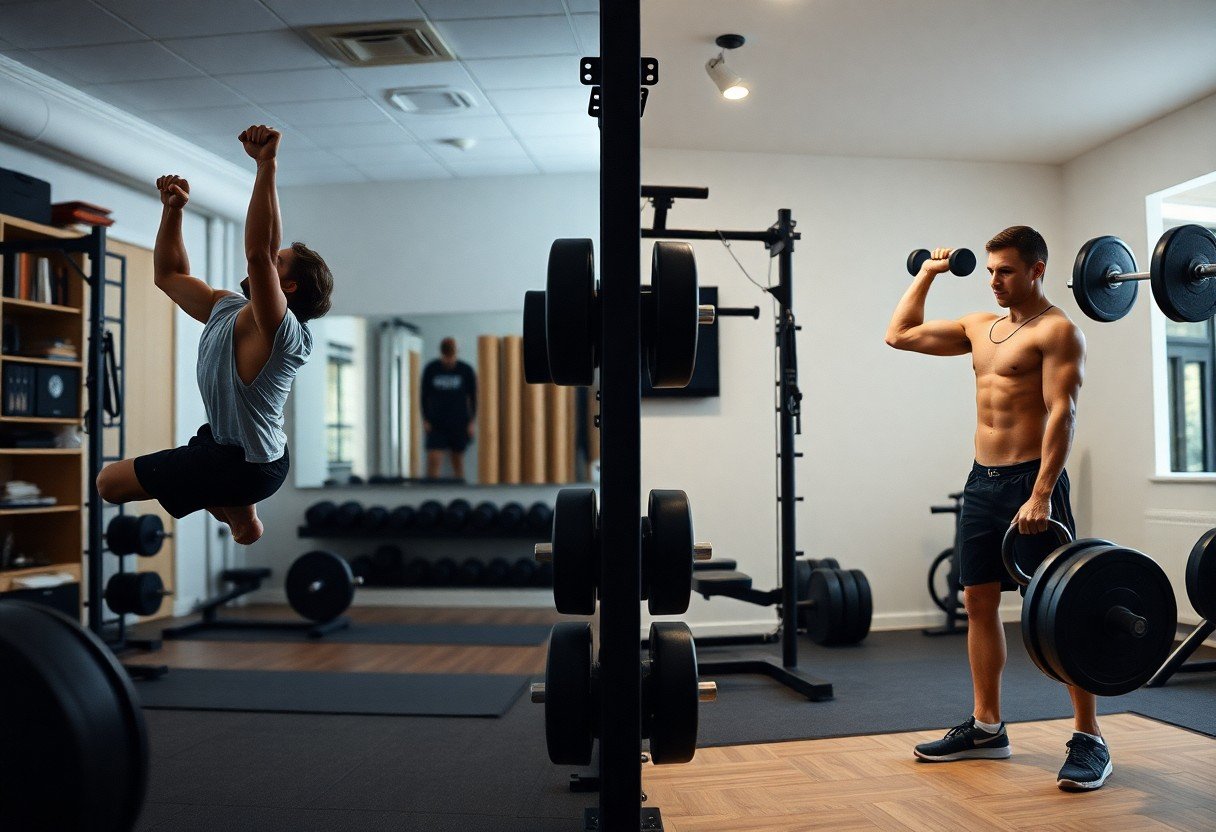
Muscle growth is a primary goal for many fitness enthusiasts, and choosing between body-weight exercises and free weights can significantly impact your progress. You can build muscle effectively at home using either method, but each has unique advantages and drawbacks that may influence your results. Body-weight exercises promote functional strength and are less likely to lead to injury, while free weights can provide greater resistance for faster muscle gains. Understanding how both options align with your fitness goals is vital for optimizing your workout routine.
Key Takeaways:
- Body-weight exercises are effective for building muscle, especially for beginners, and often require no equipment.
- Free weights provide more resistance variability and can lead to faster muscle growth for those with experience.
- Combining both body-weight and free weight exercises can enhance overall strength and muscle development at home.
Understanding Muscle Hypertrophy
Definition of Muscle Hypertrophy
Muscle hypertrophy refers to the increase in muscle size, resulting from a combination of resistance training and proper nutrition. When you engage in weightlifting or body-weight exercises, your muscle fibers endure micro-tears, which then repair and grow stronger. This process can lead to noticeable changes in your physique over time.
Factors Influencing Muscle Growth
- Exercise Type
- Nutrition
- Intensity
- Recovery
- Consistency
- Progressive Overload
- Supersets
- Compound Movements
- Caloric Surplus
- Nutrition Timing
Types of Muscle Fiber and Their Role
| Type I Fibers | Endurance, low force |
| Type IIa Fibers | Moderate endurance, moderate-high force |
| Type IIb Fibers | High force, low endurance |
| Rely on Type I | For prolonged activities |
| Rely on Type II | For short bursts of power |
- Muscle Composition
- Endurance Training
- Power Training
- Fiber Recruitment
- Training Adaptations
Body-Weight Training
Overview of Body-Weight Exercises
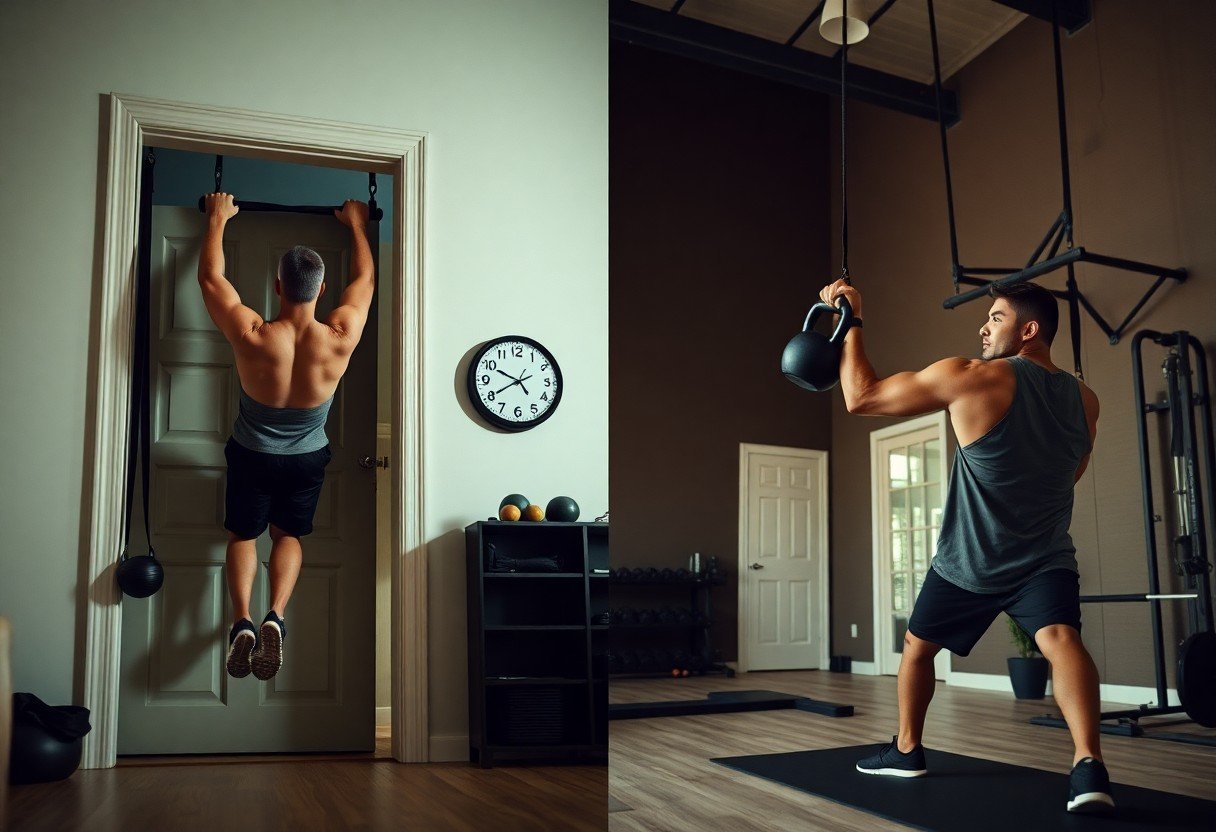
Body-weight exercises utilize your own weight to perform movements, eliminating the need for additional equipment. These exercises include push-ups, squats, planks, and burpees, effectively targeting various muscle groups. The simplicity of body-weight training allows you to adapt the intensity through variations and progressions, making it accessible regardless of your fitness level.
Benefits of Body-Weight Training
One of the primary advantages of body-weight training is its convenience; you can work out anywhere without needing a gym. It enhances core strength and stability as many exercises engage multiple muscle groups simultaneously. Additionally, body-weight training can greatly improve muscular endurance and flexibility while minimizing the risk of injury associated with heavy weights.
Additionally, engaging in body-weight training encourages functional strength, which translates into improved performance in daily activities. It helps you develop coordination and balance, factors that are particularly beneficial for overall fitness. The adaptability of these exercises allows you to progressively challenge yourself without the constraints of gym equipment.
Limitations of Body-Weight Training
While body-weight training offers numerous benefits, it may have limitations for advanced athletes seeking significant muscle growth. Progressing beyond a certain point can become challenging, as adding resistance is less straightforward than with free weights. Consequently, you may hit a plateau in your strength gains.
As your strength improves, the difficulty of body-weight exercises may not increase at the same pace, leading to insufficient overload for muscle hypertrophy. Furthermore, without proper technique, some exercises can lead to injury, especially when performed repetitively or with improper form. This highlights the need for awareness of your body’s mechanics during training.
Popular Body-Weight Exercises for Muscle Growth
To optimize muscle growth, several body-weight exercises are particularly effective, including push-ups, pull-ups, and lunges. These movements engage large muscle groups and can be modified to fit your strength levels, ensuring continuous improvement.
Plyometric variations of standard exercises, like explosive push-ups and jump squats, can also enhance muscle engagement and develop power. By incorporating a variety of movements and resistance levels, you can challenge your body continuously, stimulating growth and improving overall fitness. Consistency and proper progression are imperative for maximizing the benefits of these exercises.
Free Weights Training
Overview of Free Weights
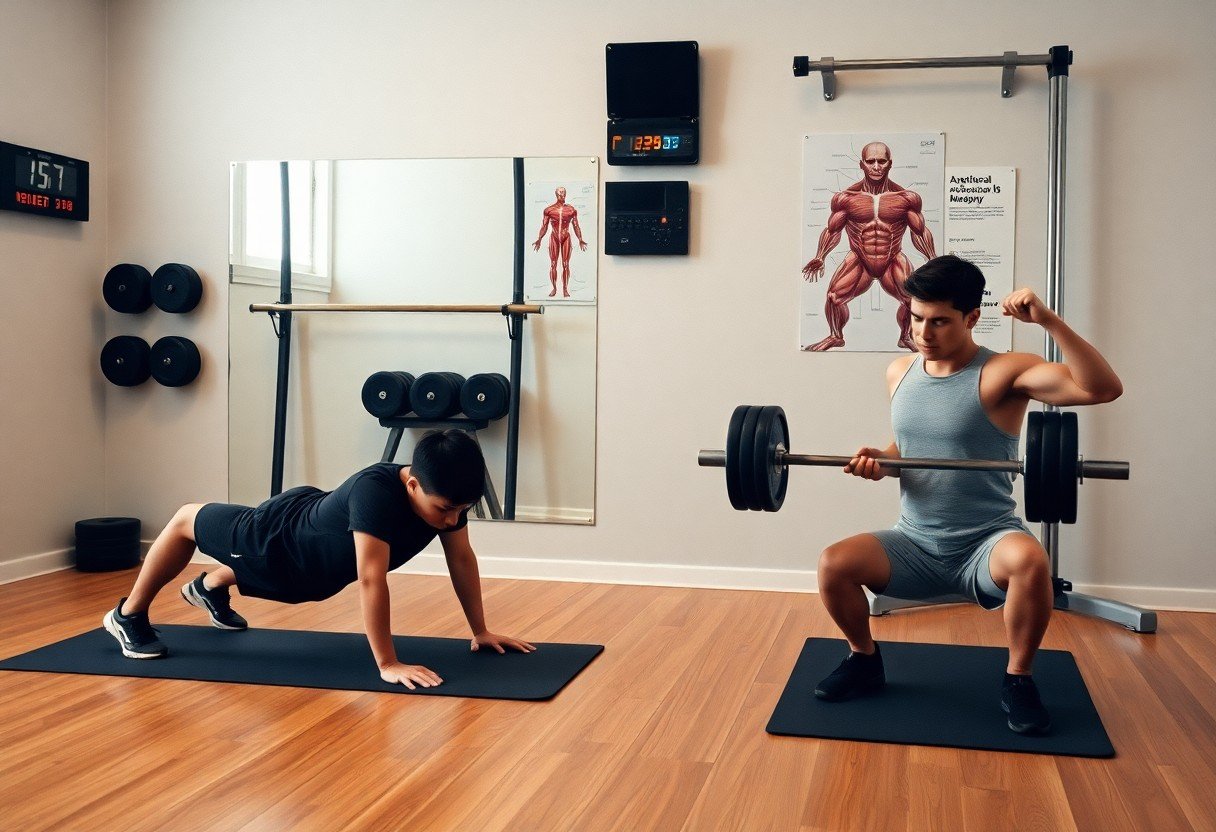
Free weights include equipment such as dumbbells, barbells, and kettlebells that allow for a greater range of motion compared to machines. They require you to stabilize your body throughout each movement, engaging multiple muscle groups simultaneously. This versatility makes free weights an effective choice for a variety of strength training exercises, from squats to bench presses.
Benefits of Free Weights Training
Training with free weights offers significant muscle-building potential, allowing you to lift heavier loads and increase strength efficiently. This method emphasizes functional movement patterns, which translates well into real-life activities and improves overall athletic performance.
Free weights also enhance your core stability and coordination, as you need to engage stabilizing muscles for proper form. You can easily adjust weights to tailor workouts to your levels, fostering progressive overload and maximizing hypertrophy. Moreover, incorporating free weights can stimulate greater hormonal responses, which contributes to muscle growth.
Limitations of Free Weights Training
Despite their benefits, free weights come with certain limitations. They require a proper understanding of technique to avoid injuries, especially for beginners who may struggle with form and control. Additionally, without guidance, it can be easy to develop bad habits or improper lifting techniques.
Inadequate knowledge can lead to overtraining or injuries, particularly when lifting heavier weights. It’s also crucial to have a sufficient space for free weight training, which may not be feasible in smaller living environments. As a result, individual safety and equipment management become vital considerations when engaging in free weight workouts.
Key Free Weight Exercises for Muscle Development
Key free weight exercises include the barbell squat, deadlift, and bench press, catering to major muscle groups. These compound movements promote maximum muscle activation, leading to enhanced strength and hypertrophy.
Incorporating a variety of these exercises into your routine targets different muscle groups while preventing plateaus. Exercises like overhead presses and bent-over rows provide a full-body challenge, encouraging functional strength. Consistently performing these key movements not only aids in muscle development but also contributes to improved balance and coordination in your overall fitness journey.
Comparing Effectiveness: Body-Weight vs. Free Weights
| Aspect | Body-Weight | Free Weights |
|---|---|---|
| Muscle Activation | Engages multiple muscle groups | Targets specific muscles effectively |
| Progressive Overload | Limited options for adding weight | Easily scalable with varying weights |
| Training Volume | Can increase reps and sets | Adjust weight and repetitions |
| Versatility | Various exercises with little space | Requires equipment and space |
Muscle Activation and Engagement
Body-weight exercises, such as push-ups and squats, engage multiple muscle groups simultaneously, promoting functional strength. In contrast, free weights, like dumbbells, allow you to target specific muscles with greater precision, enhancing muscle engagement for those targeted areas.
Progressive Overload and Adaptation
Progressive overload is important for muscle growth. Although body-weight exercises can be varied, they often limit your ability to significantly increase resistance. Free weights provide a straightforward method to progressively challenge your muscles by simply increasing the weight.
Without progressive overload, your muscles will adapt to the stress you place on them, resulting in stalled growth. You can use techniques like increasing weight or adjusting tempo with free weights to ensure consistent muscle engagement. Body-weight workouts can incorporate challenges like adding explosive movements or altering body angles, but they may not always match the gradual intensity increase achievable with free weights.
Training Volume and Frequency
Training volume and frequency play key roles in muscle development. Body-weight exercises generally require higher repetitions to achieve overload, while free weights allow for a wide range of weights and reps, giving you more flexibility in programming your workouts.
With free weights, you can manage your training load by adjusting the number of sets, reps, and weights used. This allows for tailored training sessions based on your specific muscle-building goals. In contrast, body-weight training often requires more creativity and effort to hit optimal volume, which can make structured plans more challenging for maintaining consistent progress.
Versatility of Workouts
Body-weight exercises are highly versatile, enabling you to incorporate a variety of movements without any equipment. Free weights offer versatility as well, but they require more equipment and physical space to perform effectively.
The vast range of body-weight movements can be performed anywhere, making them particularly appealing for home workouts. You can utilize common elements like gravity and leverage to create numerous variations. Free weights, while versatile, necessitate a commitment to acquiring the proper equipment and space to maximize your workout potential, which may not suit everyone’s home setup or preferences.
Practical Applications for Home Workouts
Designing a Body-Weight Workout Routine
To create an effective body-weight workout routine, focus on a mix of compound exercises targeting major muscle groups. Incorporate push-ups, squats, lunges, and planks, adjusting the number of repetitions and sets based on your current fitness level. Aim for a circuit format that allows minimal rest, enhancing both strength and endurance, and use variations like incline push-ups or Bulgarian split squats to keep progressing.
Designing a Free Weights Workout Routine
In a free weights workout routine, prioritize exercises such as bench presses, deadlifts, and rows to maximize muscle engagement. Begin with lighter weights to master your form, gradually increasing the load. A combination of upper and lower body exercises ensures well-rounded development, and you should aim for 3-4 sets of 6-12 repetitions, depending on your strength goals.
Incorporating both isolation and compound movements in your free weights routine enhances muscle growth. For example, include dumbbell bicep curls alongside barbell squats to balance muscle activation and promote strength across all areas. Ensuring proper tempo and maximum tension during lifts can also yield faster muscle gains.
Combining Both Methods for Optimal Results
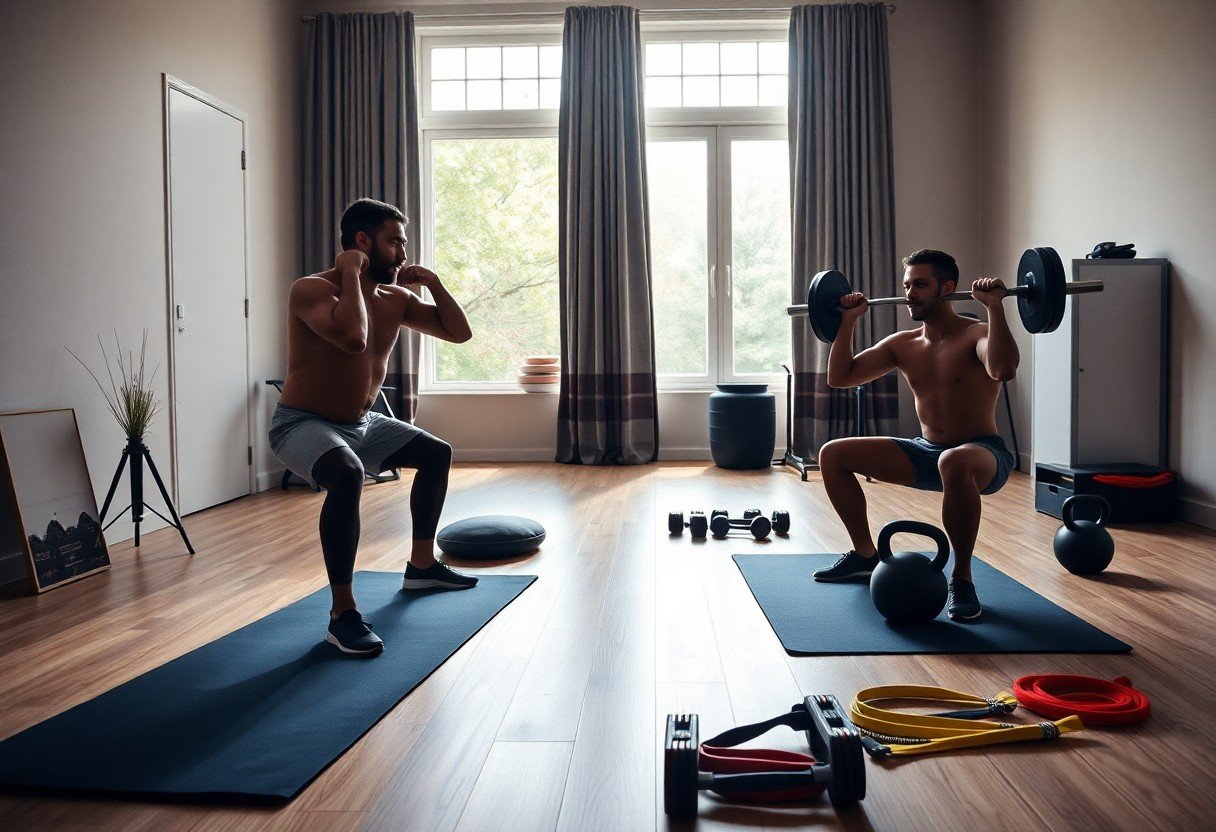
Mixing body-weight and free weight workouts provides comprehensive strength development. Start your routine with free weights for maximum intensity, then transition to body-weight exercises for endurance and conditioning. This strategy not only targets various muscle fibers but also helps prevent plateaus by continuously challenging your body.
By alternating between body-weight exercises and free weights, you can create a dynamic and flexible workout schedule. For instance, perform a free weight exercise like a deadlift, then follow up with a set of push-ups. This combination enhances muscle activation while allowing recovery for the fatigued muscle groups, keeping your workouts efficient and effective.
Equipment Recommendations for Home Users
For effective home workouts, basic equipment such as adjustable dumbbells, resistance bands, and a sturdy bench can significantly enhance your routine. These tools provide versatility in exercises, allowing you to target different muscle groups with ease.
Investing in adjustable dumbbells is particularly beneficial, as they save space and let you modify the weight for various exercises. Resistance bands offer progressive resistance, perfect for both body-weight and strength training, while a bench can be used for multiple exercises like bench presses and step-ups. This combination ensures a diverse and challenging workout setup at home.
Injury Prevention and Safety Considerations
Common Injuries in Body-Weight Training
In body-weight training, common injuries often stem from poor form or overexertion, leading to issues like shoulder pain, knee stress, and wrist strain. These injuries can occur particularly during exercises such as push-ups, squats, and pull-ups, where proper alignment is key to safety. For more insights, check this Why is muscle growth slower with bodyweight exercise ….
Common Injuries in Free Weights Training
Using free weights can lead to injuries such as back strains, shoulder injuries, and joint pain, especially if you lift weights that are too heavy without proper technique. Gradually increasing weights while focusing on form is imperative to minimize these risks.
Free weights demand stability and control, leaving room for mishaps like dropping weights, which can cause severe injuries. Additionally, the risk of injury increases when performing complex movements without adequate experience. You need to prioritize form over weight to ensure safety.
Tips for Safe Training at Home
To maintain safety while training at home, establish a clean workout space, warm up properly, and prioritize proper form. Ensure that your workout area is free from hazards. Regular breaks can aid recovery and prevent fatigue from leading to accidents. Any lapse in safety could result in injury.
- Establish a dedicated workout area
- Use mirrors or record sessions
- Warm up and cool down
Incorporating these safety measures can significantly reduce injury risk. For optimal results, listen to your body and adjust routines to fit your capabilities, ensuring any adjustments do not compromise safety.
Recognizing and Responding to Overtraining
Overtraining can present with symptoms like chronic fatigue, irritability, and prolonged muscle soreness. You must recognize these signs early to prevent injuries and setbacks in your training progression. Adjust your routine to include adequate rest and recovery.
Monitoring your body’s response is imperative; if you notice that workouts feel excessively challenging or your performance declines, it might be time to consider a period of rest. Adjusting your program to include lighter weeks can help manage fatigue effectively, ensuring your training remains sustainable. Any training regimen should allow for recovery to support long-term progress.
To wrap up
Upon reflecting, you will find that both body-weight exercises and free weights can effectively build muscle at home, each offering unique benefits. Body-weight workouts enhance functional strength and require minimal equipment, making them highly accessible. Conversely, free weights allow for targeted muscle growth and increased intensity, enabling you to push your limits. Ultimately, your choice should depend on your fitness goals, preferences, and equipment availability. By integrating both methods into your routine, you can maximize muscle-building potential and achieve balanced strength development.
FAQ
Q: What are body-weight exercises?
A: Body-weight exercises use the individual’s own weight to perform movements. Examples include push-ups, squats, and lunges.
Q: What are free weights?
A: Free weights refer to equipment like dumbbells and barbells that allow for a range of motions and muscle engagement.
Q: Which method is more effective for building muscle at home?
A: Both body-weight and free weights can build muscle effectively. Body-weight routines improve functional strength, while free weights often allow for greater resistance and can promote faster muscle gains.
Q: Can I build muscle using only body-weight exercises?
A: Yes, body-weight exercises can build significant muscle if adequately progressed and combined with proper nutrition. Adding variations can also increase intensity.
Q: How should I decide between body-weight and free weights for my workout routine?
A: Consider your fitness goals, available equipment, and personal preferences. If flexibility and space are limited, body-weight workouts may be more suitable, while free weights can offer more resistance options for targeted muscle growth.